




RELATED: Report studies musculoskeletal pain in city bus drivers
Data shows health risks associated within transportation workforce
Findings include increased risk for heart disease, stroke, and diabetes for drivers.
June 11, 2019
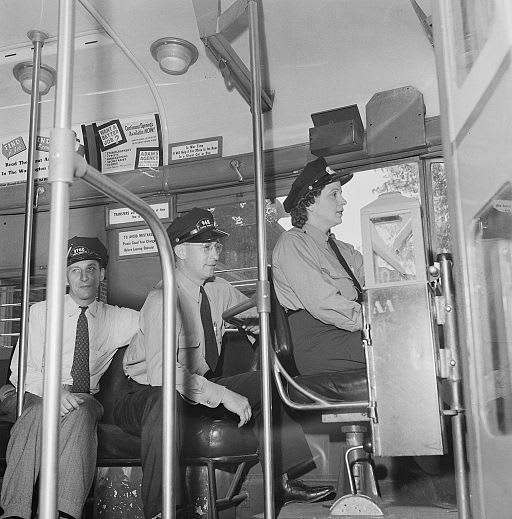
A 1943 photo of Washington, D.C.-based Capitol Transit Co. instructor teaching a female student to operate a one-man streetcar.
PublicDomain
2 min to read
A 1943 photo of Washington, D.C.-based Capitol Transit Co. instructor teaching a female student to operate a one-man streetcar.
PublicDomain
New research examining demographic and wellness trends within the transportation industry reveals the correlation between certain physical and behavioral elements and the risks to employee health and wellness.
The newly released white paper titled Relationship between Demographics and Wellness in the Transportation Industry details the results of a five-year study of 15,165 drivers and non-drivers (employed in terminals, warehouses, shops, and offices).
Factors measured include: body mass index (BMI), tobacco use, age, and gender and how these factors impact driver and non-driver health. The paper outlines potential risk factors that contribute to health concerns facing drivers.
Findings in the paper include:
Increased risk for heart disease, stroke, and diabetes: Of the 15,165 participants who completed biometric screening, 33% had at least 3 out of 5 conditions involved with metabolic syndrome (MetS), which includes hypertension, high blood sugar, excess body fat around the waist, and abnormal cholesterol and triglyceride levels. Individuals who have a combination of 3 or more of these factors have an increased risk for heart disease, stroke, and diabetes.
Increased percentage of MetS in younger drivers: Drivers between ages 40 and 59 years shared the same risks as their 60+ year-old counterparts.
Tobacco use and drivers: Drivers are 130% more likely to smoke than their non-driver counterparts.
The need for targeted training/wellness programs: Addressing BMI as a medical condition, understanding health risks associated with aging, adopting smoking cessation programs, and targeting drivers for training/wellness programs can decrease development of MetS conditions and slow the rate at which MetS risks increase with age.
"Our goal with this paper is to inform health and safety professionals in the transportation industry on how to identify and prioritize higher-risk drivers," says James Landsman, president of Atlas Injury Prevention Solutions, authors of the study.
More Management

METRO Opens Submissions for 2026 Motorcoach Awards
Nominations are now being accepted for METRO Magazine’s Operator of the Year and Innovative Operator of the Year awards.
Read More →
New York MTA Advances Final Contract for Second Avenue Subway Expansion
Contract Four is the largest in the Second Avenue Subway Phase 2 project and includes construction of station infrastructure, tracks, and signals for the subway expansion, MTA officials said. Work on Contract Four will begin in 2027.
Read More →
Transit Agencies Highlight Safety Gains at National Summit
Leaders from 15 major transit systems shared crime-reduction results and safety initiatives while discussing the role of continued federal support.
Read More →

NITA Names New Leadership, Expands Reduced-Fare Program at First Board Meeting
The new regional transit authority appointed its first board chair and interim executive director while extending reduced fares across CTA, Metra, and Pace for eligible riders.
Read More →
Beyond the Checklist: A Structured Approach to Transit Maintenance
Reliability-Centered Maintenance helps transit agencies move beyond routine checklists to focus limited resources on the assets and failures that have the greatest impact on safety, reliability, and service.
Read More →
APTA 2026 Nominating Committee Selects Leadership Slate, Names Chair and Vice Chair Nominees
Leadership changes will help shape the association’s priorities and its representation of the transportation industry during the 2026–2027 term.
Read More →
DART Launches Major Security, Fare Enforcement Initiative
The 90-day demonstration will deploy coordinated security teams at five light rail stations while testing controlled access and gathering data to guide future investments.
Read More →
Sponsored•September 9, 2026
Advancing Fare Collection Through Technology and Innovation
Learn about delivering 1300 gates at 91 stations while managing fare evasion. Explore the large scale deployment, solution customization and real-world results that affect the region. Prepare for deployment in your region now.
Read More →
Game Day in Motion: Moving Millions During the 2026 World Cup
Between packed transit stations and team motorcoaches, see how agencies and operators across North America tackled the transportation demands of the 2026 FIFA World Cup.
Read More →
Surface Transportation Extension Averts Shutdown, Leaves Transit Funding Gap
The stopgap keeps federal transportation programs moving, but missing advance funding could complicate the transit and rail projects agencies are planning next.
Read More →