




Related: Transportation options could lure Amazon to Denver, report says
Denver RTD considers discounted passes, other fare recommendations
RTD’s senior leadership team will review the group’s work at an internal meeting in March.
March 2, 2018
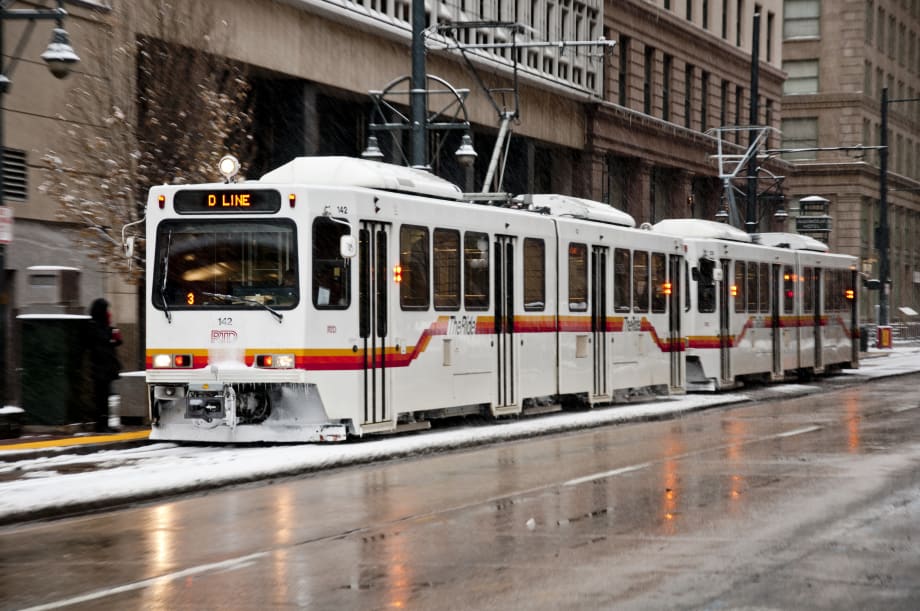
As is the case with the pass program study, any changes in fares would first be reviewed by RTD’s senior leadership team, then approved by its board of directors. Photo via VXLA/Wikimedia
3 min to read
As is the case with the pass program study, any changes in fares would first be reviewed by RTD’s senior leadership team, then approved by its board of directors. Photo via VXLA/Wikimedia
A 25-member group of leaders asked to evaluate and determine whether changes should be made to Denver’s Regional Transportation District’s (RTD) pass programs completed its work, drafting a recommendation from its year-long effort that will be reviewed by the agency’s leadership team and its board of directors.
The working group — convened at the request of the public and at the direction of RTD’s 15-member board of directors — reviewed each of the agency’s individual and group passes and formulated several options, all of which were evaluated by a consultant for their impact on total fare revenue and ridership. As they deliberated, study participants considered eight guiding principles in their work: brand loyalty, convenience, cost-effectiveness, equitable access, increased ridership, an ability to meet strategic budget plan targets, revenue certainty, and simplifying rider-operator interactions. RTD’s pass programs last underwent a thorough review in 2009.
Working group members have no inherent authority to make changes to pass programs. RTD’s senior leadership team will review the group’s work at an internal meeting in March. The board of directors will receive an initial public update from staff at its next finance committee meeting, on March 13. No board decision is expected on that date. With board approval later this year, the earliest the public could experience any change resulting from the group’s recommendation would be early 2019.
Elements of the group’s recommendation include:
Adding a low-income pass, which would provide a 40% discount to qualifying riders whose incomes are at or below 185% of the federal poverty guidelines. This pass effectively serves as an expansion of the existing RTD nonprofit program, which has been in place for decades to assist low-income riders and would be retained.
Adding a youth pass, which would discount the fare for riders 13- through 19-years-old to 70%. Individuals 12-years-old and younger would ride free with a fare-paying rider.
Retaining EcoPass, Neighborhood EcoPass and CollegePass and pricing them based on updated service level areas (for EcoPass) and value of the trips taken (for Neighborhood EcoPass and CollegePass). The group is considering phasing in price increases of more than 20% for EcoPass holders, neighborhoods, and higher education institutions.
The group’s deliberations and modeling presumed that RTD’s board of directors would review fares, as it does periodically, later this year and determine whether to make adjustments to them. That public process — related to but separate from the pass program study — would have any potential changes to fares taking place in 2019.
The modeling assumptions from the working group’s recommended option assume 2019 cash fares of $3 for a local trip, $5.25 for a regional trip and $10.50 for a ride on the University of Colorado A Line to Denver International Airport. These specific fares are not being considered by the board at this time. As is the case with the pass program study, any changes in fares would first be reviewed by RTD’s senior leadership team, then approved by its board of directors.
More Management

LIT Marks 10-Year Milestone at Annual Summit
Hosted by the COTA from September 10 to 13, the Summit carried the theme “Celebrating 10 Years of Excellence, Leadership, and Impact,” with every part of the program honoring the people, agencies, and partners who built LIT over its first decade.
Read More →
People Movement: Dan Dipert Coaches Adds Third-Generation Leader, Keolis Names New Valley Metro VP/GM, and More
In this edition, we also cover recent appointments and announcements at the Wabtec, SilverRide, HNTB, and more, showcasing the individuals helping to shape the future of transportation.
Read More →
METRO Opens Submissions for 2026 Motorcoach Awards
Nominations are now being accepted for METRO Magazine’s Operator of the Year and Innovative Operator of the Year awards.
Read More →

New York MTA Advances Final Contract for Second Avenue Subway Expansion
Contract Four is the largest in the Second Avenue Subway Phase 2 project and includes construction of station infrastructure, tracks, and signals for the subway expansion, MTA officials said. Work on Contract Four will begin in 2027.
Read More →
Transit Agencies Highlight Safety Gains at National Summit
Leaders from 15 major transit systems shared crime-reduction results and safety initiatives while discussing the role of continued federal support.
Read More →
NITA Names New Leadership, Expands Reduced-Fare Program at First Board Meeting
The new regional transit authority appointed its first board chair and interim executive director while extending reduced fares across CTA, Metra, and Pace for eligible riders.
Read More →
Beyond the Checklist: A Structured Approach to Transit Maintenance
Reliability-Centered Maintenance helps transit agencies move beyond routine checklists to focus limited resources on the assets and failures that have the greatest impact on safety, reliability, and service.
Read More →
APTA 2026 Nominating Committee Selects Leadership Slate, Names Chair and Vice Chair Nominees
Leadership changes will help shape the association’s priorities and its representation of the transportation industry during the 2026–2027 term.
Read More →
DART Launches Major Security, Fare Enforcement Initiative
The 90-day demonstration will deploy coordinated security teams at five light rail stations while testing controlled access and gathering data to guide future investments.
Read More →
Sponsored•September 9, 2026
Advancing Fare Collection Through Technology and Innovation
Learn about delivering 1300 gates at 91 stations while managing fare evasion. Explore the large scale deployment, solution customization and real-world results that affect the region. Prepare for deployment in your region now.
Read More →