



Denver's RTD sees customer, community survey improvements
In August, customers were asked to complete the intercept survey and provide their feedback while riding RTD’s buses and trains, and the results were shared during the RTD board’s Performance Committee meeting.

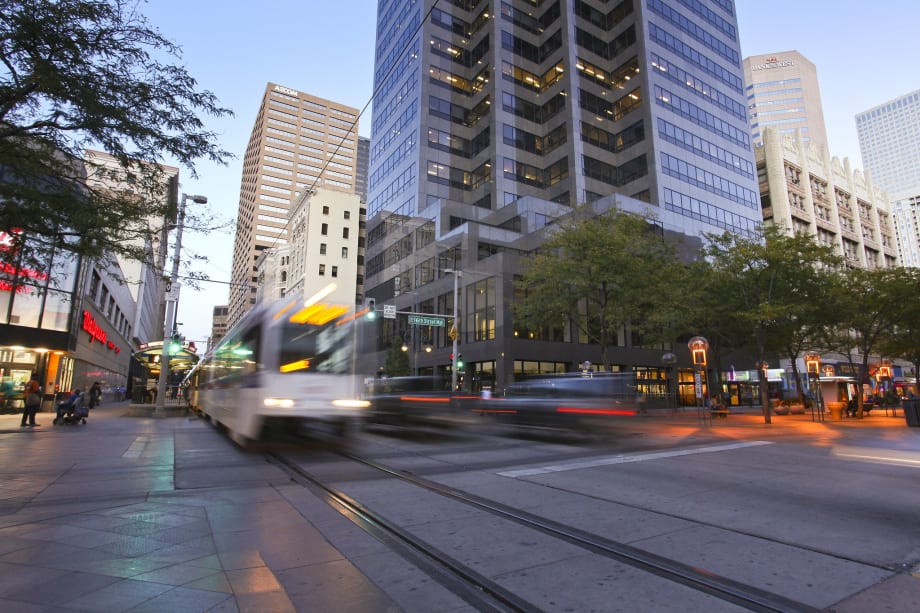
Customers who use RTD’s bus or rail services rated the frequency of routes as being slightly more important overall when compared with feedback provided in the 2023 survey.
Photo: Denver RTD
For the fourth consecutive year, Denver’s Regional Transportation District (RTD) commissioned a comprehensive survey of customers and the community to better understand the agency’s strengths and identify opportunities for improvement, with the agency seeing positive trends.
In August, customers were asked to complete the intercept survey and provide their feedback while riding RTD’s buses and trains, and the results were shared during the RTD board’s Performance Committee meeting.
The agency also conducted its annual survey in June and July to gather feedback from individuals who use RTD’s paratransit services, as well as a separate survey to garner overall community feedback.
Bus and Rail Surveys
Customer feedback was obtained via intercept surveys across a sampling of individuals using all bus routes and rail lines throughout the agency’s service area.
In total, survey respondents used either bus (75%) or rail services (74%) three or more days a week, with 56% of customers using RTD services to commute to and from work.
Findings indicate that 68% of bus customers and 63% of rail customers are “satisfied” or “very satisfied” with RTD services, a decrease from 76% and 78%, respectively, in 2023.
Notably, the survey period coincided with the end of the first phase of RTD’s Downtown Rail Reconstruction Project and followed several months of light rail service delays and speed restrictions due to the agency’s preventive maintenance and state of good repair efforts.
Approximately half of bus customers and a majority of light rail and commuter rail customers reported being impacted by RTD’s maintenance efforts.
In spite of the maintenance projects, RTD’s bus customers are 10% more satisfied and rail customers 2% more satisfied with transit services when compared to the national average. National averages were provided by RTD’s third-party survey consultant.
Net Promoter Scores
The surveys also provided RTD with Net Promoter Scores (NPS) for bus, rail, and paratransit customers and community members.
NPS is an indication for how likely someone is to recommend the agency’s services to a friend or neighbor. Scores are measured on a scale of 0-10 and are calculated by subtracting detractors from promoters.
RTD’s NPS scores for bus and rail increased slightly overall in 2024. Compared to 2023, RTD’s NPS score for bus increased by six points and increased 10 points for light rail services.
Both scores remain above zero, meaning that RTD has more promoters in the community than detractors. RTD’s combined score of 13 is higher than the national average (-17) for transit services.
RTD Safety
RTD customers also rated operators higher than the national average for safe vehicle operation, with 83% of bus customers giving high marks to the frontline employees.
In total, 85% of light rail and commuter rail customers also indicated that the trains are safely operated. Nationally, 70% of bus and 75% of rail customers indicate that their vehicles are operated safely.
“These survey results continue to illustrate the tremendous value RTD delivers to the communities the agency serves,” said GM/CEO Debra A. Johnson said. “And while I am also encouraged to see that RTD is leading the way across a myriad of factors compared to national averages, the agency has no intention to rest on its laurels as we collectively strive for continuous improvement in order to make lives better through connections.”
Other survey highlights include 87% of bus customers and 85% of rail customers indicating that the agency’s services provide value to the community, compared to 69% and 72%, respectively, for the national average.
Customers who use RTD’s bus or rail services rated the frequency of routes as being slightly more important overall when compared with feedback provided in the 2023 survey.
A Look at RTD’s Paratransit
RTD also conducted a customer survey between June 18 and July 19 for registered, eligible individuals who specifically use the agency’s paratransit services. Paratransit customers were contacted via text message, email, and mail for survey distributions.
Overall satisfaction for paratransit services improved from 2023, with 80% of respondents reporting they are “satisfied” or “very satisfied” with Access-a-Ride and the percentage of “dissatisfied” and “very dissatisfied” Access-a-Ride customers decreased to 5% in 2024, down from 13% in 2023.
RTD’s NPS for paratransit services also increased 39 points, moving from 20 to 59. Almost half of paratransit customers use the ADA service for medical appointments.
Value in the Community
In addition to gathering feedback via customer intercept surveys in August 2024, separate mail surveys solicited input from households across RTD’s service area. Community surveys were mailed to a random sample of USPS addresses throughout the eight-county district with feedback collected in June and July.
Highlights from the community survey indicated 86% of respondents believe that RTD provides value to the region, up from 84% in 2023. RTD’s Community NPS also increased 22 points year over year.
All surveys were conducted in English and Spanish, with language assistance available in an additional 20 languages, as well as assistance for customers who are blind or visually impaired.
All surveys were administered to a target sample of the population to ensure they were statistically valid and representative of customers and the community.
More Management

METRO Opens Submissions for 2026 Motorcoach Awards
Nominations are now being accepted for METRO Magazine’s Operator of the Year and Innovative Operator of the Year awards.
Read More →
New York MTA Advances Final Contract for Second Avenue Subway Expansion
Contract Four is the largest in the Second Avenue Subway Phase 2 project and includes construction of station infrastructure, tracks, and signals for the subway expansion, MTA officials said. Work on Contract Four will begin in 2027.
Read More →
Transit Agencies Highlight Safety Gains at National Summit
Leaders from 15 major transit systems shared crime-reduction results and safety initiatives while discussing the role of continued federal support.
Read More →

NITA Names New Leadership, Expands Reduced-Fare Program at First Board Meeting
The new regional transit authority appointed its first board chair and interim executive director while extending reduced fares across CTA, Metra, and Pace for eligible riders.
Read More →
Beyond the Checklist: A Structured Approach to Transit Maintenance
Reliability-Centered Maintenance helps transit agencies move beyond routine checklists to focus limited resources on the assets and failures that have the greatest impact on safety, reliability, and service.
Read More →
APTA 2026 Nominating Committee Selects Leadership Slate, Names Chair and Vice Chair Nominees
Leadership changes will help shape the association’s priorities and its representation of the transportation industry during the 2026–2027 term.
Read More →
DART Launches Major Security, Fare Enforcement Initiative
The 90-day demonstration will deploy coordinated security teams at five light rail stations while testing controlled access and gathering data to guide future investments.
Read More →
Advancing Fare Collection Through Technology and Innovation
Learn about delivering 1300 gates at 91 stations while managing fare evasion. Explore the large scale deployment, solution customization and real-world results that affect the region. Prepare for deployment in your region now.
Read More →
Game Day in Motion: Moving Millions During the 2026 World Cup
Between packed transit stations and team motorcoaches, see how agencies and operators across North America tackled the transportation demands of the 2026 FIFA World Cup.
Read More →
Surface Transportation Extension Averts Shutdown, Leaves Transit Funding Gap
The stopgap keeps federal transportation programs moving, but missing advance funding could complicate the transit and rail projects agencies are planning next.
Read More →