




More from Canada: Vancouver Mayors Urge Voters Ask for Rapid Transit
Edmonton Transit Ridership Outpaces Population Growth
Ridership in Edmonton continues to grow, allowing the city to exceed pre-pandemic ridership levels.
October 8, 2024
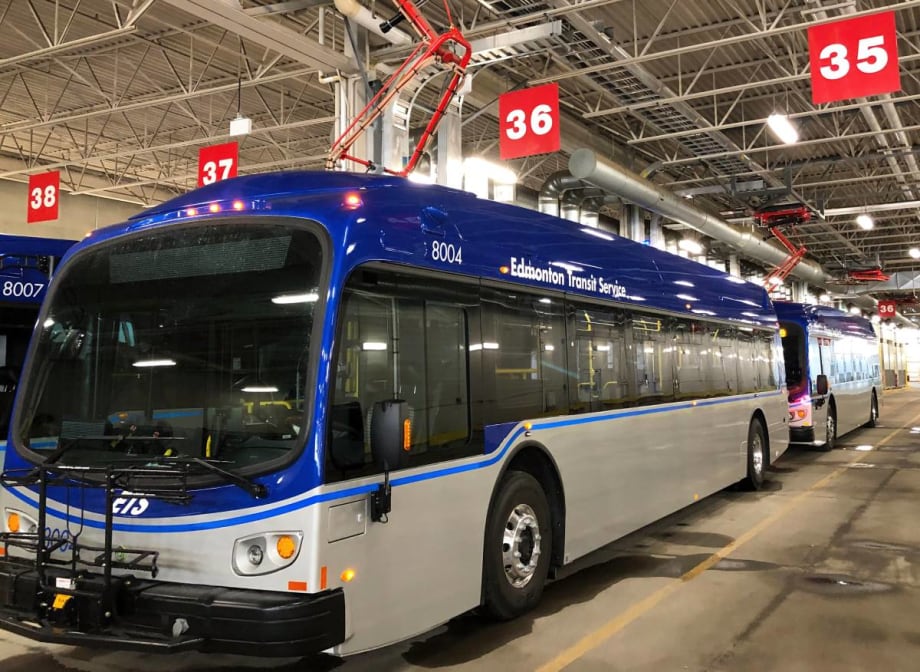
Edmonton Transit Services include 120 regular bus routes in order to help maintain the city’s high frequency transit grid.
Photo: ETS/Proterra
2 min to read
Edmonton Transit Service (ETS) Ridership is exceeding the population growth of Edmonton, one of the fastest growing cities in Canada. From January to September 2024 ETS ridership has grown by 14%, continuing one of the strongest post-pandemic ridership recoveries in the country.
ETS is on track to move nearly 60 million riders in 2024.
Transit Services in Edmonton
ETS has 120 regular bus routes, 50 school routes, three LRT lines, and an on-demand transit service.
The opening of the 13-kilometre Valley Line Southeast LRT in November 2023 has provided another option for riders to reach destinations between Mill Woods and downtown. Nearly two million trips have been taken on Valley Line Southeast LRT.
Edmonton is one of five cities in Canada with a high-frequency transit grid providing transit in the core of the city every 15 minutes every day.
A Growing Transit System
In 2023 Edmonton City Council invested in growing transit service, adding 120,000 service hours to the transit network. While these investments help ease the pressure on transit service, the gap between current service levels and the Transit Service Standards continues to expand as the city’s population grows.
“We’ve been investing in the transit network and are proud to deliver equitable, accessible and convenient service that will continue to meet the needs of riders,” said Carrie Hotton-MacDonald, branch manager, Edmonton Transit Service. “We’re working to make it easier for people to choose transit, and are excited to see this positive response. We’re thankful for our riders and the growth we’ve been experiencing.”
ETS launched the current bus network in April 2021. Year-over-year, monthly ridership has increased for 42 consecutive months. In September 2024 monthly ridership exceeded six million for the first time, as ETS welcomed back students and riders returned to fall routines.
Overall, ridership has exceeded pre-pandemic levels by 12% since the beginning of the year.
Looking for Ways to Improve
ETS continually analyzes transit performance to ensure it remains efficient and effective for riders. This includes making service adjustments five times each year based on transit data, rider feedback, seasonal changes and ridership growth.
More Bus
Biz Briefs: New Flyer Delivers in Columbus, Houston, Beep and Freebee Merge, and More
In this edition of Biz Briefs, we spotlight the latest developments shaping the future of mobility.
Read More →
People Movement: Dan Dipert Coaches Adds Third-Generation Leader, Keolis Names New Valley Metro VP/GM, and More
In this edition, we also cover recent appointments and announcements at the Wabtec, SilverRide, HNTB, and more, showcasing the individuals helping to shape the future of transportation.
Read More →
New York MTA Plans Largest Bus Fleet Upgrade in More Than a Decade
The agency is seeking manufacturers for 650 new CNG buses to replace aging vehicles, improve reliability, and advance its broader fleet modernization strategy.
Read More →
Building a Flexible Path to Transit Electrification
John Hroncich discusses BAE Systems’ modular and scalable approach, lessons learned from decades of real-world operations, and how agencies can identify electrification strategies that fit their fleets.
Read More →
Bus Tech Talk: Keeping Transit Technicians Ahead of the Technology Curve
LA Metro’s Obed Mejia discusses technician training, evolving maintenance technology, fleet replacement, and strategies for getting the most out of today’s transit fleets.
Read More →
Biz Briefs: RIPTA Unveils New Frontrunners, Clevland RTA Adds New Siemens, and More
In METRO's latest installment, we take a look at recent news from Siemens, Prevost, Dodge, and more partnerships making headlines across the transportation sector.
Read More →
People Movement: Holly Arnold Joins Transdev and More
In this edition, we also cover recent appointments and announcements at Pace, CamTran, MCI, and more, showcasing the individuals helping to shape the future of transportation.
Read More →
The High Cost of Transit Buses: Industry Leaders Look to Procurement Reform
Transit leaders and policymakers examine how standardized bus designs, streamlined procurement, and predictable funding could help agencies stretch budgets and deliver better service.
Read More →
The Business Voice Behind Public Transportation
As chair of APTA’s Business Members Board of Governors, Ray Melleady explains how more than 850 business members are partnering with transit agencies to advance funding, innovation, and industry-wide collaboration.
Read More →
From Surviving to Thriving: Building Stronger Transportation Organizations
Bus Business Consultants founder Brian Dickson shares lessons on leadership, organizational health, and creating options for long-term success in a changing transportation industry.
Read More →