



Freightliner admitted into environmental excellence program
FCCC was selected primarily on the strength of its Zero Waste to Landfill efforts, a pilot program initiated by Daimler Trucks North America, FCCC's parent company.

Freightliner Custom Chassis Corp. (FCCC) was recently accepted into the South Carolina Environmental Excellence Program (SCEEP) for the company's ongoing commitment to reducing waste and improving South Carolina's environment.
SCEEP is a voluntary initiative designed to recognize and reward South Carolina facilities that have demonstrated environmental performance through pollution prevention, energy and resource conservation, and the use of an environmental management system.
FCCC was admitted into the program primarily on the strength of its Zero Waste to Landfill efforts, a pilot program initiated by Daimler Trucks North America, FCCC's parent company. The purpose of the program is to become 100 percent landfill waste-free by 2010. As of Dec. 31, 2008, the company has achieved 90 percent waste-free status, a gain of 62.3 percent for the year compared to 2007.
In March 2008, the FCCC plant was recognized by the Environmental Protection Agency's WasteWise Program for its 2007 waste reduction achievement and was accepted as a WasteWise partner. WasteWise engages government, businesses and nonprofit organizations to educate others about the benefits of reducing solid waste.
More Motorcoach

METRO Opens Submissions for 2026 Motorcoach Awards
Nominations are now being accepted for METRO Magazine’s Operator of the Year and Innovative Operator of the Year awards.
Read More →
Biz Briefs: Alstom Lands Canadian Contract, LYT to Supply California TSP, and More
In METRO's latest installment, we take a look at recent news from Complete Coach Works, Beep, FlixBus, and more partnerships making headlines across the transportation sector.
Read More →
Biz Briefs: RIPTA Unveils New Frontrunners, Clevland RTA Adds New Siemens, and More
In METRO's latest installment, we take a look at recent news from Siemens, Prevost, Dodge, and more partnerships making headlines across the transportation sector.
Read More →
People Movement: Holly Arnold Joins Transdev and More
In this edition, we also cover recent appointments and announcements at Pace, CamTran, MCI, and more, showcasing the individuals helping to shape the future of transportation.
Read More →
ABA Report: Motorcoach Travel Generates $161.6B Economic Impact
The 2025 analysis finds motorcoach travel supported nearly 900,000 jobs and generated $28 billion in federal, state, and local taxes.
Read More →
CharterUP’s Armir Harris on Technology, AI, and the Future of Group Mobility
In a recent episode of METROspectives, CharterUP Founder/CEO Armir Harris discussed the company’s evolution from an online charter bus marketplace into a technology platform supporting public- and private-sector mobility and much more.
Read More →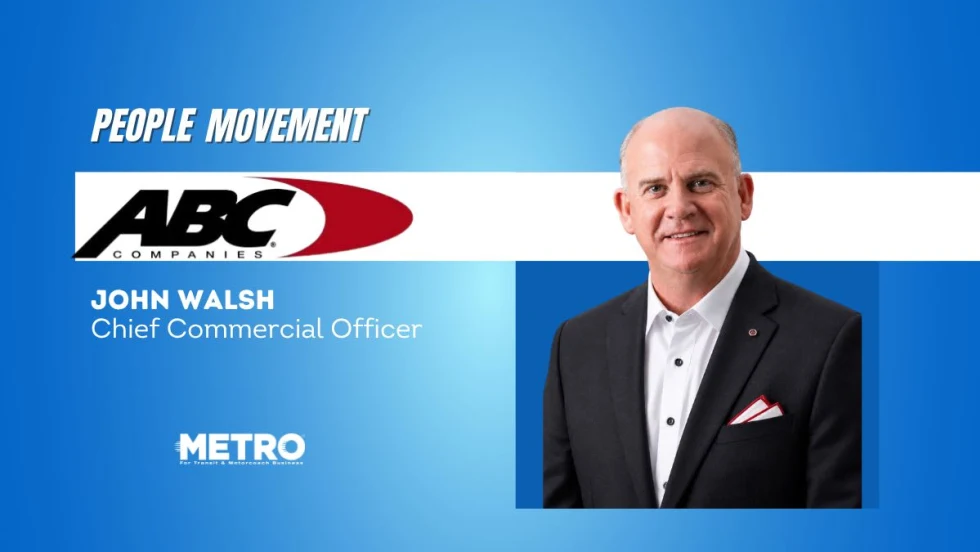
People Movement: ABC Names John Walsh as Chief Commercial Officer
In this edition, METRO also covers recent appointments and announcements at the DART, STV, and more, showcasing the individuals helping to shape the future of transportation.
Read More →
From Surviving to Thriving: Building Stronger Transportation Organizations
Bus Business Consultants founder Brian Dickson shares lessons on leadership, organizational health, and creating options for long-term success in a changing transportation industry.
Read More →
Biz Briefs: Luminator Marks Milestone and More
From manufacturers and suppliers to transit agencies and motorcoach operators, these updates offer a snapshot of the projects, partnerships and business moves driving the industry forward.
Read More →
ABAF Study Reveals Growing Insurance Crisis for Motorcoach Operators
Preliminary findings show 98% of operators faced premium increases over the past five years, while shrinking insurer participation is putting added pressure on businesses and customers.
Read More →