




Moving Foward: MARTA Advances BRT Project
FTA Grants $240M to Support BRT Project in Twin Cities
The FTA Full Funding Grant Agreement will help the Metropolitan Council expand its BRT network.
April 12, 2023
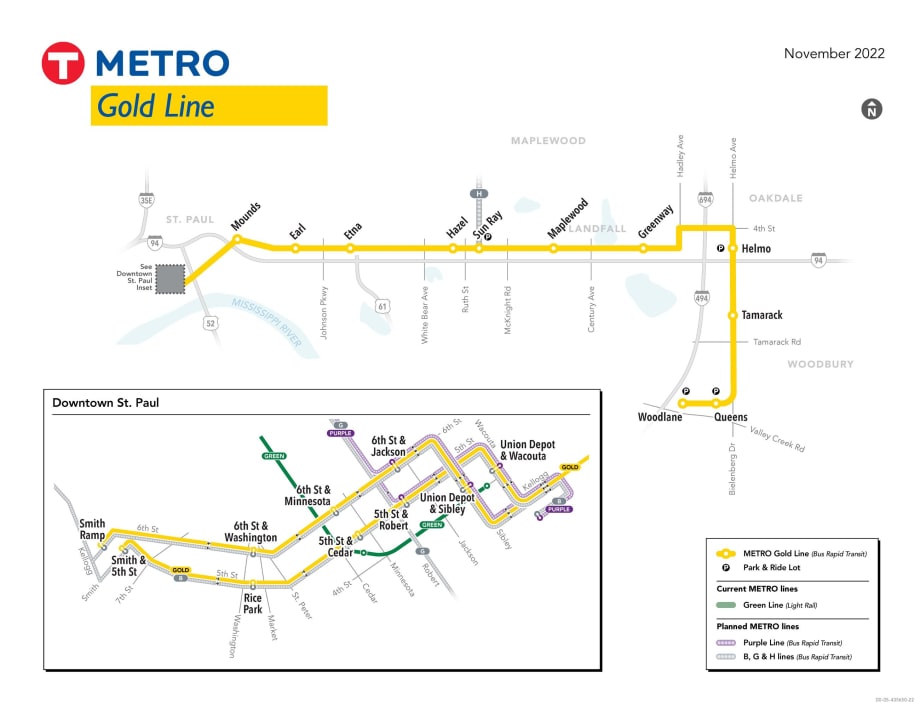
The Gold Line will promote equity by providing efficient service in an area with twice as many low-income residents as the Twin Cities Metropolitan Area.
Photo: WCRRA
2 min to read
The U.S. Department of Transportation's Federal Transit Administration (FTA) announced a grant award of $239.3 million to support the Twin Cities’ Metropolitan Council as it constructs the Gold Line Bus Rapid Transit (BRT) project.
The FTA Full Funding Grant Agreement will help the Metropolitan Council expand its BRT network to better connect residents of the east metro area of the Twin Cities to job centers and other opportunities, according to the administration's news release.
"Better transit systems mean faster commutes, cleaner air, and better options to get people where they need to go," said Pete Buttigieg, U.S. Transportation Secretary. “The Twin Cities' growing BRT network is an example of how safe, convenient public transit can transform communities, and we are proud to support the new Gold Line, which will connect more people with jobs and opportunities."
The 10.3-mile Metro Transit Gold Line BRT, which will include 16 stations and seven miles of exclusive bus lanes, will connect several suburbs of the Twin Cities, including Maplewood, Landfall, Oakdale, and Woodbury, and help residents and visitors move throughout the metro area courtesy of a connection to the regional transit network at St. Paul's Union Depot.
By 2040, the Metropolitan Council estimates the Gold Line BRT project will provide more than 2 million rides annually and provide access to 89,000 jobs along the route.
"The Gold Line BRT project will not only provide better public transportation to residents, but it will also promote equity by connecting areas of affordable housing with jobs and other opportunities," said FTA Administrator Nuria Fernandez. "We applaud the Metropolitan Council's choice to use electric-powered buses, which will improve air quality and help address climate change."
The Metropolitan Council will improve the rider experience with pre-boarding fare payment, real-time arrival and departure screens, and station amenities.
Buses will run every 10 minutes during peak hours. The Gold Line will promote equity by providing efficient service in an area with twice as many low-income residents as the Twin Cities Metropolitan Area. Approximately 14% of all households within a half-mile from Gold Line stations don’t have a car.
The funding comes from FTA's Capital Investment Grants (CIG) program.
More Bus
Indian River Transit’s Community-Focused Approach Earns National Recognition
Named APTA’s 2026 Outstanding Public Transportation System in its size category, Florida’s Indian River County transit system continues to grow ridership through fare-free service and a focus on evolving community needs.
Read More →
ENC Lands MATA Contract and More in Biz Briefs
In this edition of Biz Briefs, we spotlight the latest developments shaping the future of mobility.
Read More →
From Surviving to Thriving: Building Stronger Transportation Organizations
Bus Business Consultants founder Brian Dickson shares lessons on leadership, organizational health, and creating options for long-term success in a changing transportation industry.
Read More →
Everett Transit, Community Transit Outline Consolidation Agreement
The proposed agreement calls for a 50% increase in bus service in Everett, a new microtransit zone, continued paratransit service, and the transfer of Everett Transit operations to Community Transit.
Read More →
SEPTA Details Accelerate Vision for Transit System
The plan outlines investments in trolley modernization, new Metro and Regional Rail vehicles, accessible stations, and more frequent bus and rail service.
Read More →
Report: Transit Bus Manufacturing Supports 34,100 Jobs, $5.1B in GDP
The “Buses Mean Business” report examines the transit bus manufacturing industry’s economic footprint, supply chain, and rising demand for vehicle replacements.
Read More →
Biz Briefs: New Flyer Delivers in Columbus, Houston, Beep and Freebee Merge, and More
In this edition of Biz Briefs, we spotlight the latest developments shaping the future of mobility.
Read More →
People Movement: Dan Dipert Coaches Adds Third-Generation Leader, Keolis Names New Valley Metro VP/GM, and More
In this edition, we also cover recent appointments and announcements at the Wabtec, SilverRide, HNTB, and more, showcasing the individuals helping to shape the future of transportation.
Read More →
New York MTA Plans Largest Bus Fleet Upgrade in More Than a Decade
The agency is seeking manufacturers for 650 new CNG buses to replace aging vehicles, improve reliability, and advance its broader fleet modernization strategy.
Read More →
Building a Flexible Path to Transit Electrification
John Hroncich discusses BAE Systems’ modular and scalable approach, lessons learned from decades of real-world operations, and how agencies can identify electrification strategies that fit their fleets.
Read More →