



HDR Selected to Design L.A. Metro BRT Corridor
The BRT project will provide faster and more reliable service to meet the corridor’s growth by linking Los Angeles, Burbank, Glendale, and Pasadena.

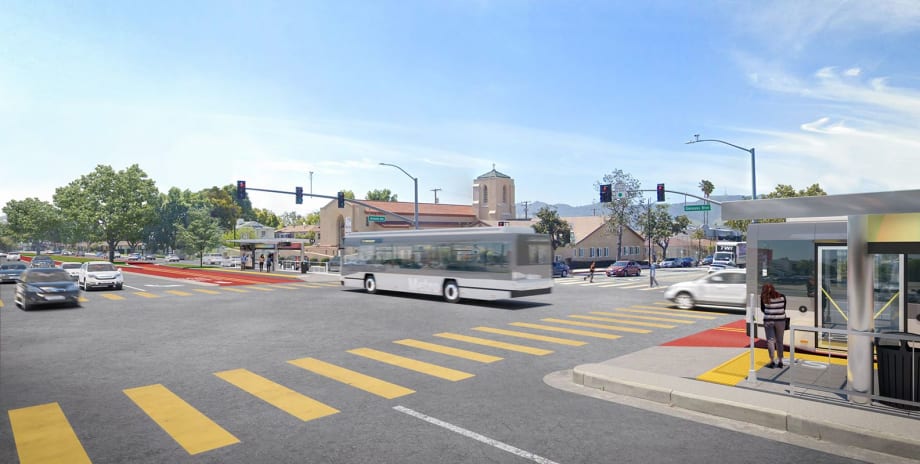
L.A. Metro's new BRT is expected to result in travel time savings of 34% to 44% over existing transit services.
Photo: HDR
The Los Angeles County Metropolitan Transportation Authority (Metro) selected
to provide the final design of the North Hollywood to Pasadena bus rapid transit (BRT) corridor project.
The BRT project will provide faster and more reliable service to meet the corridor’s growth by linking Los Angeles, Burbank, Glendale, and Pasadena.
Key destinations include the North Hollywood Arts District, Burbank Media District, Downtown Burbank, Glendale Galleria, Americana at Brand, Eagle Rock Plaza, Old Pasadena, and Pasadena City College.
Benefits of Metro’s New BRT Corridor
The new BRT is expected to result in travel time savings of 34% to 44% over existing transit services.
The corridor includes 22 new stations over its 19 miles, and buses will use dedicated lanes on most of the route. New charging equipment at each end of the line will serve the system’s electric buses.
“The
will significantly reduce travel times for riders on this corridor, improving access to jobs, healthcare and more,” said HDR Principal Engineer Mark Christoffels, who is leading the firm’s work. “It’s great to work on projects that make such a tangible contribution to people’s everyday lives.”
HDR’s Work
HDR will provide a variety of design services, including civil and roadway, station, traffic, and more.
The project is being delivered via the construction manager/general contractor approach. Working with the contractors, HDR has dedicated teams to each jurisdiction to accelerate progress in each section and avoid unnecessary delays.
“Designing a multi-jurisdictional corridor isn’t something every team can take on, and I’m proud that HDR was chosen for this complex project,” said HDR Global Transit Director Matt Tucker. “This BRT will provide better transit options to busy neighborhoods in need of improved mobility options, and I’m looking forward to seeing the new service in operation a few years from now.”
Construction on the corridor is expected to begin in 2025, with revenue service scheduled for 2027.
More Bus

New York MTA Plans Largest Bus Fleet Upgrade in More Than a Decade
The agency is seeking manufacturers for 650 new CNG buses to replace aging vehicles, improve reliability, and advance its broader fleet modernization strategy.
Read More →
Building a Flexible Path to Transit Electrification
John Hroncich discusses BAE Systems’ modular and scalable approach, lessons learned from decades of real-world operations, and how agencies can identify electrification strategies that fit their fleets.
Read More →
Bus Tech Talk: Keeping Transit Technicians Ahead of the Technology Curve
LA Metro’s Obed Mejia discusses technician training, evolving maintenance technology, fleet replacement, and strategies for getting the most out of today’s transit fleets.
Read More →
Biz Briefs: RIPTA Unveils New Frontrunners, Clevland RTA Adds New Siemens, and More
In METRO's latest installment, we take a look at recent news from Siemens, Prevost, Dodge, and more partnerships making headlines across the transportation sector.
Read More →
People Movement: Holly Arnold Joins Transdev and More
In this edition, we also cover recent appointments and announcements at Pace, CamTran, MCI, and more, showcasing the individuals helping to shape the future of transportation.
Read More →
The High Cost of Transit Buses: Industry Leaders Look to Procurement Reform
Transit leaders and policymakers examine how standardized bus designs, streamlined procurement, and predictable funding could help agencies stretch budgets and deliver better service.
Read More →
The Business Voice Behind Public Transportation
As chair of APTA’s Business Members Board of Governors, Ray Melleady explains how more than 850 business members are partnering with transit agencies to advance funding, innovation, and industry-wide collaboration.
Read More →
From Surviving to Thriving: Building Stronger Transportation Organizations
Bus Business Consultants founder Brian Dickson shares lessons on leadership, organizational health, and creating options for long-term success in a changing transportation industry.
Read More →
Finding the ‘Happy Medium’: Optimizing Maintenance Without Sacrificing Reliability
The key to maintenance optimization isn’t doing less work—it’s doing the right work at the right time on the right assets.
Read More →
LA Metro, City of West Hollywood, and Partners Advance Smarter Bus Lane Enforcement
The award-winning partnership combines AI-powered detection with human oversight to improve bus reliability, accessibility, and enforcement efficiency.
Read More →