



Houston Metro light rail construction gets approval
The cost of the work, estimated at $12.5 million, was approved by the Metro board in December 2010 as an addition to the fiscal year 2011 MetroRail expansion budget.

Houston Metro received formal notification from the Federal Transit Administration (FTA) that critical new construction work can begin on the North and Southeast rail lines.
The notification, in the form of "Letters of No Prejudice," also means that Metro can expect to receive federal reimbursement for about half the cost. The anticipated letters were received on Dec. 28, 2010, and contractors have already begun work.
Construction activity for the North Line includes the start of communications duct banks, concrete pavement, sidewalks and asphalt paving on Fulton Street from Cavalcade to IH - 610, and from Boundary to Collingsworth. In addition, construction can begin on the new bridge over the Union Pacific Railroad and the retrofit of the Main Street Bridge at the University of Houston-Downtown.
Work on the Southeast Line includes the start of communications duct banks, concrete pavement, sidewalks and asphalt paving on Martin Luther King Jr. Blvd from Winnetka to just north of Griggs Road and on Scott Street from Polk to Coyle.
Also as part of the North Line project, new construction activity will occur at Metro's Rail Operations Center at Fannin South, including installation of tracks for rail vehicles in the maintenance yard, construction of an expanded parking lot for maintenance vehicles and expansion of the building.
The cost of the work, estimated at $12.5 million, was approved by the Metro board in December 2010 as an addition to the fiscal year 2011 MetroRail expansion budget.
More Rail

Stadler, CapMetro Sign Long-Term Rail Fleet Support Agreement
Beginning in 2027, Stadler will provide on-site technical expertise, spare parts support, training, and obsolescence management to help extend the reliability and longevity of CapMetro’s GTW fleet.
Read More →
Biz Briefs: Alstom Lands Canadian Contract, LYT to Supply California TSP, and More
In METRO's latest installment, we take a look at recent news from Complete Coach Works, Beep, FlixBus, and more partnerships making headlines across the transportation sector.
Read More →
CATS Gold Line Marks 5 Years of Service, 2.8M Passenger Trips
With a six-mile expansion planned, the Charlotte streetcar is positioned to connect more neighborhoods and major transit hubs across the region.
Read More →
Why Simulating Pedestrian Movement Has Become Essential for Modern Rail Stations
Pedestrian microsimulation is helping rail planners identify bottlenecks, test station designs, and prepare complex transit hubs for growing passenger volumes.
Read More →
Amtrak Begins Major Construction at New York’s Sunnyside Yard
The new maintenance facility will support Amtrak’s Airo trainsets while improving maintenance efficiency and turnaround times in New York.
Read More →
Chicago Leaders Unveil Plans for O’Hare Airport Express Train
The privately developed project would offer a 15-minute trip between downtown and O’Hare’s Terminal 2, with trains operating every 15 minutes on a dedicated track. The service would use battery-electric trains and three existing freight rail rights-of-way.
Read More →
OCTA Maps Out 30-Year Strategy to Protect Coastal Rail Corridor
The draft feasibility report identifies strategies to protect the coastal rail line for decades as the agency continues near-term stabilization and sand placement efforts.
Read More →
The Business Voice Behind Public Transportation
As chair of APTA’s Business Members Board of Governors, Ray Melleady explains how more than 850 business members are partnering with transit agencies to advance funding, innovation, and industry-wide collaboration.
Read More →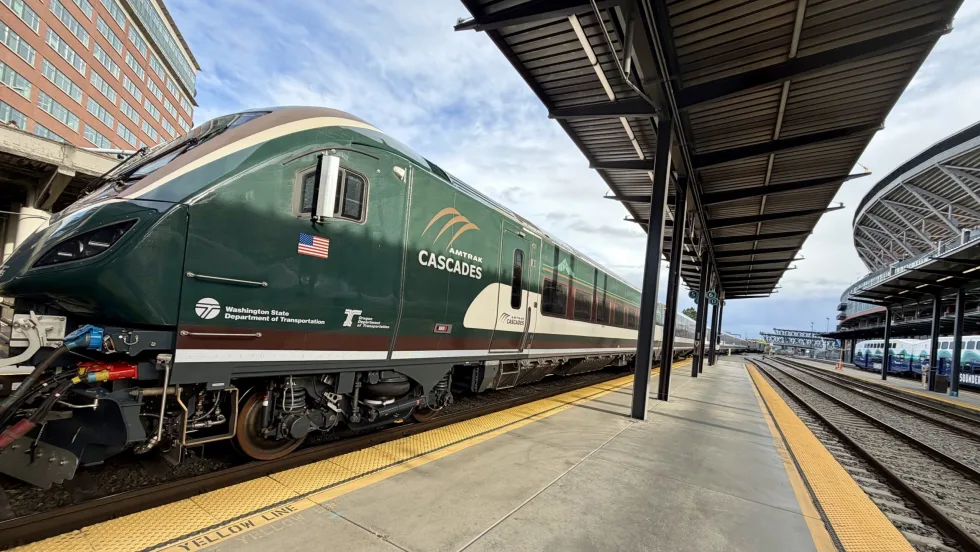
FRA Announces $5.3B in Rail Investments, Including $2B for Amtrak
Funding will support grade-crossing improvements, infrastructure upgrades, and new Amtrak equipment in 23 states.
Read More →
Finding the ‘Happy Medium’: Optimizing Maintenance Without Sacrificing Reliability
The key to maintenance optimization isn’t doing less work—it’s doing the right work at the right time on the right assets.
Read More →