



RELATED: Ride-hailing services impacting public transit ridership
Income affects bus ridership in bad weather, study finds
Findings may help midsized communities consider how they might need to adjust their bus services in the face of climate forecasts.
by By Jim Barlow, University of Oregon
May 14, 2019
Temperature extremes and heavy rain reduce weekday bus ridership in Lane County, Oregon, except in low-income neighborhoods, according to a University of Oregon study.
University of Oregon
3 min to read
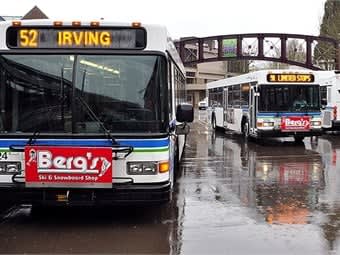
Temperature extremes and heavy rain reduce weekday bus ridership in Lane County, Oregon, except in low-income neighborhoods, according to a University of Oregon study.
University of Oregon
Temperature extremes and heavy rain reduce weekday bus ridership in Lane County, Oregon, except in low-income neighborhoods where residents have few alternatives for transportation, according to a University of Oregon study.
When broken down, subtleties in the findings may help midsized communities consider how they might need to adjust their bus services in the face of climate forecasts that call for an increase in extreme weather events, said Nicole Ngo, a professor in the UO’s School of Planning, Public Policy and Management.
“I think this study is a starting point, especially with the income effects that we found,” Ngo said. “In Eugene, university students get easy access to bus service, but other people without access to private vehicles rely on bus service. It is especially important on days of heavy precipitation, especially in Eugene when bike paths are flooded and riding is dangerous.”
The study looked at Lane Transit District data from some 32 million observations, based on automatic passenger counters, at more than 1,300 bus stops in 2012-17. It was a stable period in which major adjustments did not affect the LTD’s 62 routes. The dataset, Ngo said, allowed her to make associations based on the locations of bus stops in different income areas.
Because of the region’s temperate climate, Ngo focused on days in which temperatures fell below 50 degrees or rose above 85 degrees. Rainfall was considered heavy if more than one-half inch fell in a day. Because major snow events are rare, they were not analyzed in the study.
On cold weekdays, bus ridership decreased by 5.7%, while on cold weekends the overall dip was less than 1%. On hot weekdays, overall ridership fell 2.2%; on weekends, hot-weather reduced ridership felll by 1.1%. Income factors made for differences.
“I wanted to explore the effect of extreme weather on ridership, and how where you live, in respect to income, influences the relationship,” Ngo said. “I did find that bus ridership is more sensitive to bad weather in low-income areas than in neighborhoods of higher-income.”
For the study, ridership in neighborhoods in which households earned below $50,000 were compared to those with incomes over $75,000. Ridership in low-income neighborhoods rose by 2.7% on days of heavy rain but dipped by 1.6% on hot days.
The study — published online in the journal Transportation Research Part D: Transport and Environment — also found that weekend bus ridership rose during days of heavy rainfall, suggesting that leisure-time pursuits give residents more flexibility in their schedules.
“In a mid-sized city like Eugene, buses don’t operate as frequently as they do in large cities,” Ngo said. “There can be 30 minutes to an hour of waiting for a bus. It could be that heavy rain or icy conditions discourage people from traveling. They don’t want to wait for a bus in those conditions.”
Bus stops in commercial districts and near municipal parks were busier on days of heavy rain, the study found. Because both leisure and business uses are likely in play, the study noted, understanding travel purposes around commercial zones or parks could have meaningful economic and recreational implications.
In a literature review, Ngo found that most studies on bus ridership have looked at large metropolitan areas where buses often run more frequently. Such ridership data for midsized cities has been overlooked, she said.
The study suggests that as climate changes take hold, midsized communities may need to monitor ridership to see if they may need to adjust the frequency of bus service in some areas. More research is needed, she added, to be able to compare her local findings with other comparably sized cities, especially those that don’t have a major university where students’ access can affect ridership numbers.
“As heat waves and days of heavy precipitation are expected to increase in the Pacific Northwest, these changes in bus ridership could have meaningful implications for transit agencies,” Ngo wrote in her conclusion.
More Bus

New York MTA Plans Largest Bus Fleet Upgrade in More Than a Decade
The agency is seeking manufacturers for 650 new CNG buses to replace aging vehicles, improve reliability, and advance its broader fleet modernization strategy.
Read More →
Building a Flexible Path to Transit Electrification
John Hroncich discusses BAE Systems’ modular and scalable approach, lessons learned from decades of real-world operations, and how agencies can identify electrification strategies that fit their fleets.
Read More →
Bus Tech Talk: Keeping Transit Technicians Ahead of the Technology Curve
LA Metro’s Obed Mejia discusses technician training, evolving maintenance technology, fleet replacement, and strategies for getting the most out of today’s transit fleets.
Read More →
Biz Briefs: RIPTA Unveils New Frontrunners, Clevland RTA Adds New Siemens, and More
In METRO's latest installment, we take a look at recent news from Siemens, Prevost, Dodge, and more partnerships making headlines across the transportation sector.
Read More →
People Movement: Holly Arnold Joins Transdev and More
In this edition, we also cover recent appointments and announcements at Pace, CamTran, MCI, and more, showcasing the individuals helping to shape the future of transportation.
Read More →
The High Cost of Transit Buses: Industry Leaders Look to Procurement Reform
Transit leaders and policymakers examine how standardized bus designs, streamlined procurement, and predictable funding could help agencies stretch budgets and deliver better service.
Read More →
The Business Voice Behind Public Transportation
As chair of APTA’s Business Members Board of Governors, Ray Melleady explains how more than 850 business members are partnering with transit agencies to advance funding, innovation, and industry-wide collaboration.
Read More →
From Surviving to Thriving: Building Stronger Transportation Organizations
Bus Business Consultants founder Brian Dickson shares lessons on leadership, organizational health, and creating options for long-term success in a changing transportation industry.
Read More →
Finding the ‘Happy Medium’: Optimizing Maintenance Without Sacrificing Reliability
The key to maintenance optimization isn’t doing less work—it’s doing the right work at the right time on the right assets.
Read More →
LA Metro, City of West Hollywood, and Partners Advance Smarter Bus Lane Enforcement
The award-winning partnership combines AI-powered detection with human oversight to improve bus reliability, accessibility, and enforcement efficiency.
Read More →