



Investments in Modern Transit Options May Yield $7.6B in Health Benefits
The benefits would be a result of increased investments in infrastructure to promote walking and bicycling across the Northeast and Mid-Atlantic region.
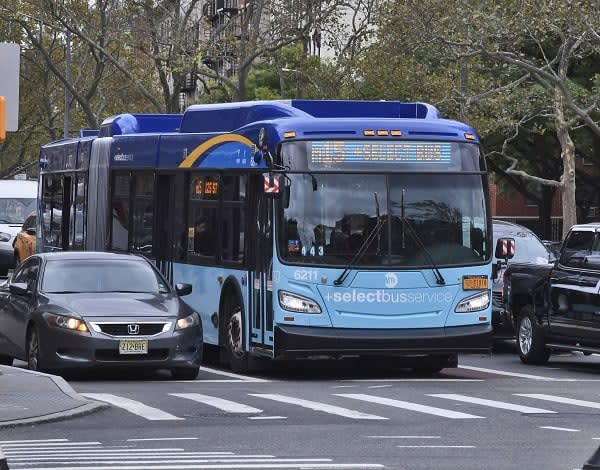
The potential health benefits from investments in biking and walking infrastructure could expand beyond reducing air pollution and tackling climate change.
Marc A. Hermann
Investments in infrastructure to promote bicycling and walking under the proposed Transportation and Climate Initiative (TCI) could mean major health benefits and savings for residents across the Northeast and Mid-Atlantic region, according to a new study conducted by Boston University School of Public Health (BUSPH) and Harvard T.H. Chan School of Public Health.
Published in the Journal of Urban Health, the analysis shows that the monetary benefit of lives saved from increased walking and cycling exceed the estimated annual investment for such infrastructure, without considering the added benefits of reducing air pollution and tackling climate change.
“Our study suggests that if all the states joined TCI and collectively invested at least $100 million in active mobility infrastructure and public transit, the program could save hundreds of lives per year from increased physical activity,” says study lead author Matthew Raifman, a doctoral student in environmental health at BUSPH. “These benefits are larger than the estimated air quality and climate benefits for the TCI scenarios, highlighting the importance of leveraging investments in sustainable active mobility to improve health.”
The TCI program, a partnership of 12 states and the District of Columbia currently under development, would implement a cap-and-invest program to reduce transportation sector emissions across the Northeast and Mid-Atlantic region, including investment in cycling and pedestrian infrastructure as well as other sustainable transportation strategies like electric vehicle charging and public transit.
Raifman and colleagues used an investment scenario model and the World Health Organization (WHO) Health Economic Assessment Tool methodology to estimate how many lives would be saved in each of the 378 counties in the Northeast and Mid-Atlantic regions due to increased physical activity (walking/running and cycling) and accounting for the potential for changes in traffic fatalities.
The team analyzed nine scenarios that differed in their greenhouse gas emission caps as well as how the proceeds from the program would be invested across a range of transportation options. The scenario with the largest health benefits assumed a 25% reduction in greenhouse gas emissions, and investment of $632 million of the proceeds in cycling and pedestrian infrastructure across the 12 states and D.C. The researchers estimated that this scenario could save 770 lives regionwide due to reduced cardiovascular mortality, accounting for changes in pedestrian accident fatality rates. Meanwhile, the monetary value of the reduced health risk would be $7.6 billion per year.
Health benefits across the other scenarios that were analyzed roughly scaled with the degree of investment in pedestrian and cycling infrastructure. The states with the largest estimated health benefits from active mobility under all policy scenarios are the populous states of New York, New Jersey, Pennsylvania, and Maryland.
The study is part of the Transportation, Equity, Climate and Health (TRECH) Project, a multi-university research initiative independently analyzing TCI and other policy scenarios. The TRECH Project is made possible in part by a grant from the Barr Foundation to the Center for Climate, Health, and the Global Environment at the Harvard T.H. Chan School of Public Health (Harvard Chan C-CHANGE).
More Management

METRO Opens Submissions for 2026 Motorcoach Awards
Nominations are now being accepted for METRO Magazine’s Operator of the Year and Innovative Operator of the Year awards.
Read More →
New York MTA Advances Final Contract for Second Avenue Subway Expansion
Contract Four is the largest in the Second Avenue Subway Phase 2 project and includes construction of station infrastructure, tracks, and signals for the subway expansion, MTA officials said. Work on Contract Four will begin in 2027.
Read More →
Transit Agencies Highlight Safety Gains at National Summit
Leaders from 15 major transit systems shared crime-reduction results and safety initiatives while discussing the role of continued federal support.
Read More →

NITA Names New Leadership, Expands Reduced-Fare Program at First Board Meeting
The new regional transit authority appointed its first board chair and interim executive director while extending reduced fares across CTA, Metra, and Pace for eligible riders.
Read More →
Beyond the Checklist: A Structured Approach to Transit Maintenance
Reliability-Centered Maintenance helps transit agencies move beyond routine checklists to focus limited resources on the assets and failures that have the greatest impact on safety, reliability, and service.
Read More →
APTA 2026 Nominating Committee Selects Leadership Slate, Names Chair and Vice Chair Nominees
Leadership changes will help shape the association’s priorities and its representation of the transportation industry during the 2026–2027 term.
Read More →
DART Launches Major Security, Fare Enforcement Initiative
The 90-day demonstration will deploy coordinated security teams at five light rail stations while testing controlled access and gathering data to guide future investments.
Read More →
Advancing Fare Collection Through Technology and Innovation
Learn about delivering 1300 gates at 91 stations while managing fare evasion. Explore the large scale deployment, solution customization and real-world results that affect the region. Prepare for deployment in your region now.
Read More →
Game Day in Motion: Moving Millions During the 2026 World Cup
Between packed transit stations and team motorcoaches, see how agencies and operators across North America tackled the transportation demands of the 2026 FIFA World Cup.
Read More →
Surface Transportation Extension Averts Shutdown, Leaves Transit Funding Gap
The stopgap keeps federal transportation programs moving, but missing advance funding could complicate the transit and rail projects agencies are planning next.
Read More →