



L.A. Metro advances two rail projects
The $4.2B Westside Subway Extension would extend the system to Beverly Hills, Century City and Westwood, a congested and jobs-rich region of Los Angeles. The $1.32B Regional Connector would tie together all light rail lines in downtown L.A., providing major regional north/south and east/west rail line linkages.

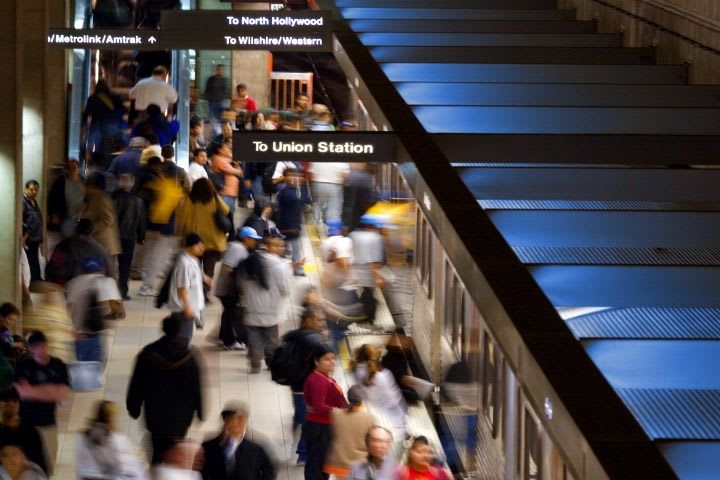
The Westside Subway Extension, a $4.2 billion project, would extend Los Angeles’ subway system to Beverly Hills, Century City and Westwood, a congested and jobs-rich region of Los Angeles that has waited several decades for rail service. Photo courtesy of Metro ©2010 LACMTA
[IMAGE]L-A-Metro-subway-full-2.jpg[/IMAGE]The Los Angeles County Metropolitan Transportation Authority (Metro) Board of Directors approved the environmental drafts for the Westside Subway Extension and Regional Connector projects, clearing the way for both projects to enter final environmental review and preliminary engineering.
In approving the environmental drafts, the board also approved Metro staff recommendations for the Locally Preferred Alternatives (LPA) — the routes the projects would take through their respective project areas.
In the Final EIS/R phase, agency planners will further analyze environmental issues for route and station options that were carried forward from the draft. At the end of the approximately one-year final environmental review process, the Metro board will decide the project that will ultimately be built utilizing local Measure R transportation sales tax monies. Metro is also currently seeking matching funds through the federal New Starts Program for these projects.
Both projects are expected to fill two major gaps in the Los Angeles area rail system, providing faster, more reliable travel times for transit commuters while increasing project trips throughout the Metro Rail system.
The Westside Subway Extension, a $4.2 billion project (in 2009 dollars), would extend Los Angeles’ subway system to Beverly Hills, Century City and Westwood, a congested and jobs-rich region of Los Angeles that has waited several decades for rail service. A one-way trip between Downtown L.A. and Westwood is forecast to take only 25 minutes.
[IMAGE]L-A-Westside-Subway-map-full-2.jpg[/IMAGE]
By 2035, the project is estimated to generate nearly 53,000 boardings at new stations along the alignment. The number of transit trips increases to nearly 81,000 when new station boardings are combined with riders who board the new line from elsewhere on the Metro Rail system. Construction could begin in 2013, with completion of the subway to the Westwood area by 2022 if Metro is successful in securing advance federal funding.
The Regional Connector, a $1.32 billion project (in 2009 dollars), would tie together all light rail lines in downtown L.A., providing major regional north/south and east/west rail line linkages that would give transit commuters a one-seat, one-ticket ride and significant travel time savings not available today. The connection itself will save approximately 20 minutes of time by eliminating line transfers through Downtown.
The project is estimated to provide access to 90,000 passengers daily, including 17,000 new transit riders by 2035. Construction could begin in 2014 and be completed by 2019, again depending on leveraging Measure R funding with federal dollars.
For additional reporting, click here.
More Bus

New York MTA Plans Largest Bus Fleet Upgrade in More Than a Decade
The agency is seeking manufacturers for 650 new CNG buses to replace aging vehicles, improve reliability, and advance its broader fleet modernization strategy.
Read More →
Building a Flexible Path to Transit Electrification
John Hroncich discusses BAE Systems’ modular and scalable approach, lessons learned from decades of real-world operations, and how agencies can identify electrification strategies that fit their fleets.
Read More →
Bus Tech Talk: Keeping Transit Technicians Ahead of the Technology Curve
LA Metro’s Obed Mejia discusses technician training, evolving maintenance technology, fleet replacement, and strategies for getting the most out of today’s transit fleets.
Read More →
Biz Briefs: RIPTA Unveils New Frontrunners, Clevland RTA Adds New Siemens, and More
In METRO's latest installment, we take a look at recent news from Siemens, Prevost, Dodge, and more partnerships making headlines across the transportation sector.
Read More →
People Movement: Holly Arnold Joins Transdev and More
In this edition, we also cover recent appointments and announcements at Pace, CamTran, MCI, and more, showcasing the individuals helping to shape the future of transportation.
Read More →
The High Cost of Transit Buses: Industry Leaders Look to Procurement Reform
Transit leaders and policymakers examine how standardized bus designs, streamlined procurement, and predictable funding could help agencies stretch budgets and deliver better service.
Read More →
The Business Voice Behind Public Transportation
As chair of APTA’s Business Members Board of Governors, Ray Melleady explains how more than 850 business members are partnering with transit agencies to advance funding, innovation, and industry-wide collaboration.
Read More →
From Surviving to Thriving: Building Stronger Transportation Organizations
Bus Business Consultants founder Brian Dickson shares lessons on leadership, organizational health, and creating options for long-term success in a changing transportation industry.
Read More →
Finding the ‘Happy Medium’: Optimizing Maintenance Without Sacrificing Reliability
The key to maintenance optimization isn’t doing less work—it’s doing the right work at the right time on the right assets.
Read More →
LA Metro, City of West Hollywood, and Partners Advance Smarter Bus Lane Enforcement
The award-winning partnership combines AI-powered detection with human oversight to improve bus reliability, accessibility, and enforcement efficiency.
Read More →