



LA Metro Launches New Microtransit Service, NextGen Bus Plan
The technology behind this service will allow riders to plan entire trips — both Metro Micro and their bus or train ride — in real-time using a single mobile app, internet browser, or Metro’s call center.
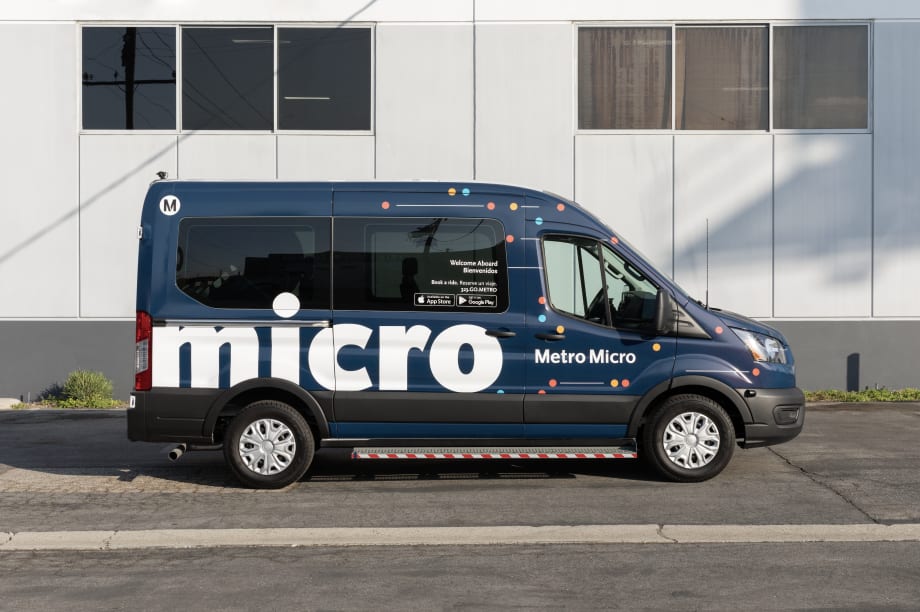
Metro Micro is an on-demand shared ride service using vans for short trips within designated service zones in Los Angeles County.
LA Metro
The Los Angeles County Metropolitan Transportation Authority (Metro) introduced the first phase of its NextGen Bus Plan and its innovative Metro Micro project on Sunday.
NextGen represents the first major overhaul of Metro’s bus network in more than 25 years and is designed to speed up bus trips, provide more frequent trips to the bulk of Metro’s riders, and improve reliability and accessibility.
Metro Micro is an on-demand shared ride service using vans for short trips within designated service zones in Los Angeles County. The technology behind this service will allow riders to plan entire trips — both Metro Micro and their bus or train ride — in real-time using a single mobile app, internet browser, or Metro’s call center. Riders will be able to pay for the service by using their TAP card and TAP account or with a debit, credit, or prepaid credit card.
Rides will cost an introductory rate of $1 per ride (transfer not included) for the first six months of Metro Micro service in each zone. Metro staff will return to the board at the end of the six-month introductory period to consider potential fare adjustments.
In February, the Metro Board approved awarding a $29-million contract to private ridesharing company RideCo Inc. to partner with Metro to operate Metro Micro. The three-year pilot project is designed to replace short, solo trips by offering a flexible, on-demand service operated by Metro employees in vehicles that hold up to 10 passengers.
Like other pilot projects, Metro Micro staff will be continually adjusting this service based on demand and real-time results from data collected during its operation.
As part of the agency’s NextGen Bus Plan to improve bus frequencies and better serve riders, bus trips are being added to many Metro Bus lines to improve the frequency of service and provide more room for riders to practice social distancing whenever possible. Metro always requires riders to wear a face covering.
Other bus routes are being modified with route changes to speed up trips and a few lines with low ridership are being discontinued. Riders can use this online tool to check their bus line for any changes. Also, the Transit app for smartphones — Metro's official app — will show changes.
When the NextGen Bus Plan is fully implemented in December 2021, there will be more frequent, all-day bus service on more routes, shorter wait times for buses and more reliable service. Even during the ongoing COVID-19 pandemic, the NextGen network and its focus on improving the frequency of service will better serve bus riders.
"This pandemic has shown how critical it is that LA Metro help people travel to essential jobs and tasks," said Metro CEO Phillip A. Washington. "Metro Micro will give people in these zones a new, convenient way to get around while still meeting our goals of reducing traffic by using shared rides. And NextGen will give people throughout Los Angeles County a faster, more reliable bus system that will continue to improve and evolve as we recover from the pandemic."
More New Mobility

From Hardware to Digital Partner: Luminator Charts Its Next Chapter
CEO Magnus Friberg discusses Luminator’s shift toward becoming a digital partner, the growing importance of software and interoperability, and how AI can help agencies improve operations and passenger experience.
Read More →
Biz Briefs: Alstom Lands Canadian Contract, LYT to Supply California TSP, and More
In METRO's latest installment, we take a look at recent news from Complete Coach Works, Beep, FlixBus, and more partnerships making headlines across the transportation sector.
Read More →
CharterUP’s Armir Harris on Technology, AI, and the Future of Group Mobility
In a recent episode of METROspectives, CharterUP Founder/CEO Armir Harris discussed the company’s evolution from an online charter bus marketplace into a technology platform supporting public- and private-sector mobility and much more.
Read More →
Jacksonville’s NAVI Project Charts a New Course for Autonomous Public Transportation
Through its NAVI program, JTA is showing how autonomous vehicles, intelligent infrastructure, and coordinated operations can work together to deliver everyday public transportation.
Read More →
Biz Briefs: Luminator Marks Milestone and More
From manufacturers and suppliers to transit agencies and motorcoach operators, these updates offer a snapshot of the projects, partnerships and business moves driving the industry forward.
Read More →
New Tricks for Old Bureaucracies: Joshua Schank on Making Transit Innovation Stick
Former LA Metro Chief Innovation Officer Joshua Schank discusses why good ideas aren't enough, how transit agencies can overcome resistance to change, and why today's challenges demand more innovation.
Read More →
How DART's GoPass Is Redefining Regional Mobility
Serving 14 transit agencies, GoPass simplifies multimodal travel by allowing riders to plan, pay for, and manage an entire trip through one app.
Read More →
Biz Briefs: OCTA Taps Clean Energy for Hydrogen Station, Stadler to Supply Via Rail Vehicles, and More
From manufacturers and suppliers to transit agencies and motorcoach operators, these updates offer a snapshot of the projects, partnerships and business moves driving the industry forward.
Read More →CharterUP Expands Into New Mobility and Autonomous Transportation
Vice President of New Mobility Stephen Joos discusses how CharterUP is leveraging its nationwide transportation network, technology platform, and autonomous vehicle partnerships to expand into workforce mobility, campus shuttles, and transit solutions.
Read More →
METRO Magazine Announces 2026 Innovative Solutions Awards Winners
Projects Recognized for Advancing Mobility Through Technology, Accessibility, Workforce Innovation, and Operational Excellence
Read More →