




Keep Reading: WeGo Journey Pass Enrollment Reached 10,000 in April
LA Metro Reports 57% Decline in Homelessness on Transit System Since 2024
The agency's latest homelessness count offers new data on how care-based services and cross-sector partnerships can complement traditional transit security strategies.
August 4, 2026
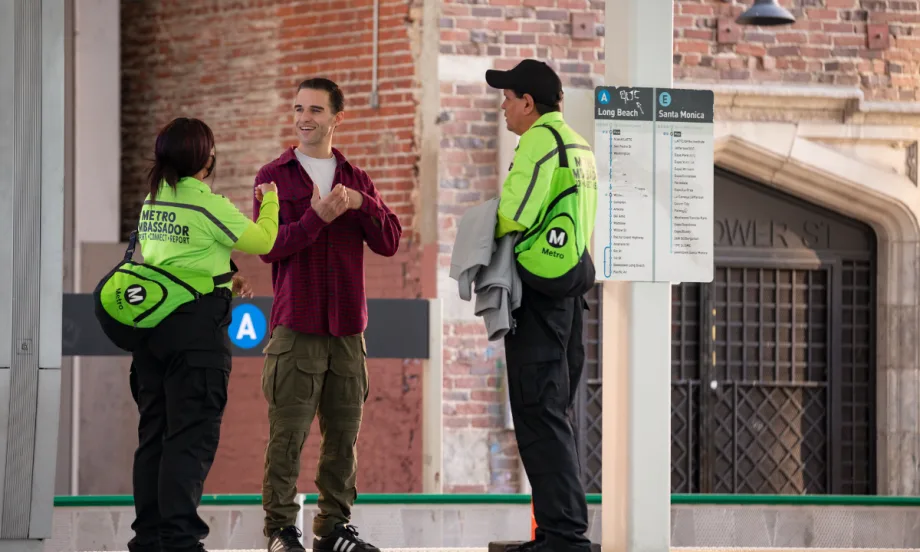
Los Angeles Metro Ambassadors engage with riders as part of the agency's care-based public safety strategy, which pairs rider assistance and outreach with security and law enforcement.
Credit:
Los Angeles Metro
3 min to read
- LA Metro reports a significant 57% reduction in homelessness on its transit system since 2024, and a reduction of 31% since 2025.
- The recent homelessness count highlights the effective role of care-based services in achieving this decline.
- Cross-sector partnerships are shown to effectively complement traditional transit security strategies.
*Summarized by AI
Los Angeles Metro recently announced that the number of people experiencing homelessness across its transit system has fallen 57% since 2024, attributing the improvement to an integrated public safety strategy that combines care-based services with law enforcement, security, and partnerships with local housing and social service agencies.
According to LA Metro's 2026 point-in-time count, an estimated 395 to 517 people were experiencing homelessness on the system, down from 631 to 684 in 2025 and 1,041 to 1,092 in 2024. The latest count also represents a 31% year-over-year decline from 2025. The agency reports the results as a range to account for statistical margins of error.
The findings reinforce a strategy that many transit agencies are beginning to explore. That is, pairing traditional security and law enforcement with dedicated care-based teams focused on outreach, crisis intervention, and connections to housing and behavioral health services.
In early 2026, LA Metro formally launched its Care-Based Services Division, consolidating its Metro Ambassadors, Homeless Outreach Management and Engagement (HOME) program, and Community Intervention Specialists within the Department of Public Safety.
The goal of this division is to improve coordination between care-based personnel and security staff while ensuring individuals experiencing homelessness are connected to appropriate services rather than relying solely on enforcement responses.
"This continued decline reflects the dedication of Metro employees and our many partners who work every day to address homelessness with compassion, accountability and coordination," LA Metro CEO Stephanie Wiggins said in a statement. "Creating the Care-Based Services Division reinforced our belief that public safety is strongest when care-based services and enforcement work together."
Are Care-Based Services Becoming a Key Part of Transit Safety?
The agency said its outreach efforts are supported through partnerships with the Los Angeles County Department of Homeless Services & Housing, the City and County of Los Angeles, and community-based organizations that provide outreach, interim housing, permanent housing placement, and supportive services. During fiscal year 2026, outreach teams connected 354 individuals to permanent housing.
Since this public safety strategy began to be implemented over the past two years, LA Metro reported a decline in violent crime and societal crimes in February, alongside improvements in customer satisfaction, crediting its layered approach of ambassadors, security personnel, law enforcement, fare enforcement, and care-based services.
The latest numbers in care-based services also align with a broader industry adoption that we examined earlier this year. In June, we interviewed transit leaders from Los Angeles Metro, Charlotte Area Transit System (CATS) in North Carolina, and WeGo Transit in Tennessee, who described moving beyond enforcement-only approaches by creating specialized teams focused on behavioral health, homelessness, and customer assistance.
Rather than replacing law enforcement, agencies said care-based programs allow the "right response" for non-criminal situations while helping improve rider confidence and operational efficiency.
LA Metro's point-in-time count was conducted January 20, 2026, as part of the Greater Los Angeles Homeless Count led by the Los Angeles Homeless Services Authority (LAHSA). Sixty-two volunteers, including LA Metro employees, outreach workers, and riders, surveyed the rail and busway system using the same methodology employed in the countywide count and aligned with U.S. Department of Housing and Urban Development standards.
While the agency's transit-specific results are not included in LAHSA's regional homelessness totals, the agency says they provide an important measure of conditions across the transit network.
More Security and Safety

Transit Agencies Highlight Safety Gains at National Summit
Leaders from 15 major transit systems shared crime-reduction results and safety initiatives while discussing the role of continued federal support.
Read More →
DART Launches Major Security, Fare Enforcement Initiative
The 90-day demonstration will deploy coordinated security teams at five light rail stations while testing controlled access and gathering data to guide future investments.
Read More →
RTD Launches NextRide App to Consolidate Trip Planning, Fares, Security Reporting
The app expands on RTD’s existing NextRide web application and allows customers to view real-time vehicle locations and service alerts, purchase and store digital fares, and access customer support.
Read More →

TAPTCO Updates OSHA Compliance Training for Transit Maintenance Operations
The revamped program addresses 26 OSHA standards for maintenance facilities, with TAPTCO pointing to training, documentation, and everyday shop hazards as continuing challenges for transit operations.
Read More →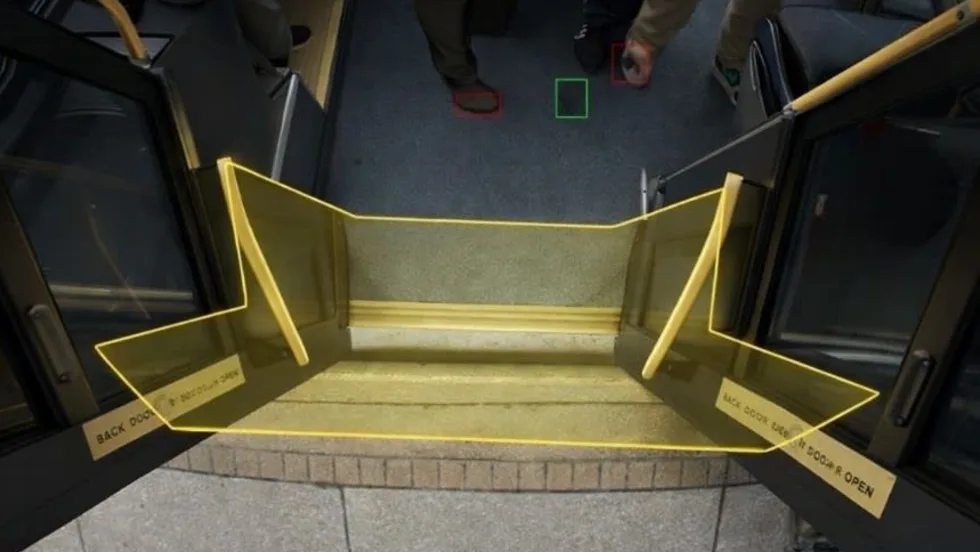
Sponsored•August 18, 2026
How VaporVision Adds Value to Transit Door Systems
Wabtec engineers explain how the system improves doorway detection, strengthens diagnostics and gives transit agencies and OEMs greater operating flexibility.
Read More →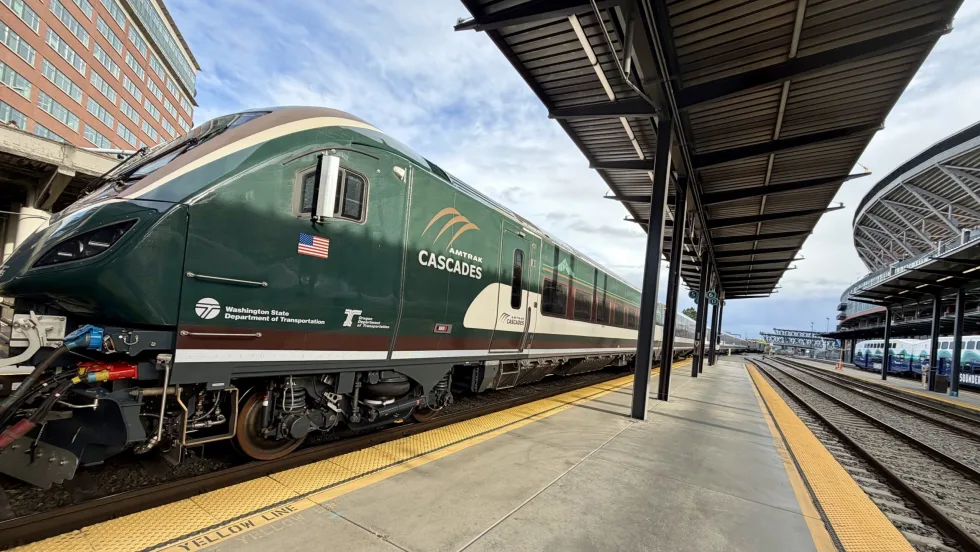
FRA Announces $5.3B in Rail Investments, Including $2B for Amtrak
Funding will support grade-crossing improvements, infrastructure upgrades, and new Amtrak equipment in 23 states.
Read More →
Chicago, Maryland Expand Non-Law-Enforcement Safety, Rider Support
The CTA and MTA are launching new programs aimed at de-escalation, crisis response, rider assistance, and greater transparency.
Read More →
LA Metro, City of West Hollywood, and Partners Advance Smarter Bus Lane Enforcement
The award-winning partnership combines AI-powered detection with human oversight to improve bus reliability, accessibility, and enforcement efficiency.
Read More →
FTA Launches 'Transit Moves America' Dashboard to Highlight Agency Safety and Performance
The online dashboard transforms National Transit Database information into a public-facing resource that allows users to compare transit agencies on key operational and safety metrics.
Read More →
LA Metro Marks Banner Year, Sets Ambitious Goals for New Fiscal Year
Incoming LA Metro Board Chair and Los Angeles Mayor Karen Bass joined outgoing Board Chair Fernando Dutra and LA Metro CEO Stephanie Wiggins to review accomplishments from fiscal year 2026, which included the opening of new rail extensions, advancement of major transit projects, expanded safety programs, and new rider amenities.
Read More →