



Marsella, former RTD Denver GM and FasTracks leader, dies
Clarence W. (Cal) Marsella led the creation of the multi-billion dollar FasTracks rapid transit expansion program of projects for metro Denver, died unexpectedly Saturday while visiting friends and family in Connecticut. He was 65.

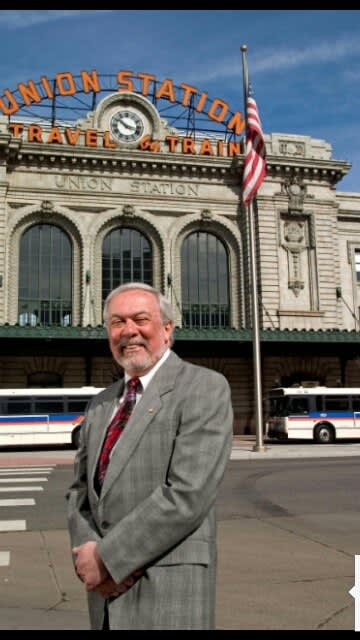
Courtesy RTD Denver
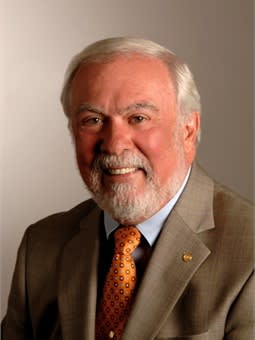
Cal Marsella. Courtesy RTD Denver
Clarence W. (Cal) Marsella, former GM/CEO of the Regional Transportation District and visionary who led the creation of the multi-billion dollar FasTracks rapid transit expansion program of projects for metro Denver, died unexpectedly Saturday while visiting friends and family in Connecticut.
"Cal leaves us with numerous legacies — the Denver Union Station redevelopment, FasTracks projects and other transit infrastructure that will benefit the entire Denver Metro area. I believe his greatest legacy is people — Cal touched the hearts and minds of many," said RTD Interim General Manager Dave Genova. " He was my mentor, advisor and good friend — he gave me opportunity and I am forever grateful. I will deeply miss him.”
Marsella was born on November 28, 1950 in Waterbury, Conn., the son of Clarence and Elizabeth (Serlise) Marsella. He grew up in Wolcott, Conn. and attended the University of Connecticut where he earned his Bachelor's and Master's degrees. Marsella served in the U.S. Army from July 1969 through July 1971, including a year in Vietnam. During his master's program at UConn, he earned a transportation internship which he turned into a position, working for the city of Hartford running the elderly transportation program.
Courtesy RTD Denver
In 1979 Marsella was recruited to Miami to run their contracted transit services. Following that, he had a small stint in the private sector. In 1995, Marsella was hired as the GM/CEO of the Denver Regional Transportation District, and he served in this capacity for 14 years, leaving the agency in 2009 to join a private sector transit firm.
Under Marsella’s leadership, RTD made numerous major accomplishments, including:
Securing RTD’s first federal Full Funding Grant Agreement for a light rail line with the $120 million FFGA for the Southwest Light Rail line that was signed by then-US Secretary of Transportation Federico Pena in 1996
Opening the Southwest Light Rail Line in 2000 on time and within budget
Securing in 2000 the $525 million federal Full Funding Grant Agreement for the Southeast Light Rail Line for the T-REX Project
Replacing the aging 16th Street Mall shuttle bus fleet beginning in 2000 with state-of-the-art hybrid electric low-floor buses built by a local firm
Purchasing Denver Union Station in 2001 in partnership with the City and County of Denver, the Denver Regional Council of Governments, and the Colorado Department of Transportation
Opening the C Line Light Rail Line in 2002 on time and within budget
RTD being named the Outstanding Public Transportation Agency in North America by the American Public Transportation Association (APTA) in 2003 and again in 2008.
Developing over a seven-year period the FasTracks comprehensive transit system for the metro region that was overwhelmingly approved by voters in 2004 that will build 122 miles of new light rail and commuter rail, build 21,000 additional parking spaces at transit park-n-Rides, add 18 miles of bus rapid transit service, and build 57 new transit stations
Opening the Southeast Light Rail Line (T-REX Project) on time and within budget in 2006
Receiving in January, 2009 the $308.9 million federal Full Funding Grant Agreement for the West Corridor Light Rail Line
In addition to these agency accomplishments, Marsella was selected by APTA as the Outstanding Public Transportation Manager in 2006, by the University of Colorado Real Estate Council as their 2006 Person of the Year, and by the Colorado Association of State Transportation Agencies as the Transportation Professional of the Year in 2000.
RTD Chair Tom Tobiassen said, “Cal provided a vision for the metro area’s transit improvements that will serve current and future generations in beneficial ways that we can now only begin to realize. His ability to help unite the region behind the FasTracks program of transit projects was remarkable and unique. I had the pleasure of speaking with Cal just a couple weeks ago, and once again got to share in his ever-present and contagious optimism. Cal’s positive impacts to the metro region will be felt for decades to come.”
In honor of the years that he spent serving the community and the transit industry, Marsella's family requests that donations can be made in his honor to the American Public Transportation Foundation at 1300 I Street, N.W., Suite 1200 East, Washington DC, 20005 or online at APTFD.org.
More Management

LIT Marks 10-Year Milestone at Annual Summit
Hosted by the COTA from September 10 to 13, the Summit carried the theme “Celebrating 10 Years of Excellence, Leadership, and Impact,” with every part of the program honoring the people, agencies, and partners who built LIT over its first decade.
Read More →
People Movement: Dan Dipert Coaches Adds Third-Generation Leader, Keolis Names New Valley Metro VP/GM, and More
In this edition, we also cover recent appointments and announcements at the Wabtec, SilverRide, HNTB, and more, showcasing the individuals helping to shape the future of transportation.
Read More →
METRO Opens Submissions for 2026 Motorcoach Awards
Nominations are now being accepted for METRO Magazine’s Operator of the Year and Innovative Operator of the Year awards.
Read More →

New York MTA Advances Final Contract for Second Avenue Subway Expansion
Contract Four is the largest in the Second Avenue Subway Phase 2 project and includes construction of station infrastructure, tracks, and signals for the subway expansion, MTA officials said. Work on Contract Four will begin in 2027.
Read More →
Transit Agencies Highlight Safety Gains at National Summit
Leaders from 15 major transit systems shared crime-reduction results and safety initiatives while discussing the role of continued federal support.
Read More →
NITA Names New Leadership, Expands Reduced-Fare Program at First Board Meeting
The new regional transit authority appointed its first board chair and interim executive director while extending reduced fares across CTA, Metra, and Pace for eligible riders.
Read More →
Beyond the Checklist: A Structured Approach to Transit Maintenance
Reliability-Centered Maintenance helps transit agencies move beyond routine checklists to focus limited resources on the assets and failures that have the greatest impact on safety, reliability, and service.
Read More →
APTA 2026 Nominating Committee Selects Leadership Slate, Names Chair and Vice Chair Nominees
Leadership changes will help shape the association’s priorities and its representation of the transportation industry during the 2026–2027 term.
Read More →
DART Launches Major Security, Fare Enforcement Initiative
The 90-day demonstration will deploy coordinated security teams at five light rail stations while testing controlled access and gathering data to guide future investments.
Read More →
Advancing Fare Collection Through Technology and Innovation
Learn about delivering 1300 gates at 91 stations while managing fare evasion. Explore the large scale deployment, solution customization and real-world results that affect the region. Prepare for deployment in your region now.
Read More →