



Metro-North announces sweeping series of safety reforms
The reforms address factors identified during several serious safety incidents over the last year, as well as issues identified by an in-depth FRA review of its operating practices that took place this past winter.

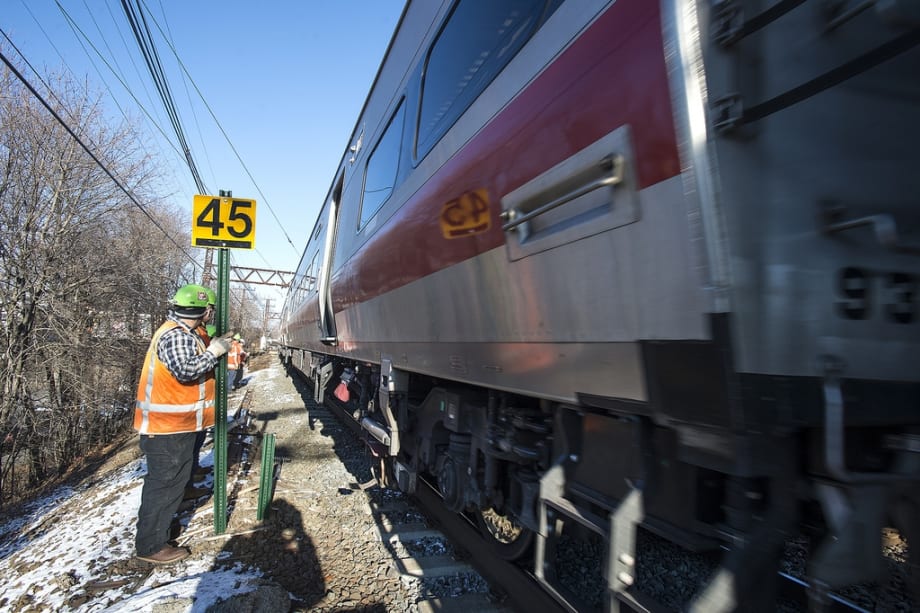
MTA/ Patrick Cashin
MTA/ Patrick Cashin
MTA Metro-North Railroad announced details of a sweeping series of reforms it is undertaking to better ensure the safety of its customers and employees. The reforms address factors identified during several serious safety incidents over the last year, as well as issues identified by an in-depth Federal Railroad Administration (FRA) review of its operating practices that took place this past winter.
The reforms touch virtually every aspect of Metro-North’s operations. Among the key overarching actions, Metro-North is engaging in comprehensive outreach to ensure that all employees understand that safety is the foundation of the railroad, and its undisputed first priority.
RELATED:Metro-North prioritized on-time performance over safety
The railroad is reorganizing the Safety Department, centralizing oversight of all training functions at Metro-North in the Training & Development Department to reduce fragmentation, and establishing a work plan to address each directed actions identified in the FRA review.
“Safety is the top priority for Metro-North Railroad, above even on-time performance,” said Metro-North Railroad President Joseph Giulietti.
Key programmatic initiatives since December 2013 include a wide-ranging host of actions:
Safety Stand-Downs: more than 8,000 employees participated in railroad-wide safety stand downs. These exercises, in which all employees at a work site stop work and discuss safety protocols with supervisors and managers, will be repeated at least once every quarter.
Enhanced Employee Protection System: To greatly reduce the risk of an injury or fatality to track workers, this system was designed and implemented to provide workers on tracks with the ultimate authority over when a track is taken out of service and restored to service.
Speed Reductions: With the issuance of FRA Emergency Order 29, Metro-North made reductions in maximum authorized speeds across our operating territory, so that no location requires a reduction in speed of greater than 20 miles per hour. At five critical curves and five moveable bridges, modifications were made to the signal system so that compliance with these speed reductions is controlled and enforced automatically.
Alerters: Two-thirds of Metro-North’s railcar fleet is outfitted with “Alerters,” equipment that ensures that the engineer of a train is responsive while operating a train. The railroad has designed and procured Alerters for installation in its older railcars this year.
Positive Train Control and Cab Cameras: Metro-North, with the LIRR, has expedited the implementation of positive train control, and the process has begun to purchase and install inward- and outward-facing cameras to assist in incident investigations.
C3RS: Metro-North, in partnership with its labor organizations, is negotiating participation in in the FRA’s Confidential Close Call Reporting System, which allows employees to anonymously report any safety-related issues they may see on the job.
Automated Track Inspection: Metro-North has developed a comprehensive automated track inspection plan. This plan includes the use of track geometry measurements, machine vision track inspection, and rail internal defect testing. These efforts will augment the visual inspections conducted by the railroad. Metro-North is purchasing an autonomous track monitoring system to be mounted on passenger rail cars, to provide continuous information about the condition of the right-of-way. The railroad will also obtain a dedicated track geometry vehicle.
More than 60 experts comprising 14 teams from the FRA conducted the 60-day comprehensive safety assessment. The review analyzed Metro-North’s safety-related processes and procedures, its compliance with safety regulations and requirements, and its overall safety culture.
The result was a report issued on March 14 that recommended or directed Metro-North to take more than 27 specific actions within eight categories: track safety, railroad operating rules, qualification and certification for engineers and conductors, workplace safety, train control systems, blue signal protection for employees, Operations Control Center and track worker fatigue.
Out of the 27 actions detailed in the report, Metro-North has completed 14, is progressing on five, and for eight has developed a training strategy to be carried out starting immediately.
More Management

LIT Marks 10-Year Milestone at Annual Summit
Hosted by the COTA from September 10 to 13, the Summit carried the theme “Celebrating 10 Years of Excellence, Leadership, and Impact,” with every part of the program honoring the people, agencies, and partners who built LIT over its first decade.
Read More →
People Movement: Dan Dipert Coaches Adds Third-Generation Leader, Keolis Names New Valley Metro VP/GM, and More
In this edition, we also cover recent appointments and announcements at the Wabtec, SilverRide, HNTB, and more, showcasing the individuals helping to shape the future of transportation.
Read More →
METRO Opens Submissions for 2026 Motorcoach Awards
Nominations are now being accepted for METRO Magazine’s Operator of the Year and Innovative Operator of the Year awards.
Read More →

New York MTA Advances Final Contract for Second Avenue Subway Expansion
Contract Four is the largest in the Second Avenue Subway Phase 2 project and includes construction of station infrastructure, tracks, and signals for the subway expansion, MTA officials said. Work on Contract Four will begin in 2027.
Read More →
Transit Agencies Highlight Safety Gains at National Summit
Leaders from 15 major transit systems shared crime-reduction results and safety initiatives while discussing the role of continued federal support.
Read More →
NITA Names New Leadership, Expands Reduced-Fare Program at First Board Meeting
The new regional transit authority appointed its first board chair and interim executive director while extending reduced fares across CTA, Metra, and Pace for eligible riders.
Read More →
Beyond the Checklist: A Structured Approach to Transit Maintenance
Reliability-Centered Maintenance helps transit agencies move beyond routine checklists to focus limited resources on the assets and failures that have the greatest impact on safety, reliability, and service.
Read More →
APTA 2026 Nominating Committee Selects Leadership Slate, Names Chair and Vice Chair Nominees
Leadership changes will help shape the association’s priorities and its representation of the transportation industry during the 2026–2027 term.
Read More →
DART Launches Major Security, Fare Enforcement Initiative
The 90-day demonstration will deploy coordinated security teams at five light rail stations while testing controlled access and gathering data to guide future investments.
Read More →
Advancing Fare Collection Through Technology and Innovation
Learn about delivering 1300 gates at 91 stations while managing fare evasion. Explore the large scale deployment, solution customization and real-world results that affect the region. Prepare for deployment in your region now.
Read More →