



Metro-North, CTDOT Bring PTC, Signal System to Waterbury Branch
With the activation of the Waterbury Branch, all parts of Metro-North are now operating in PTC.
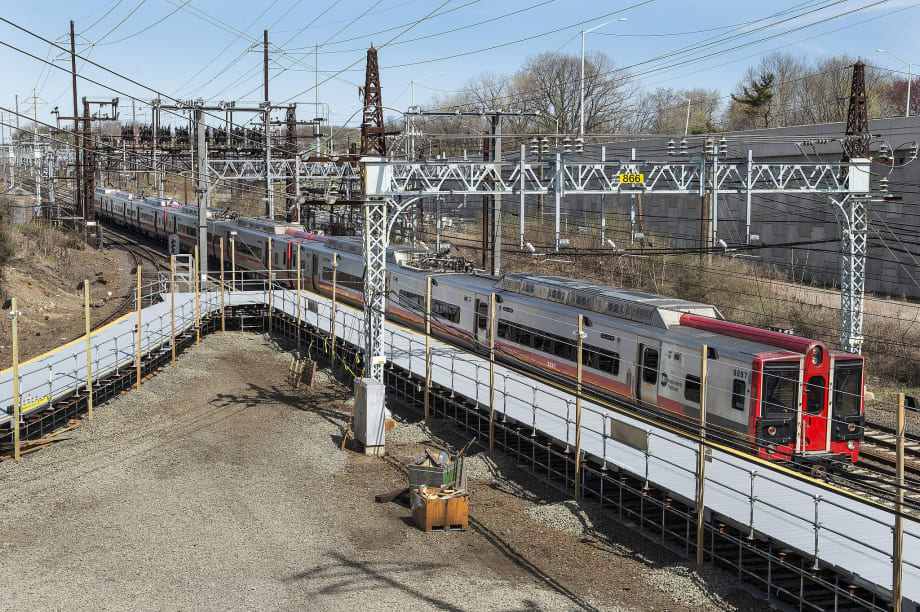
The new signal system, known as Centralized Traffic Control, was brought online this month by Metro-North crews at the direction of the CTDOT, which provided funding.
Patrick Cashin
Metro-North Railroad installed signals, Positive Train Control (PTC), and passing sidings along the Waterbury Branch. The completion represents a historic upgrade to a branch that was built in 1849, underscores Connecticut’s commitment to maintaining and upgrading the branch, and eliminates the final segment of Metro-North Railroad that had been operating without an automatic signal system.
Though the Waterbury Branch had been exempt from PTC because it lacked a signal system, Metro-North and the Connecticut Department of Transportation (CTDOT) nevertheless brought signals to the branch allowing for PTC to be activated on Nov. 20. PTC automates key operational functions and reduces the potential of human error to contribute to train accidents. With the activation of the Waterbury Branch, all parts of Metro-North are now operating in PTC.
“The successful installation of the new signal system on the Waterbury Branch allowed us to bring the final segment of Metro-North online for PTC, increasing passenger safety, while also giving us the ability to provide more service on the branch in the future,” said Catherine Rinaldi, president of Metro-North Railroad. “I would like to thank CTDOT for being great partners throughout this project and am excited for our Connecticut customers to reap the benefits of a smoother commuting experience.”
The new signal system, known as Centralized Traffic Control (CTC), was brought online this month by Metro-North crews at the direction of the CTDOT, which provided funding. The CTC system allows trains to safely travel at speeds of up to 60 mph. The signalization project was recognized as the Infrastructure Project of the Year by the Connecticut chapter of the Construction Management Association of America.
Work on the project began in April 2019 and finished at the beginning of November. In that time crews completely upgraded the signal system on the entire branch. Crews replaced more than 13,000 rail ties to keep train tracks in a good state of repair, and passing sidings were added where trains can pass each other at Derby, Beacon Falls, and just south of Waterbury, with a fourth to be installed at Devon. The siding installations give Metro-North the potential to increase train service and provide more flexibility to reduce congestion during peak periods.
Since Metro-North started operating service on the Waterbury Branch in 1983, trains have operated under a Manual Block System, the industry standard for rail lines without an automatic signaling system. That system required a Rail Traffic Controller at Metro-North’s Operations Control Center to provide authority to each train’s crew to proceed between various points (or “blocks”) on the line. The new CTC system is a significant upgrade, allowing additional capacity and safety on the line.
CTDOT looks to build on the signal-system installation with plans to install two-way rail service on the branch in the coming months. With the signaling-system upgrades and the addition of the passing sidings, service can increase on the branch to as many as 22 trains each weekday beginning as early as the summer of 2022. Increased service on the Waterbury Line was funded by $1.23 million in Connecticut state funding; $1.3 billion in federal funds will further enhance and expand these efforts.
More Rail

New York MTA Advances Final Contract for Second Avenue Subway Expansion
Contract Four is the largest in the Second Avenue Subway Phase 2 project and includes construction of station infrastructure, tracks, and signals for the subway expansion, MTA officials said. Work on Contract Four will begin in 2027.
Read More →
San Diego MTS Breaks Monthly Trolley Ridership Record
Agency officials said July’s ridership indicates MTS’s continued recovery from the pandemic.
Read More →
Report Examines NJ TRANSIT Reliability, Funding Challenges
The Garden State Initiative analysis examines the roles of Amtrak infrastructure, fleet management, and agency operations while recommending a more performance-based approach to improving reliability.
Read More →
Stadler, CapMetro Sign Long-Term Rail Fleet Support Agreement
Beginning in 2027, Stadler will provide on-site technical expertise, spare parts support, training, and obsolescence management to help extend the reliability and longevity of CapMetro’s GTW fleet.
Read More →
Biz Briefs: Alstom Lands Canadian Contract, LYT to Supply California TSP, and More
In METRO's latest installment, we take a look at recent news from Complete Coach Works, Beep, FlixBus, and more partnerships making headlines across the transportation sector.
Read More →
CATS Gold Line Marks 5 Years of Service, 2.8M Passenger Trips
With a six-mile expansion planned, the Charlotte streetcar is positioned to connect more neighborhoods and major transit hubs across the region.
Read More →
Why Simulating Pedestrian Movement Has Become Essential for Modern Rail Stations
Pedestrian microsimulation is helping rail planners identify bottlenecks, test station designs, and prepare complex transit hubs for growing passenger volumes.
Read More →
Amtrak Begins Major Construction at New York’s Sunnyside Yard
The new maintenance facility will support Amtrak’s Airo trainsets while improving maintenance efficiency and turnaround times in New York.
Read More →
Chicago Leaders Unveil Plans for O’Hare Airport Express Train
The privately developed project would offer a 15-minute trip between downtown and O’Hare’s Terminal 2, with trains operating every 15 minutes on a dedicated track. The service would use battery-electric trains and three existing freight rail rights-of-way.
Read More →
OCTA Maps Out 30-Year Strategy to Protect Coastal Rail Corridor
The draft feasibility report identifies strategies to protect the coastal rail line for decades as the agency continues near-term stabilization and sand placement efforts.
Read More →