



Motorcoach out-of-service levels at all-time low
At lowest levels since the CVSA's commercial vehicle safety enforcement campaign, Roadcheck began in 1988. Inspections of passenger vehicles found a compliance rate of 91.3 percent in 2011 versus 91.0 percent in 2010. The motorcoach driver compliance rate was 97.4 percent; in 2010 it was 96.4 percent.

Commercial motor carrier and motorcoach industries continue to improve the maintenance and safety of their operations, according to a data from the Roadcheck safety campaign, with overall out-of-service (OOS) rates being the lowest levels since the campaign began in 1988.
Roadcheck 2011 is the three-day, commercial vehicle safety enforcement and education campaign organized annually by the Commercial Vehicle Safety Alliance (CVSA).
Nearly 8,000 CVSA and the Federal Motor Carrier Safety Administration (FMCSA) certified inspectors at 2,550 locations across North America performed 70,712 truck and bus inspections in 72 hours. Inspectors focused on the North American Standard (NAS) Level I inspection, motorcoach inspections, hours of service logbooks, and household goods (HHG) carriers.
Once again, hours of service logbook violations lead overwhelmingly as a percentage of all driver violations cited (52.5 percent of all driver out-of-service violations). The hours of service rules are designed to reduce driver fatigue which may be a contributing factor in large truck and bus crashes. Inspectors also queried drivers of their use of electronic logging devices; 14 percent were using them.
An additional emphasis was placed on identifying carriers of household goods (HHG) operating “under-the-radar” by using improperly marked rental vehicles and/or operating as a for-hire property carrier rather than HHG carrier. The twelve states that participated in the HHG focus activity identified 32 carriers that required enforcement action.
During Roadcheck 2011 approximately 16 trucks or buses were inspected, on average, every minute for the 72 hours of the event, from June 7 to 9, occurring from Canada to Mexico. Drivers were pulled over or directed into weigh stations or other inspection locations and asked to show their commercial driver’s license, medical examiner’s certificate and record of duty status. Brakes, tires, lights and every major safety component of the truck or bus, plus proper load securement were also examined during Roadcheck.
CVSA sponsors Roadcheck each year with the FMCSA, Canadian Council of Motor Transport Administrators (CCMTA), Transport Canada, and the Secretariat of Communications and Transportation (Mexico).
Roadcheck data from 2011 show the overall vehicle compliance rate at 80.7 percent (80.0 percent in 2010), with an overall driver compliance rate of 95.8 percent (95.6 percent from last year). For NAS Level I inspections, the compliance rates were up to 77.2 percent for vehicles (76.7 percent in 2010) and 96.3 percent for drivers (unchanged from 2010). In addition, there were 296 fewer safety belt violations in 2011 (863 versus 1,159 in 2010).
Inspections of passenger carrying vehicles found a vehicle compliance rate of 91.3 percent in 2011 versus 91.0 percent in 2010. The motorcoach driver compliance rate was 97.4 percent — in 2010 it was 96.4 percent. Hazardous materials inspections resulted in a vehicle compliance rate of 82.1 percent (83.7 percent in 2010) and driver compliance rate of 97.5 percent (unchanged from previous year). There were 29,609 CVSA Decals issued to vehicles that passed the inspection, up from the number issued in 2010 (26,605).
More Motorcoach

METRO Opens Submissions for 2026 Motorcoach Awards
Nominations are now being accepted for METRO Magazine’s Operator of the Year and Innovative Operator of the Year awards.
Read More →
Biz Briefs: Alstom Lands Canadian Contract, LYT to Supply California TSP, and More
In METRO's latest installment, we take a look at recent news from Complete Coach Works, Beep, FlixBus, and more partnerships making headlines across the transportation sector.
Read More →
Biz Briefs: RIPTA Unveils New Frontrunners, Clevland RTA Adds New Siemens, and More
In METRO's latest installment, we take a look at recent news from Siemens, Prevost, Dodge, and more partnerships making headlines across the transportation sector.
Read More →
People Movement: Holly Arnold Joins Transdev and More
In this edition, we also cover recent appointments and announcements at Pace, CamTran, MCI, and more, showcasing the individuals helping to shape the future of transportation.
Read More →
ABA Report: Motorcoach Travel Generates $161.6B Economic Impact
The 2025 analysis finds motorcoach travel supported nearly 900,000 jobs and generated $28 billion in federal, state, and local taxes.
Read More →
CharterUP’s Armir Harris on Technology, AI, and the Future of Group Mobility
In a recent episode of METROspectives, CharterUP Founder/CEO Armir Harris discussed the company’s evolution from an online charter bus marketplace into a technology platform supporting public- and private-sector mobility and much more.
Read More →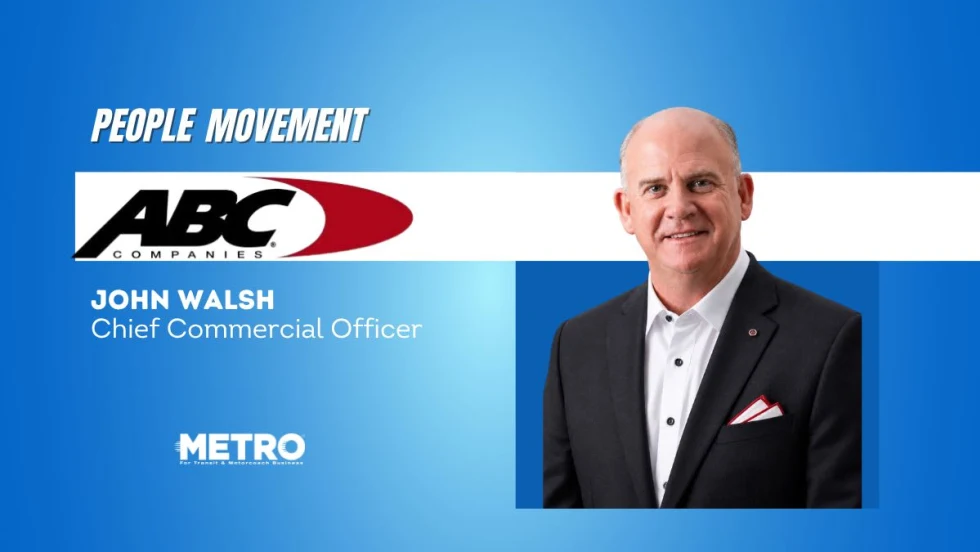
People Movement: ABC Names John Walsh as Chief Commercial Officer
In this edition, METRO also covers recent appointments and announcements at the DART, STV, and more, showcasing the individuals helping to shape the future of transportation.
Read More →
From Surviving to Thriving: Building Stronger Transportation Organizations
Bus Business Consultants founder Brian Dickson shares lessons on leadership, organizational health, and creating options for long-term success in a changing transportation industry.
Read More →
Biz Briefs: Luminator Marks Milestone and More
From manufacturers and suppliers to transit agencies and motorcoach operators, these updates offer a snapshot of the projects, partnerships and business moves driving the industry forward.
Read More →
ABAF Study Reveals Growing Insurance Crisis for Motorcoach Operators
Preliminary findings show 98% of operators faced premium increases over the past five years, while shrinking insurer participation is putting added pressure on businesses and customers.
Read More →