




Miss This? California's OCTA Approves $1.65B Balanced Budget for FY 22-23
MTA Preliminary Budget Forecasts Ridership Recovery
The documents project the MTA fiscal cliff presented in February 2022 will occur in 2025, one year earlier than previously forecasted, with federal COVID-19 relief aid largely exhausted by 2024.
July 28, 2022
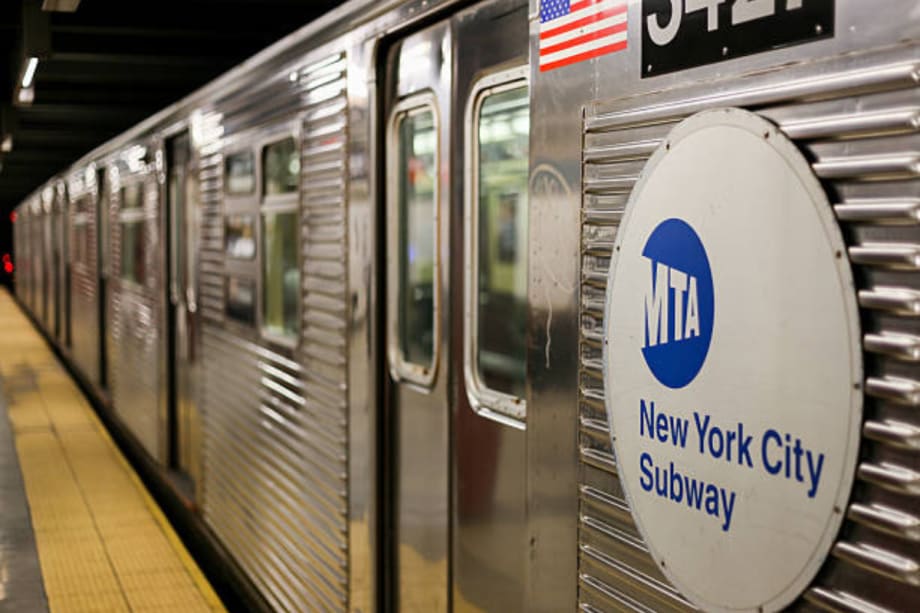
The updated McKinsey forecast for New York City Transit and commuter railroads has been revised, with ridership projected to reach 80% of pre-pandemic levels by 2026.
Photo: MTA
3 min to read
The Metropolitan Transportation Authority (MTA) released its preliminary 2023 budget and four-year financial plan, including a reforecast of ridership recovery conducted by McKinsey & Company.
The documents project the MTA fiscal cliff presented in February 2022 will occur in 2025, one year earlier than previously forecasted, with federal COVID-19 relief aid largely exhausted by 2024.
While MTA Bridges and Tunnels toll revenues remain near the best-case scenario laid out in McKinsey’s previous forecast, a slower-than-expected return to the office for many employers, fewer non-work trips, and customer sentiment on issues including safety have seen transit and railroad ridership lag the 2020 forecast.
The updated McKinsey forecast for New York City Transit and commuter railroads has been revised, with ridership projected to reach 80% of pre-pandemic levels by 2026. This revision represents a $500 million decline in anticipated annual farebox revenues in 2026 compared to the prior forecast and a $1.8 billion decline compared to pre-pandemic forecasts.
MTA CFO Kevin Willens presented to the board an alternative scenario to lower the looming fiscal cliff by $1 billion. Rather than spending down the entirety of federal funds on the 2023 and 2024 deficits, those funds could be spread to decrease the medium-term cost structure and avoid costly borrowing. To do so, new revenue sources are required in 2023. The MTA is engaged with stakeholders to identify new sources of funding needed to avoid large future fare increases and service reductions. In addition, the authority will continue to seek operating efficiencies.
“Identifying new, dedicated revenues to fund mass transit is imperative as we seek to address our fiscal cliff,” said Janno Lieber, MTA chair/CEO. “Transit is essential to the economic future of New York as we continue to recover from the pandemic, and it should be treated as an essential service, with strategies that don’t just put the problem on the backs of our riders through painful service cuts and fare increases.”
The revised financial plan projects annual structural deficits of $2.5 billion within two years, rising to $2.75 billion in 2028. Based largely on the projected declines to farebox revenues, the five-year financial outlook (2022-2026) in the July Plan versus the February Plan includes a cumulative net decline of $2.693 billion to the MTA’s bottom line.
"The reforecast of ridership projections has created a new higher and earlier fiscal cliff for the MTA,” said Willens. “While there is sufficient Federal Aid to cover structural deficits through 2024, State and City action by 2023 to create new, dedicated revenue streams to the MTA can lower the fiscal cliff to $1.6 billion and save billions in costly debt service expense.”
The reforecast of ridership from McKinsey and Company created two models: a “high case” and a “low case” of future projected ridership for New York City Transit, Long Island Rail Road, and Metro-North Railroad. In developing these projections, factors considered included the future of office work, a reduction in non-work trips, consumer sentiment on issues such as safety and reliability, fare evasion, the impact of Congestion Pricing on transit ridership, mode shifts to biking and walking, ridership changes resulting from network expansion, employment levels, and population growth.
The two models were averaged to create a midpoint projection, which forecasts ridership to be at 69% of pre-pandemic levels in 2023, and 80% of pre-pandemic ridership by the end of 2026. This midpoint projection was used in developing the July Financial Plan’s farebox revenue assumptions.
More Rail

New York MTA Advances Final Contract for Second Avenue Subway Expansion
Contract Four is the largest in the Second Avenue Subway Phase 2 project and includes construction of station infrastructure, tracks, and signals for the subway expansion, MTA officials said. Work on Contract Four will begin in 2027.
Read More →
San Diego MTS Breaks Monthly Trolley Ridership Record
Agency officials said July’s ridership indicates MTS’s continued recovery from the pandemic.
Read More →
Report Examines NJ TRANSIT Reliability, Funding Challenges
The Garden State Initiative analysis examines the roles of Amtrak infrastructure, fleet management, and agency operations while recommending a more performance-based approach to improving reliability.
Read More →
Stadler, CapMetro Sign Long-Term Rail Fleet Support Agreement
Beginning in 2027, Stadler will provide on-site technical expertise, spare parts support, training, and obsolescence management to help extend the reliability and longevity of CapMetro’s GTW fleet.
Read More →
Biz Briefs: Alstom Lands Canadian Contract, LYT to Supply California TSP, and More
In METRO's latest installment, we take a look at recent news from Complete Coach Works, Beep, FlixBus, and more partnerships making headlines across the transportation sector.
Read More →
CATS Gold Line Marks 5 Years of Service, 2.8M Passenger Trips
With a six-mile expansion planned, the Charlotte streetcar is positioned to connect more neighborhoods and major transit hubs across the region.
Read More →
Why Simulating Pedestrian Movement Has Become Essential for Modern Rail Stations
Pedestrian microsimulation is helping rail planners identify bottlenecks, test station designs, and prepare complex transit hubs for growing passenger volumes.
Read More →
Amtrak Begins Major Construction at New York’s Sunnyside Yard
The new maintenance facility will support Amtrak’s Airo trainsets while improving maintenance efficiency and turnaround times in New York.
Read More →
Chicago Leaders Unveil Plans for O’Hare Airport Express Train
The privately developed project would offer a 15-minute trip between downtown and O’Hare’s Terminal 2, with trains operating every 15 minutes on a dedicated track. The service would use battery-electric trains and three existing freight rail rights-of-way.
Read More →
OCTA Maps Out 30-Year Strategy to Protect Coastal Rail Corridor
The draft feasibility report identifies strategies to protect the coastal rail line for decades as the agency continues near-term stabilization and sand placement efforts.
Read More →