




At the Forefront: Putting Automation at the Center of the Customer Experience
MTI Research Examines Microtransit Benefits
Perspective authors Joshua Schank and Emma Huang were the architects of two on-demand microtransit systems for LA Metro.
October 26, 2022
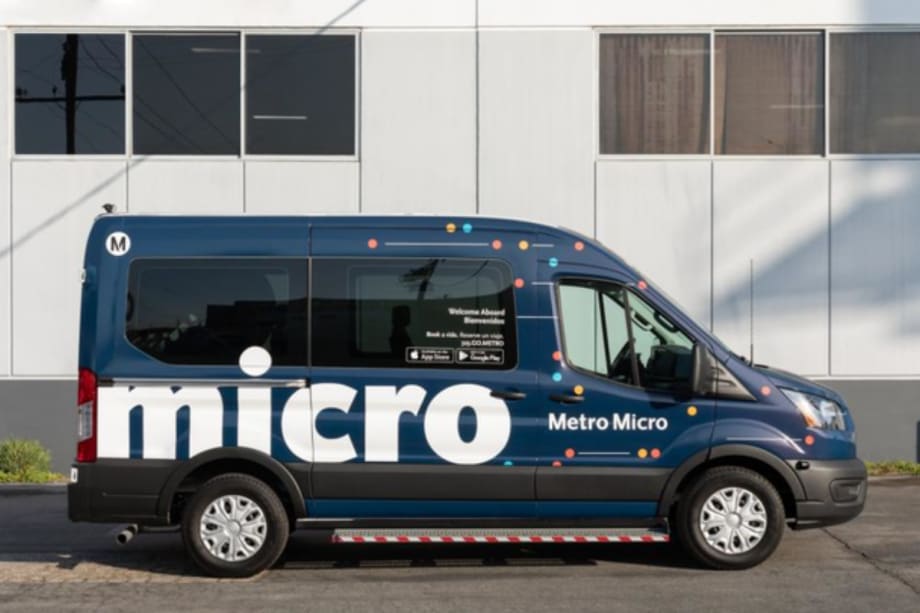
Microtransit excels at improving customer experience for existing transit riders.
Photo: APTA
2 min to read
The latest Mineta Transportation Institute (MTI) perspective, "Microtransit: A Good Idea Just Got Even Better," suggets that public transit agencies can better adapt to post-pandemic transit needs with some of the flexibility previously offered by ride hailing, according to the institute's news release.
Perspective authors Joshua Schank and Emma Huang were the architects of two on-demand microtransit systems for Los Angeles County Metropolitan Transportation Authority (LA Metro), including a pilot — in collaboration with Via — that offered shared, on-demand rides to and from three of LA Metro’s busiest stations, and an on-demand microtransit rideshare. Other cities, including Seattle, have launched similar programs offering “public transit that comes to you.”
Microtransit is a demand-responsive shared transit method that utilizes small-scale vehicles like minibuses or shuttles, to deliver transportation to the public, according to MTI. Often, microtransit offers riders an on-demand option that is more flexible than appointment-like paratransit and designated fixed routes.
The perspective argues that microtransit may be more useful than ever because:
Microtransit is flexible: the pandemic has shifted traditional work and commuting patterns, and, because it does not adhere to fixed routes, microtransit has the advantage of being more flexible to workers’ schedules.
Microtransit excels at improving customer experience for existing transit riders: by providing guaranteed wait times and more point-to-point service, as well as the opportunity to track the arriving vehicle in real time, microtransit can create a more welcoming and efficient experience for many riders.
Microtransit can step into the void: as ride-hailing services such as Uber and Lyft revert back to higher-end services to adjust to inflation and business model adjustments, microtransit can fill the void left by these services and more traditional commuting by remaining flexible, affordable, and accessible.
“The pandemic has also brought into sharp focus the fact that Transportation Network Companies (TNCs) are not financially sustainable businesses,” said the perspective’s authors. “While Uber and Lyft used to present themselves as the future of transportation, taking on everything from reinventing the bus to eliminating drivers, the pandemic has brought them back down to earth. Now it appears likely that the technology and improvements they have brought to transportation will live on in some form, but they are unlikely to continue to be affordable to the masses.”
More New Mobility

From Hardware to Digital Partner: Luminator Charts Its Next Chapter
CEO Magnus Friberg discusses Luminator’s shift toward becoming a digital partner, the growing importance of software and interoperability, and how AI can help agencies improve operations and passenger experience.
Read More →
Biz Briefs: Alstom Lands Canadian Contract, LYT to Supply California TSP, and More
In METRO's latest installment, we take a look at recent news from Complete Coach Works, Beep, FlixBus, and more partnerships making headlines across the transportation sector.
Read More →
CharterUP’s Armir Harris on Technology, AI, and the Future of Group Mobility
In a recent episode of METROspectives, CharterUP Founder/CEO Armir Harris discussed the company’s evolution from an online charter bus marketplace into a technology platform supporting public- and private-sector mobility and much more.
Read More →
Jacksonville’s NAVI Project Charts a New Course for Autonomous Public Transportation
Through its NAVI program, JTA is showing how autonomous vehicles, intelligent infrastructure, and coordinated operations can work together to deliver everyday public transportation.
Read More →
Biz Briefs: Luminator Marks Milestone and More
From manufacturers and suppliers to transit agencies and motorcoach operators, these updates offer a snapshot of the projects, partnerships and business moves driving the industry forward.
Read More →
New Tricks for Old Bureaucracies: Joshua Schank on Making Transit Innovation Stick
Former LA Metro Chief Innovation Officer Joshua Schank discusses why good ideas aren't enough, how transit agencies can overcome resistance to change, and why today's challenges demand more innovation.
Read More →
How DART's GoPass Is Redefining Regional Mobility
Serving 14 transit agencies, GoPass simplifies multimodal travel by allowing riders to plan, pay for, and manage an entire trip through one app.
Read More →
Biz Briefs: OCTA Taps Clean Energy for Hydrogen Station, Stadler to Supply Via Rail Vehicles, and More
From manufacturers and suppliers to transit agencies and motorcoach operators, these updates offer a snapshot of the projects, partnerships and business moves driving the industry forward.
Read More →CharterUP Expands Into New Mobility and Autonomous Transportation
Vice President of New Mobility Stephen Joos discusses how CharterUP is leveraging its nationwide transportation network, technology platform, and autonomous vehicle partnerships to expand into workforce mobility, campus shuttles, and transit solutions.
Read More →
METRO Magazine Announces 2026 Innovative Solutions Awards Winners
Projects Recognized for Advancing Mobility Through Technology, Accessibility, Workforce Innovation, and Operational Excellence
Read More →