



N.Y. Grand Central Terminal foyer dedicated to Kennedy Onassis
The former First Lady and iconic New Yorker led the historic campaign to save Grand Central from destruction in the 1970s.

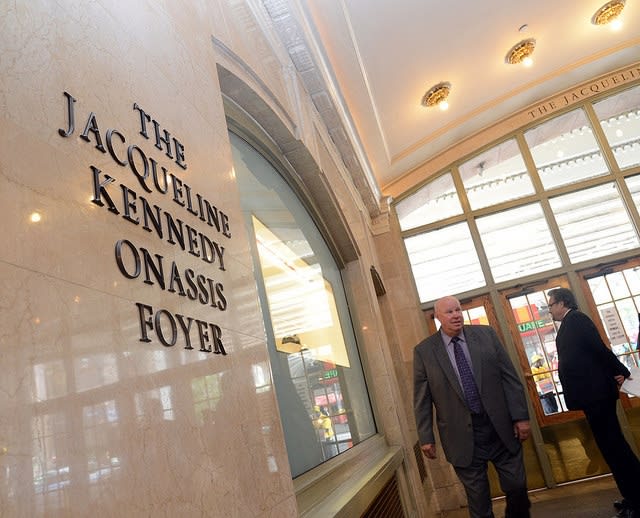
Photos by Marc A. Hermann - MTA New York City Transit
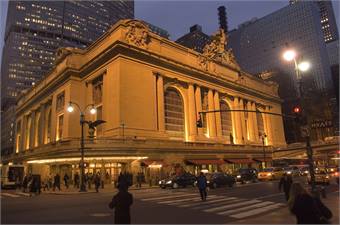
MTA Metro-North Railroad, the steward of Grand Central Terminal, dedicated the Terminal’s fully restored, main entry vestibule at 89 East 42nd Street and Park Avenue (Pershing Square), in honor of Jacqueline Kennedy Onassis, the former First Lady and iconic New Yorker who led the historic campaign to save Grand Central from destruction in the 1970s.
Onassis’ efforts with the Municipal Art Society (MAS) and other luminaries in New York City, including then-Congressman Ed Koch and MAS leaders Fred Papert and Kent Barwick, helped fight construction of a major office tower atop Grand Central Terminal during a lawsuit that was appealed all the way to the United States Supreme Court. It ruled in favor of preservation in a celebrated 1978 decision that marked the first time the Supreme Court ruled on historic preservation and led to the ongoing protection of other landmarks across the nation.
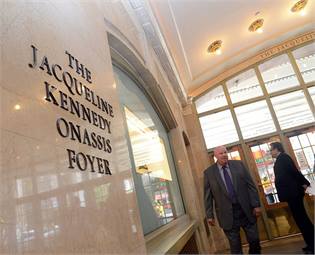
Photos by Marc A. Hermann - MTA New York City Transit
The major features of the historic restoration of the main entry vestibule include repair and cleaning of vintage glass lighting fixtures; fully renovated, cleaned and polished marble walls and floors, including removal and restoration of the inscription lettering over the doors leading into Vanderbilt Hall; extensive door refurbishments; a new, safety-enhanced, non-slip, entry mat banded with a brass border; energy-efficient lighting atop the cornices to help enhance illumination levels; and repainting of the walls and ceiling.
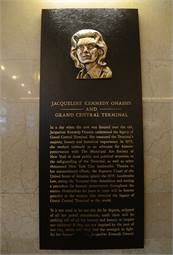
New features of the foyer include a plaque honoring Mrs. Onassis’ work to save the Terminal; the name rendered in bronze letters on the wall and painted along the arch leading to 42nd Street; and two display vitrines rotating digital imagery that recount Onassis’ life and the 101-year history of the Terminal, including its preservation and renovation.
The unique plaque, mounted on the foyer’s west wall, is 43” high and 18” wide, made of bronze with an artist-created bronze relief of Onassis and a narrative describing her role in saving the Terminal. The historic restoration of the main entry vestibule at 89 East 42nd Street and its dedication as the Jackie Kennedy Onassis Foyer was performed for approximately $465,000.
“The dedication of the Jacqueline Kennedy Onassis Foyer is a significant moment for Grand Central and for Metro-North,” said MTA Metro-North Railroad President Joseph Giulietti. “Mrs. Onassis is one of America’s most cherished historical figures, and she is considered by many a renowned savior of Grand Central. This landmark building, universally acclaimed as one of the world’s great public spaces, is still here today because of her leadership. Today, Grand Central Terminal recognizes Mrs. Onassis’ achievements.”
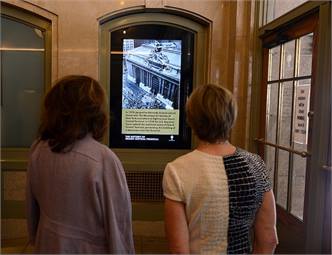
Renovation plans were initially conceived during Grand Central’s 2013 Centennial celebrations, when Metro-North was developing a “legacy project” that would make a permanent improvement to the space and recognize the crucial role Mrs. Onassis played in helping the Terminal reach its Centennial.
The plans for the foyer were reviewed by Ambassador Caroline Kennedy, who served as Honorary Chair of the Centennial Committee and spoke at the Centennial celebration.
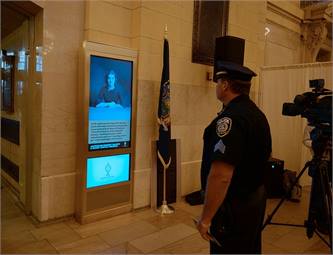
Grand Central Terminal opened in 1913 on the site of the Grand Central Depot, which had been conceived by “Commodore” Cornelius Vanderbilt. The Vanderbilt family led the N.Y. Central Railroad in building the current Grand Central Terminal.
More Management

METRO Opens Submissions for 2026 Motorcoach Awards
Nominations are now being accepted for METRO Magazine’s Operator of the Year and Innovative Operator of the Year awards.
Read More →
New York MTA Advances Final Contract for Second Avenue Subway Expansion
Contract Four is the largest in the Second Avenue Subway Phase 2 project and includes construction of station infrastructure, tracks, and signals for the subway expansion, MTA officials said. Work on Contract Four will begin in 2027.
Read More →
Transit Agencies Highlight Safety Gains at National Summit
Leaders from 15 major transit systems shared crime-reduction results and safety initiatives while discussing the role of continued federal support.
Read More →

NITA Names New Leadership, Expands Reduced-Fare Program at First Board Meeting
The new regional transit authority appointed its first board chair and interim executive director while extending reduced fares across CTA, Metra, and Pace for eligible riders.
Read More →
Beyond the Checklist: A Structured Approach to Transit Maintenance
Reliability-Centered Maintenance helps transit agencies move beyond routine checklists to focus limited resources on the assets and failures that have the greatest impact on safety, reliability, and service.
Read More →
APTA 2026 Nominating Committee Selects Leadership Slate, Names Chair and Vice Chair Nominees
Leadership changes will help shape the association’s priorities and its representation of the transportation industry during the 2026–2027 term.
Read More →
DART Launches Major Security, Fare Enforcement Initiative
The 90-day demonstration will deploy coordinated security teams at five light rail stations while testing controlled access and gathering data to guide future investments.
Read More →
Advancing Fare Collection Through Technology and Innovation
Learn about delivering 1300 gates at 91 stations while managing fare evasion. Explore the large scale deployment, solution customization and real-world results that affect the region. Prepare for deployment in your region now.
Read More →
Game Day in Motion: Moving Millions During the 2026 World Cup
Between packed transit stations and team motorcoaches, see how agencies and operators across North America tackled the transportation demands of the 2026 FIFA World Cup.
Read More →
Surface Transportation Extension Averts Shutdown, Leaves Transit Funding Gap
The stopgap keeps federal transportation programs moving, but missing advance funding could complicate the transit and rail projects agencies are planning next.
Read More →