



N.Y. MTA approves $206M signaling contract for Queens Blvd Line
The MTA gave preliminary approval to two contracts to Siemens Industry Inc. and Thales Transport & Security for the installation of a Communications-Based Train Control signaling system on one of New York City Transit’s busiest subway lines.

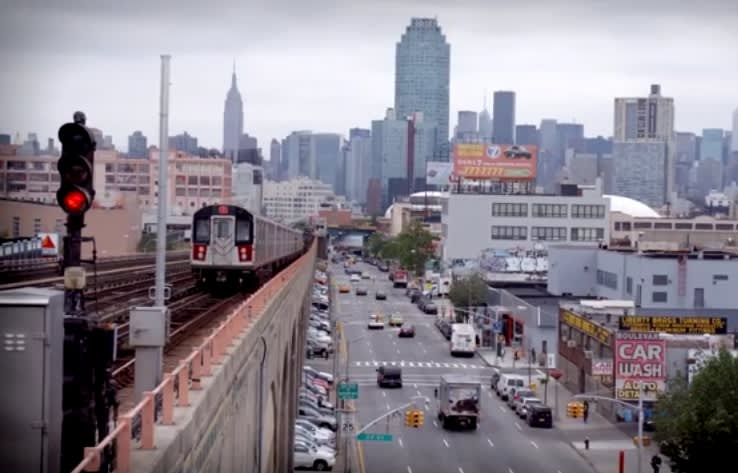
NYCT subway Photo: MTA
NYCT subway Photo: MTA
The New York Metropolitan Transportation Authority (MTA) gave preliminary approval to two contracts totaling $205.8 million to Siemens Industry Inc. and Thales Transport & Security for the installation of a Communications-Based Train Control (CBTC) signaling system on the Queens Boulevard Line, one of New York City Transit’s busiest subway lines.
The signaling system, which is currently in operation on the Canarsie L Line and being installed on the Flushing 7 Line, enables the MTA to address overcrowding and record subway ridership by operating subway trains more closely together, adding passenger capacity to the century-old subway system.
CBTC allows NYC Transit to operate more trains per hour, thereby increasing passenger capacity; provide improved and more reliable service; and make more efficient use of its track and car fleet. The system is more flexible than the current block signals system because CBTC continuously updates train positions, distances and travel speeds, allowing for faster and more efficient operations. Continuous updates allow the subway system to recover quickly from delays and restore consistent wait times at subway stations.
The installation of CBTC will keep the signaling system in a state of good repair and will also enhance safety for customers and employees alike. With CBTC, NYC Transit can program a work zone so trains cannot exceed a set speed, making the work zone much safer for workers on the tracks.
The signals system also can provide real-time travel information that can be shared with customers on public address systems and electronic screens, such as countdown clocks or data-driven mobile apps.
CBTC will be installed on local and express tracks serving the EFMR lines from north of the Kew Gardens/Union Tpke EF station to north of the 47-50 Sts/Rockefeller Ctr station on the FM Lines and south of the 50 St CE station. It is the first phase in a project that will ultimately update the signaling system for the entire Queens Boulevard Line. QBL West Phase 1 represents a change from MTA’s other CBTC projects, which have been installed on single subway lines such as the L and 7. QBL West Phase 1 encompasses four subway lines with multiple train overlays.
“The communications-based train control signaling system is a vital part of our plan to address issues of overcrowding, record ridership and service delays,” said MTA Chairman/CEO Thomas F. Prendergast. “CBTC represents the MTA’s efforts to bring advanced technology to a century-old subway system that, in some parts, has not been updated in decades. On the L Line where CBTC has been installed for several years now, we have seen improved service and we have been able to increase capacity significantly. Once we’re done installing CBTC on the 7 Line, those customers will also benefit from similarly improved and increased service, and the Queens Boulevard project is a continuation of our efforts to make those improvements system-wide.”
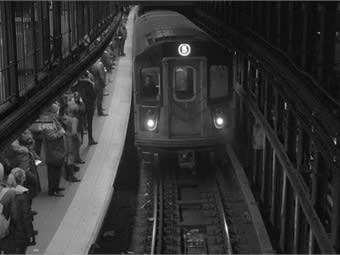
NYCT subway Photo: MTA
Design work on QBL West Phase 1 is estimated to begin later in 2015, with major installation work estimated to start in mid-2017. Once complete, NYC Transit will be able to run more frequent subway service with fewer delays, which will be a major benefit to EMFR customers who commute to some of Queens’ most populated neighborhoods, major commercial destinations, and areas in Central Queens that are undergoing significant residential and commercial development. On the L Line, ridership has increased by 27% since CBTC was installed in 2007; capacity also is expected to increase on the 7 Line once CBTC becomes operational in 2017.
The Transit Committee of the MTA Board approved the 67-month contracts to Siemens Industry Inc. and Thales Transport & Security Inc., currently the only two MTA-qualified vendors for CBTC projects. The Siemens contract is for approximately $156.2 million; the Thales contract is for $49.6 million.
It also approved a separate $1.2 million contract for Mitsubishi Electric Power Products Inc. to develop and test CBTC software and systems with the goal of qualifying an additional supplier for future CBTC projects. This process widens the pool of vendors to compete for such projects and increases the potential for cost savings for the MTA.
These contracts are scheduled to be considered by the full MTA Board on Wednesday. They will be fully funded by the MTA, with portions funded by the 2010-2014 Capital Program and other existing programs. Integral portions such as car and wayside equipment installation are scheduled to be funded in the 2015-2019 Capital Program.
More Rail

New York MTA Advances Final Contract for Second Avenue Subway Expansion
Contract Four is the largest in the Second Avenue Subway Phase 2 project and includes construction of station infrastructure, tracks, and signals for the subway expansion, MTA officials said. Work on Contract Four will begin in 2027.
Read More →
San Diego MTS Breaks Monthly Trolley Ridership Record
Agency officials said July’s ridership indicates MTS’s continued recovery from the pandemic.
Read More →
Report Examines NJ TRANSIT Reliability, Funding Challenges
The Garden State Initiative analysis examines the roles of Amtrak infrastructure, fleet management, and agency operations while recommending a more performance-based approach to improving reliability.
Read More →
Stadler, CapMetro Sign Long-Term Rail Fleet Support Agreement
Beginning in 2027, Stadler will provide on-site technical expertise, spare parts support, training, and obsolescence management to help extend the reliability and longevity of CapMetro’s GTW fleet.
Read More →
Biz Briefs: Alstom Lands Canadian Contract, LYT to Supply California TSP, and More
In METRO's latest installment, we take a look at recent news from Complete Coach Works, Beep, FlixBus, and more partnerships making headlines across the transportation sector.
Read More →
CATS Gold Line Marks 5 Years of Service, 2.8M Passenger Trips
With a six-mile expansion planned, the Charlotte streetcar is positioned to connect more neighborhoods and major transit hubs across the region.
Read More →
Why Simulating Pedestrian Movement Has Become Essential for Modern Rail Stations
Pedestrian microsimulation is helping rail planners identify bottlenecks, test station designs, and prepare complex transit hubs for growing passenger volumes.
Read More →
Amtrak Begins Major Construction at New York’s Sunnyside Yard
The new maintenance facility will support Amtrak’s Airo trainsets while improving maintenance efficiency and turnaround times in New York.
Read More →
Chicago Leaders Unveil Plans for O’Hare Airport Express Train
The privately developed project would offer a 15-minute trip between downtown and O’Hare’s Terminal 2, with trains operating every 15 minutes on a dedicated track. The service would use battery-electric trains and three existing freight rail rights-of-way.
Read More →
OCTA Maps Out 30-Year Strategy to Protect Coastal Rail Corridor
The draft feasibility report identifies strategies to protect the coastal rail line for decades as the agency continues near-term stabilization and sand placement efforts.
Read More →