



N.Y. MTA launches competition for best transit apps
MTA App Quest challenges tech developers to create software applications that increase access to information and improve the travel experience for customers of New York's public transit system. The winning app developer will receive $5,000. Smaller cash prizes will go to the developers of apps that are judged to do the most to help transit riders and deemed most popular by the public.

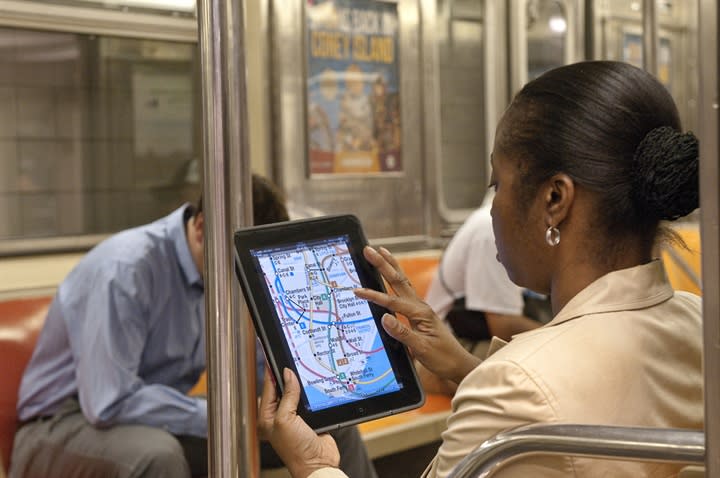
[IMAGE]NY-MTA-iPad-user-2.jpg[/IMAGE]The New York Metropolitan Transportation Authority (MTA) launched MTA App Quest, a competition challenging tech developers to create software applications that increase access to information and improve the travel experience for customers of New York's subways, buses, railroads and bridges and tunnels.
ChallengePost, a global marketplace for challenges and community-driven innovation, is powering and co-sponsoring MTA App Quest with the MTA.
The winning app developer will receive the grand prize of $5,000. Smaller cash prizes will go to the developers of apps that are judged to do the most to help train and bus riders and bridge and tunnel motorists better navigate the MTA's system and those that are deemed most popular by the public. The MTA is not contributing financially to the prize money pool.
For a complete list of prizes and contest rules, visit http://MTAAppQuest.com.
This competition is the latest component of the MTA's effort to improve the way that customers access information about New York's transportation network, from activation of countdown clocks in subway stations, to real-time bus tracking, to improvements to the MTA's website, redesigned maps, clearer audio announcements, and more.
To provide more data for developers to use as they design apps for MTA customers, the MTA is releasing new data sets to complement its existing schedule, geographic and other data sets. The newly released data sets consist of:
* Historical data showing times and locations of train movements on the 4, 5 and 6 subway lines throughout May 2011.
* Location data of resources inside subway stations such as platforms, elevators, turnstiles and station agent booths.
* Shapes of bus routes.
* Locations of outside retailers who sell E-ZPasses.
* Performance data for all MTA Agencies from 2008 to present, including on-time performance, ridership, mean distance between failures, elevator and escalator availability, and injury rates.
To maximize the amount of data available to contestants, the MTA will continue to make additional new data sets available through July 21 for developers to use.
Winners will be selected by a panel of judges made up of technology and transportation experts, including:
* Jen Chung, Executive Editor, Gothamist, and Co-Founder, Gothamist LLC
* Jeff Ferzoco, Creative and Technology Director, Regional Plan Association
* Stephen Goldsmith, Deputy Mayor for Operations, City of New York
* Mark Gorton, Founder and Chairman, OpenPlans and Founder, Tower Research Capital LLC
* Wael Hibri, Chief Enterprise Information Officer, Metropolitan Transportation Authority
* Noel Hidalgo, Director of Engagement Technologies, World Economic Forum
* Ben Kabak, Blogger and Founder, Second Avenue Sagas
* Lawrence Levy, Executive Dean, National Center for Suburban Studies at Hofstra University
* Rachel Sterne, Chief Digital Officer, City of New York
Submissions to the MTA App Quest are due by Sept. 26, and the public will be invited to view and vote for all submissions for three weeks this fall. Winners will be announced in November. The competition is open to individuals and organizations in the U.S. and its territories. Submitted apps should run on the web, desktop computers, tablets, and/or mobile phone platforms.
More Bus

New York MTA Plans Largest Bus Fleet Upgrade in More Than a Decade
The agency is seeking manufacturers for 650 new CNG buses to replace aging vehicles, improve reliability, and advance its broader fleet modernization strategy.
Read More →
Building a Flexible Path to Transit Electrification
John Hroncich discusses BAE Systems’ modular and scalable approach, lessons learned from decades of real-world operations, and how agencies can identify electrification strategies that fit their fleets.
Read More →
Bus Tech Talk: Keeping Transit Technicians Ahead of the Technology Curve
LA Metro’s Obed Mejia discusses technician training, evolving maintenance technology, fleet replacement, and strategies for getting the most out of today’s transit fleets.
Read More →
Biz Briefs: RIPTA Unveils New Frontrunners, Clevland RTA Adds New Siemens, and More
In METRO's latest installment, we take a look at recent news from Siemens, Prevost, Dodge, and more partnerships making headlines across the transportation sector.
Read More →
People Movement: Holly Arnold Joins Transdev and More
In this edition, we also cover recent appointments and announcements at Pace, CamTran, MCI, and more, showcasing the individuals helping to shape the future of transportation.
Read More →
The High Cost of Transit Buses: Industry Leaders Look to Procurement Reform
Transit leaders and policymakers examine how standardized bus designs, streamlined procurement, and predictable funding could help agencies stretch budgets and deliver better service.
Read More →
The Business Voice Behind Public Transportation
As chair of APTA’s Business Members Board of Governors, Ray Melleady explains how more than 850 business members are partnering with transit agencies to advance funding, innovation, and industry-wide collaboration.
Read More →
From Surviving to Thriving: Building Stronger Transportation Organizations
Bus Business Consultants founder Brian Dickson shares lessons on leadership, organizational health, and creating options for long-term success in a changing transportation industry.
Read More →
Finding the ‘Happy Medium’: Optimizing Maintenance Without Sacrificing Reliability
The key to maintenance optimization isn’t doing less work—it’s doing the right work at the right time on the right assets.
Read More →
LA Metro, City of West Hollywood, and Partners Advance Smarter Bus Lane Enforcement
The award-winning partnership combines AI-powered detection with human oversight to improve bus reliability, accessibility, and enforcement efficiency.
Read More →