



New funding could help boost transit services for late-shift workers
These workers have inadequate access to public transit services, which can prevent some from accessing better job opportunities.
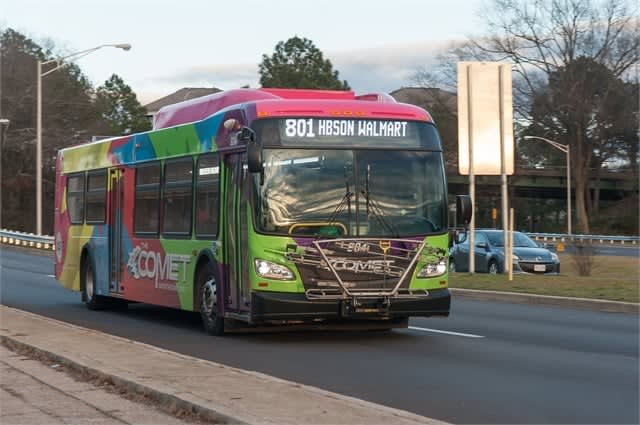
The COMET is using Lyft to replace its recently discontinued night service.
Michael Dantzler
The COMET is using Lyft to replace its recently discontinued night service.
Michael Dantzler
A new study from the American Public Transportation Association (APTA) showcases the needs of late-shift commuters and recommends steps transit providers and decision-makers can take to improve commuting options for this growing segment of the U.S. population.
With a large share of Americans working nights and weekends within industries such as food service, health care, construction, education, and finance, the study, “Supporting Late-Shift Workers: Their Transportation Needs and the Economy,” found these workers have inadequate access to public transit services, which can prevent segments of the workforce from accessing better job opportunities while also increasing turnover and absenteeism rates for employers.
Many public transit agencies around the country operate late-shift services but additional services are vitally needed, according to the study. Late-shift transit commuters earn an estimated $28 billion in wages and generate $84 billion in sales each year. Increased late-night transit access will result in access to opportunities for late-shift employees and increase the pool of workers for employers.
Late-shift workers in Metropolitan Statistical Areas are 40% less likely to commute via public transit due to inadequate service. Many are much more likely to take on the cost burden of operating personal vehicles or utilizing ride-share services like Uber and Lyft. Transit operators, along with business and political decision-makers, have an opportunity to remedy this issue.
“The late-shift is a growing source of opportunity for the American economy. When public transit providers, private sector businesses, and policymakers work together, late-shift transportation can be improved through increased funding, new public policy and innovative service,” said APTA President and CEO Paul P. Skoutelas.
Public transit providers face several challenges to running late-night service. This study outlines innovative ways transit operators can address issues like maintenance, operating costs, service planning, and more in order to expand existing systems and create new ones.
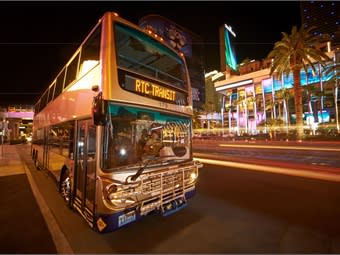
Cities like Las Vegas have forged partnerships to help provide services at night or in newly created job centers.
RTC of Southern Nevada
Some of the study’s proposed solutions for transit operators, business owners, and policymakers include:
Extend spans of service. Transit operators can make existing services more convenient and flexible by increasing operating hours.
Establish programs dedicated to funding late-shift transit operations. Without new funding at the state and federal level, transit agencies are limited in their ability to expand services.
Increase investment in transit system state-of-good-repair and shrink the backlog of deferred maintenance. Overall investment in transit infrastructure gives agencies more flexibility in their hours of service.
Embrace innovative partnerships to meet late-shift mobility needs. Ride-matching services offer guaranteed rides home where fixed-route public transit might not be appropriate or attainable.
Formalize frameworks to allow employers that benefit most to subsidize late-shift transportation. Create a standardized process for partnerships between transit agencies and the private sector will allow both to pool necessary resources to promote late-shift ridership and invest in more impactful public transit service.
To view the full report, click here.
More New Mobility

From Hardware to Digital Partner: Luminator Charts Its Next Chapter
CEO Magnus Friberg discusses Luminator’s shift toward becoming a digital partner, the growing importance of software and interoperability, and how AI can help agencies improve operations and passenger experience.
Read More →
Biz Briefs: Alstom Lands Canadian Contract, LYT to Supply California TSP, and More
In METRO's latest installment, we take a look at recent news from Complete Coach Works, Beep, FlixBus, and more partnerships making headlines across the transportation sector.
Read More →
CharterUP’s Armir Harris on Technology, AI, and the Future of Group Mobility
In a recent episode of METROspectives, CharterUP Founder/CEO Armir Harris discussed the company’s evolution from an online charter bus marketplace into a technology platform supporting public- and private-sector mobility and much more.
Read More →
Jacksonville’s NAVI Project Charts a New Course for Autonomous Public Transportation
Through its NAVI program, JTA is showing how autonomous vehicles, intelligent infrastructure, and coordinated operations can work together to deliver everyday public transportation.
Read More →
Biz Briefs: Luminator Marks Milestone and More
From manufacturers and suppliers to transit agencies and motorcoach operators, these updates offer a snapshot of the projects, partnerships and business moves driving the industry forward.
Read More →
New Tricks for Old Bureaucracies: Joshua Schank on Making Transit Innovation Stick
Former LA Metro Chief Innovation Officer Joshua Schank discusses why good ideas aren't enough, how transit agencies can overcome resistance to change, and why today's challenges demand more innovation.
Read More →
How DART's GoPass Is Redefining Regional Mobility
Serving 14 transit agencies, GoPass simplifies multimodal travel by allowing riders to plan, pay for, and manage an entire trip through one app.
Read More →
Biz Briefs: OCTA Taps Clean Energy for Hydrogen Station, Stadler to Supply Via Rail Vehicles, and More
From manufacturers and suppliers to transit agencies and motorcoach operators, these updates offer a snapshot of the projects, partnerships and business moves driving the industry forward.
Read More →CharterUP Expands Into New Mobility and Autonomous Transportation
Vice President of New Mobility Stephen Joos discusses how CharterUP is leveraging its nationwide transportation network, technology platform, and autonomous vehicle partnerships to expand into workforce mobility, campus shuttles, and transit solutions.
Read More →
METRO Magazine Announces 2026 Innovative Solutions Awards Winners
Projects Recognized for Advancing Mobility Through Technology, Accessibility, Workforce Innovation, and Operational Excellence
Read More →