



New York MTA doubles sanitizing efforts across entire system
The MTA continues to work around the clock with the CDC, DOH and other agencies, and has already taken a number of steps to provide information about the virus to employees and customers.

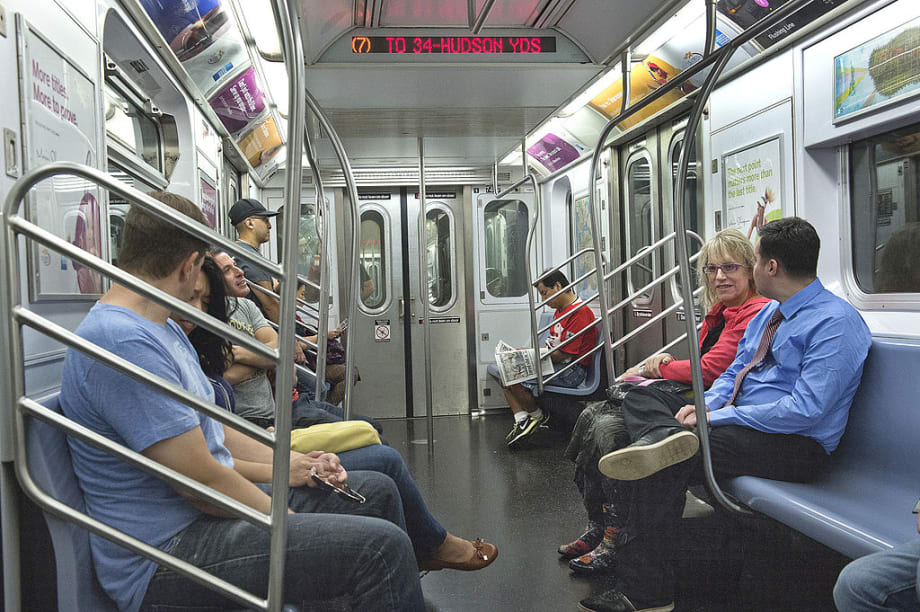
Frequently used surfaces in stations — commonly referred to as touch points — are now being disinfected twice daily.
Patrick Cashin
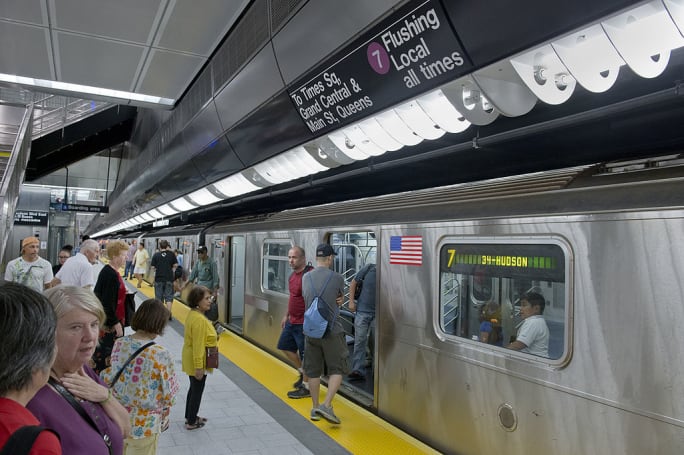
The MTA has continued to deploy health guidance PSAs at stations, on train cars, and buses to complement customer messaging already deployed across 3,600 subway screens, 2,000 bus screens, and at 84 subway station street entrances. Patrick Cashin
New York’s Metropolitan Transportation Authority (MTA) has updated its agency-wide sanitizing protocols as it redoubles safety precautions in response to the novel coronavirus (COVID-19). New York City Transit, MTA Bus Company, Long Island Rail Road (LIRR), and Metro-North are significantly increasing the frequency and intensity of sanitizing procedures at each of its stations, moving to disinfecting efforts twice a day, and continuing its daily cleanings on its fleet of rolling stock with the full fleet of train cars and buses completed every 72 hours or less. The Access-A-Ride dedicated fleet is disinfected daily.
Frequently used surfaces in stations — commonly referred to as touch points — such as turnstiles, MetroCard and ticket vending machines, and handrails, are now being disinfected twice daily. The MTA continues to use EPA-approved and CDC-endorsed disinfectants.
At Metro-North’s New Rochelle station, crews will be performing a weekly deep cleaning, and a dedicated cleaning crew is now stationed there daily. New Rochelle has the largest cluster of COVID-19 cases in New York. Cleaning crews have redoubled efforts to clean major touch points at the station, cleaning once at night and again during the day to ensure commuters traveling from that station are safe as possible.
“Our top priority is to ensure we are doing all we can to make the system as safe as possible for customers and employees,” said Patrick J. Foye, MTA Chairman and CEO. “We are investigating new advanced disinfectant methods to build on the round-the-clock efforts our hard-working employees are undertaking to sanitize the system.”
Frequently used surfaces in stations — commonly referred to as touch points — are now being disinfected twice daily.
Patrick Cashin
The MTA has continued to deploy health guidance PSAs at stations, on train cars, and buses to complement customer messaging already deployed across 3,600 subway screens, 2,000 bus screens, and at 84 subway station street entrances. The same messaging has also been deployed across 550 railroad screens. The MTA has stockpiles of hygienic supplies on hand and continues to procure cleaning materials, while working hand-in-hand with the National Centers for Disease Control (CDC), the State Department of Health (DOH), and other government agencies.
Daily car disinfection of New York City Transit’s 6,714 subway cars, Staten Island Railway’s 64 cars, and LIRR’s and Metro-North's over 1,100 cars each, continues so that no car in a fleet would go beyond a 72-hour period without a full cleaning. This cleaning cycle also includes the MTA’s 5,700 buses and fleet of 1,341 dedicated Access-A-Ride vans, which are fully disinfected daily.
Cumulatively since March 2, there have been 16,225 subway cars disinfected, as well as 293 Staten Island Railway cars, 16,049 NYC Transit and MTA buses, 11,045 Paratransit vehicles, 4,756 LIRR train cars, and 3,635 Metro-North Railroad train cars.
There are 472 subway stations, 21 stations along Staten Island Railway, the 124 stations and terminals along the LIRR, and 124 stations throughout Metro-North's territory.
The MTA continues to work around the clock with the CDC, DOH and other agencies, and has already taken a number of steps to provide information about the novel coronavirus to employees and customers.
Daily car disinfection of New York City Transit’s 6,714 subway cars, Staten Island Railway’s 64 cars, and LIRR’s and Metro-North's over 1,100 cars each, continues so that no car in a fleet would go beyond a 72-hour period without a full cleaning.
New York MTA
The MTA continues to urge customers and employees to follow recommendations from the CDC:
Wash your hands often with soap and water for at least 20 seconds. If soap and water are not available, use an alcohol-based hand sanitizer.
Avoid touching your eyes, nose and mouth with unwashed hands.
Avoid close contact with people who are sick.
Stay home when you are sick.
Cover your cough or sneeze with a tissue, then throw the tissue in the trash.
Clean and disinfect frequently touched objects and surfaces.
Individuals who are experiencing symptoms and may have traveled to areas of concern or have been in contact with somebody who has traveled to these areas should call ahead to their healthcare provider before presenting for treatment.
Coronavirus is an umbrella term for a host of mild-to-moderate illnesses including the common cold. Most people get infected with one or more of these viruses at some point in their lives. These illnesses should not be confused with COVID-19.
More Security and Safety

Transit Agencies Highlight Safety Gains at National Summit
Leaders from 15 major transit systems shared crime-reduction results and safety initiatives while discussing the role of continued federal support.
Read More →
DART Launches Major Security, Fare Enforcement Initiative
The 90-day demonstration will deploy coordinated security teams at five light rail stations while testing controlled access and gathering data to guide future investments.
Read More →
RTD Launches NextRide App to Consolidate Trip Planning, Fares, Security Reporting
The app expands on RTD’s existing NextRide web application and allows customers to view real-time vehicle locations and service alerts, purchase and store digital fares, and access customer support.
Read More →

TAPTCO Updates OSHA Compliance Training for Transit Maintenance Operations
The revamped program addresses 26 OSHA standards for maintenance facilities, with TAPTCO pointing to training, documentation, and everyday shop hazards as continuing challenges for transit operations.
Read More →
How VaporVision Adds Value to Transit Door Systems
Wabtec engineers explain how the system improves doorway detection, strengthens diagnostics and gives transit agencies and OEMs greater operating flexibility.
Read More →
FRA Announces $5.3B in Rail Investments, Including $2B for Amtrak
Funding will support grade-crossing improvements, infrastructure upgrades, and new Amtrak equipment in 23 states.
Read More →
Chicago, Maryland Expand Non-Law-Enforcement Safety, Rider Support
The CTA and MTA are launching new programs aimed at de-escalation, crisis response, rider assistance, and greater transparency.
Read More →
LA Metro, City of West Hollywood, and Partners Advance Smarter Bus Lane Enforcement
The award-winning partnership combines AI-powered detection with human oversight to improve bus reliability, accessibility, and enforcement efficiency.
Read More →
LA Metro Reports 57% Decline in Homelessness on Transit System Since 2024
The agency's latest homelessness count offers new data on how care-based services and cross-sector partnerships can complement traditional transit security strategies.
Read More →
FTA Launches 'Transit Moves America' Dashboard to Highlight Agency Safety and Performance
The online dashboard transforms National Transit Database information into a public-facing resource that allows users to compare transit agencies on key operational and safety metrics.
Read More →