The plan will enable the MTA to continue to provide frequent and reliable service by putting the system on a path to a state of good repair, including investments in railcars, power, and signals.
Photo: Marc A. Hermann
4 min to read
The New York Metropolitan Transportation Authority (MTA) released its proposed 2025-2029 Capital Plan, outlining a $68.4 billion investment in the region’s subways, buses, railroads, bridges, and tunnels over the next five years that ensures New Yorkers continue to have access to reliable, accessible, and sustainable transit.
The Capital Plan includes targeted investments to rebuild, improve, and expand the MTA system.
Ad Loading...
Continuing A State of Good Repair
The plan will enable the MTA to continue to provide frequent and reliable service by putting the system on a path to a state of good repair, including investments in railcars, power, and signals.
The plan will also improve the customer experience, with investments in accessibility, stations, and modern fare gates, and take action on climate change, including resilience and sustainability initiatives.
The proposed Capital Plan assumes a fully funded 2020-2024 Capital Plan and looks ahead to the next slate of vital improvement projects, informed by the most detailed system-wide evaluation the MTA has ever undertaken, the Twenty-Year Needs Assessment.
“This Capital Plan was developed by the most comprehensive analysis the MTA has ever undertaken to truly understand the needs of the system, the challenges and opportunities,” said MTA Chair/CEO Janno Lieber. “After years of underinvestment, more than 90% of this proposed plan — the largest in MTA history — focuses on bringing the system to a state of good repair. These investments are necessary to serve the following generations and the future of the region’s economy, environment, and social and economic equity.”
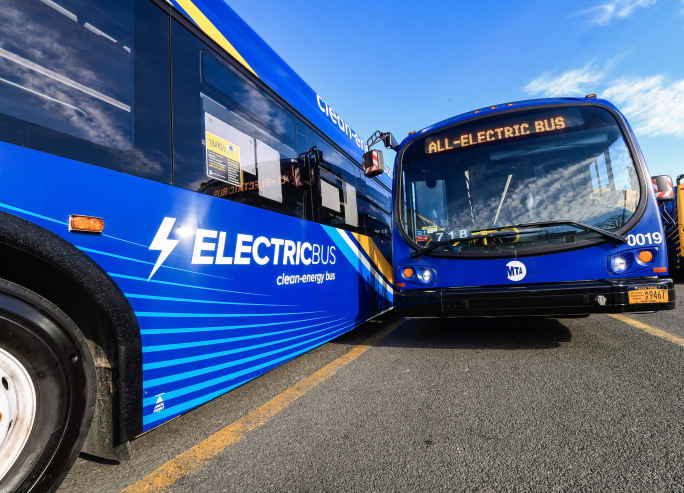
Purchases of zero-emissions buses and continued investments in bus depots for charging infrastructure will improve air quality throughout the region.
Photo: Marc A. Hermann
Building the 2025-2029 Plan
The proposed 2025-29 Capital Plan begins to scale investment to match the $1.5 trillion system, focusing on increasing the pace in certain categories to catch up with decades of underinvestment.
Ad Loading...
A third-party evaluation carried out by JP Morgan determined that in order for the MTA to maintain a capital investment level comparable to private industry peers, the authority would need to invest $23 billion annually — more than twice the already accelerated pace.
While continuing the pace in other areas like accessibility, signal modernization, station renovations, track upgrades, and customer experience and technology developments, the proposed plan focuses on areas in need of urgent investment:
Rolling stock: An aging fleet leads to increases in breakdowns and cascading delays. Cars last about 40 years before reaching the end of their useful life. There are two subway car models (R62 and R68) and one railroad model (M3) reaching the end of their useful life.
Grand Central Artery: Much of the structure that supports the Grand Central Artery is in poor or marginal condition, putting Metro-North service reliability greatly at risk. Grand Central Artery includes the Grand Central Terminal building, the Train Shed, the Park Avenue Tunnel, and the Park Avenue Viaduct.
Structures: There are thousands of structural defects that need to be addressed at subway tunnels, bridges, and viaducts to avoid closures.
Power: Aging power systems are a major vulnerability to reliability of service. Power incidents delay an average of more than 30 trains in the subway system. Across the entire network, subway, and railroads, more than 200 substations are in poor or marginal condition and need repair.
Resilience: Significant portions of the system are vulnerable to climate change’s impacts. Key challenges include fortifying the system against rising temperatures, rising sea levels, and heavy rainfall.
Sustainability: 50% of MTA’s direct carbon emissions come from diesel buses. Purchases of zero-emissions buses and continued investments in bus depots for charging infrastructure will improve air quality throughout the region.
Shops and yards: Aging facilities threaten regular service with outdated equipment and structures in a state of disrepair. Some shops like the Livonia Yard need to be reconfigured to service new models of subway cars and meet the demand of a growing fleet.
Next Steps
The MTA board will vote on the plan at the September Board meeting. A board-approved Capital Plan must then be submitted to the MTA Capital Program Review Board (CPRB) by October 1, which has 30 days to review and approve the plan.
In mid-October, the MTA will kick off a series of open houses around the New York region and a public education campaign to inform and engage New Yorkers on the capital plan.
Ad Loading...
Regarding funding, the MTA will work with partners in local, State, and Federal government to ensure that the proposed capital plan is fully funded.
Contract Four is the largest in the Second Avenue Subway Phase 2 project and includes construction of station infrastructure, tracks, and signals for the subway expansion, MTA officials said. Work on Contract Four will begin in 2027.
The new regional transit authority appointed its first board chair and interim executive director while extending reduced fares across CTA, Metra, and Pace for eligible riders.
Reliability-Centered Maintenance helps transit agencies move beyond routine checklists to focus limited resources on the assets and failures that have the greatest impact on safety, reliability, and service.
The 90-day demonstration will deploy coordinated security teams at five light rail stations while testing controlled access and gathering data to guide future investments.
Learn about delivering 1300 gates at 91 stations while managing fare evasion. Explore the large scale deployment, solution customization and real-world results that affect the region. Prepare for deployment in your region now.
Between packed transit stations and team motorcoaches, see how agencies and operators across North America tackled the transportation demands of the 2026 FIFA World Cup.
The stopgap keeps federal transportation programs moving, but missing advance funding could complicate the transit and rail projects agencies are planning next.