




RELATED: Subway air pollution damages passenger health
Noise levels during commutes could induce hearing loss, study says
Bursts of loud noise on both public and private modes of transportation could place individuals at risk of noise-induced hearing loss.
December 6, 2017
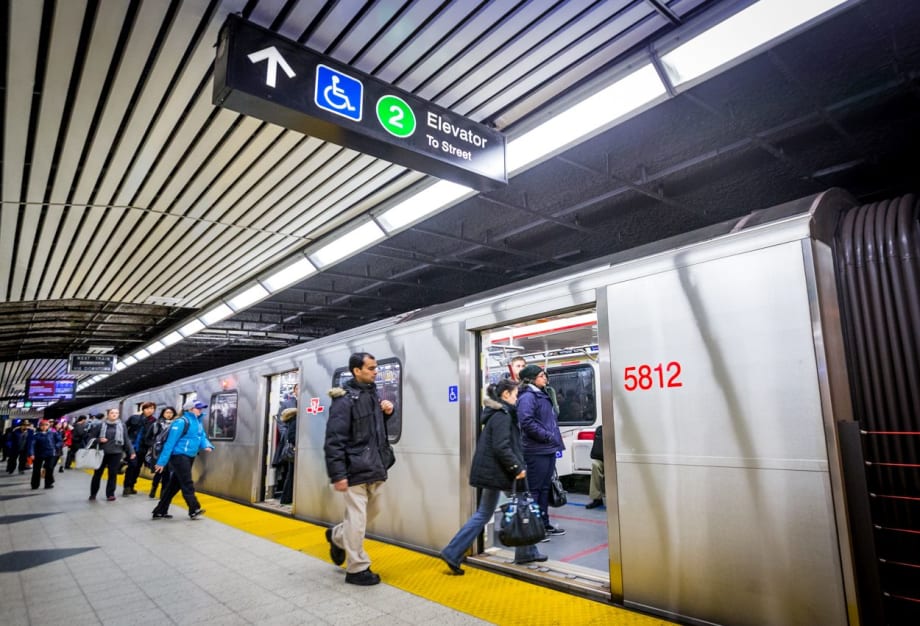
Measuring noise exposure on public (subways, trams and buses) and private (cars, bike, walking) transport in Toronto, the researchers found that while noise on average was within the recommended levels of safe exposure, bursts of loud noise on both public and private modes of transportation could still place individuals at risk of noise-induced hearing loss. Photo: TTC
3 min to read
Measuring noise exposure on public (subways, trams and buses) and private (cars, bike, walking) transport in Toronto, the researchers found that while noise on average was within the recommended levels of safe exposure, bursts of loud noise on both public and private modes of transportation could still place individuals at risk of noise-induced hearing loss. Photo: TTC
The noise levels commuters are exposed to while using public transport or while biking, could induce hearing loss if experienced repeatedly and over long periods of time, according to a new study.
Efforts to control noise should focus on materials and equipment that provide a quieter environment, researchers at the University of Toronto suggest in a new study published in the Journal of Otolaryngology - Head & Neck Surgery. Hearing protection while using public transport should also be promoted.
"This study is the first to look at and quantify the amount of noise people are exposed to during their daily commute, specifically on the Toronto Transit System ," said the corresponding author Dr. Vincent Lin. "We now are starting to understand that chronic excessive noise exposure leads to significant systemic pathology, such as depression, anxiety, increased risk of chronic diseases and increased accident risk. Short, intense noise exposure has been demonstrated to be as injurious as longer, less intense noise exposure."
Measuring noise exposure on public (subways, trams and buses) and private (cars, bike, walking) transport in Toronto, the researchers found that while noise on average was within the recommended levels of safe exposure, bursts of loud noise on both public and private modes of transportation could still place individuals at risk of noise-induced hearing loss.
According to thresholds recommended by the US Environmental Protection Agency (EPA), exposure to 114 A-weighted decibels (dBA) for longer than four seconds, exposure to 117dBA for longer than two seconds and exposure to 120 dBA for longer than 20 seconds may put people at risk of noise-induced hearing loss.
A-weighted decibels express the relative loudness of sounds experienced by the human ear; taking into account that sensitivity to noise differs depending on noise frequency. Peak noise levels in dBa across both public and personal transport exceeded the EPA recommended thresholds. The average noise levels by bike were greater than any level caused by modes of public transit.
To measure noise exposure, the researchers used noise dosimeters, which they carried on their shirt collars about two inches away from their ears. The researchers collected 210 measurements in total, comparing the noise on subways, buses, and streetcars, while driving a car, cycling, and walking. They measured in-vehicle noise and outside or boarding platform noise for all modes of private and public transportation.
The authors found that 19.9% of the loudest noises (peak noise) measured on the subway were greater than 114 dBA, while 20% of the loudest noises inside streetcars were greater than 120 dBA. 85% of peak noise measurements from bus platforms were greater than 114 dBA, while 54% were greater than 120 dBA. All peak noise exposures while riding a bike exceeded 117 dBA, with 85% being greater than 120 dBA.
When the authors extrapolated the EPA recommended noise thresholds for an average Toronto commuter who uses public transport, the recommended level of noise exposure was exceeded in 9% of subway, 12% of bus, and 14% of biking measurements but not when using streetcars, cars or when walking.
The authors caution that the number of measurements taken for individual modes of transport is relatively low and that the cross-sectional nature of the study does not allow for conclusions about cause and effect. Further studies are needed to investigate other factors that may contribute to noise exposure such as use of music players and lengthy transit times.
More Security and Safety

Transit Agencies Highlight Safety Gains at National Summit
Leaders from 15 major transit systems shared crime-reduction results and safety initiatives while discussing the role of continued federal support.
Read More →
DART Launches Major Security, Fare Enforcement Initiative
The 90-day demonstration will deploy coordinated security teams at five light rail stations while testing controlled access and gathering data to guide future investments.
Read More →
RTD Launches NextRide App to Consolidate Trip Planning, Fares, Security Reporting
The app expands on RTD’s existing NextRide web application and allows customers to view real-time vehicle locations and service alerts, purchase and store digital fares, and access customer support.
Read More →

TAPTCO Updates OSHA Compliance Training for Transit Maintenance Operations
The revamped program addresses 26 OSHA standards for maintenance facilities, with TAPTCO pointing to training, documentation, and everyday shop hazards as continuing challenges for transit operations.
Read More →
Sponsored•August 18, 2026
How VaporVision Adds Value to Transit Door Systems
Wabtec engineers explain how the system improves doorway detection, strengthens diagnostics and gives transit agencies and OEMs greater operating flexibility.
Read More →
FRA Announces $5.3B in Rail Investments, Including $2B for Amtrak
Funding will support grade-crossing improvements, infrastructure upgrades, and new Amtrak equipment in 23 states.
Read More →
Chicago, Maryland Expand Non-Law-Enforcement Safety, Rider Support
The CTA and MTA are launching new programs aimed at de-escalation, crisis response, rider assistance, and greater transparency.
Read More →
LA Metro, City of West Hollywood, and Partners Advance Smarter Bus Lane Enforcement
The award-winning partnership combines AI-powered detection with human oversight to improve bus reliability, accessibility, and enforcement efficiency.
Read More →
LA Metro Reports 57% Decline in Homelessness on Transit System Since 2024
The agency's latest homelessness count offers new data on how care-based services and cross-sector partnerships can complement traditional transit security strategies.
Read More →
FTA Launches 'Transit Moves America' Dashboard to Highlight Agency Safety and Performance
The online dashboard transforms National Transit Database information into a public-facing resource that allows users to compare transit agencies on key operational and safety metrics.
Read More →