




Check Out: How AI is Redefining Transit Operations and Signal Priority
Optibus Launches AI Agent Designed Specifically for Public Transit Operations
The new platform-embedded AI agent supports transit staff with scheduling, driver assignments and real-time operational decisions.
June 19, 2026
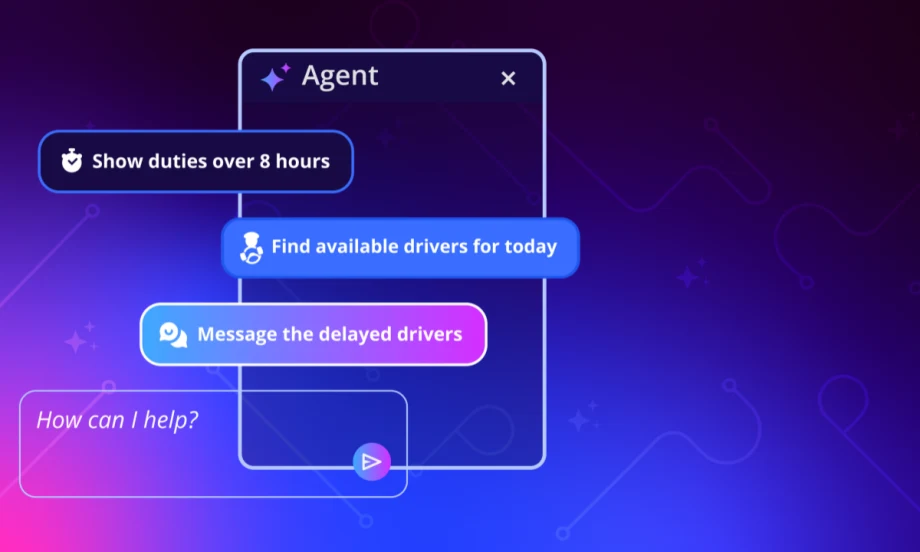
Transit agencies continue to face a combination of workforce shortages, budget constraints, and the operational complexities associated with fleet electrification. That's where Optibus Agent comes in.
Credit:
Optibus
4 min to read
Optibus has unveiled what it describes as the first AI agent purpose-built for public transportation, introducing a new layer of artificial intelligence designed to support agencies and operators in planning, scheduling, dispatch, driver management, and real-time operations.
Called Optibus Agent, the technology is embedded within the Optibus platform and is designed to help transit professionals automate complex workflows, accelerate decision-making, and improve service reliability while maintaining human oversight.
Public transportation agencies face growing operational complexity as they balance route planning, workforce management, fleet deployment, budget pressures, service disruptions, and, of course, electrification initiatives. Optibus says its new AI-powered assistant is trained specifically on public transit operations and leverages knowledge gathered from more than a decade of work with operators and agencies across over 7,000 cities worldwide.
“Optibus is taking an AI-first approach to public transportation, and the launch of Optibus Agent marks a new era for our users,” said Amos Haggiag, CEO and co-founder of Optibus. “With AI integrated into every layer of the platform, public transportation professionals can perform complex work much faster and make decisions that build far better services. It’s your team’s expertise, multiplied by AI.”
AI Across Planning, Scheduling, and Operations
Among the first capabilities being introduced are tools for schedule creation, driver assignment, compliance verification, dispatch support, and operational analysis.
The system can generate schedules that account for agency goals, labor agreements, and driver preferences, and help planners evaluate routes and timetables based on passenger demand. In driver management, the agent can identify qualified operators for open assignments by cross-referencing availability, work history, certifications, overtime limits, and contractual requirements.
For dispatchers, the technology can locate vehicles, surface live performance metrics, suggest responses to service disruptions, and facilitate communication with operators. The platform also allows users to query operational data using natural language requests, such as identifying specific trips, reviewing team activities, or understanding scheduling outcomes.
Human Oversight and Optibus Agent’s Expected Impact
As transit agencies evaluate AI technologies, concerns around opaque or “black box” decision-making remain a significant consideration. Haggiag said Optibus designed the system to function as a collaborative tool rather than an autonomous decision-maker.
“Many transit agencies are understandably wary of ‘black box’ AI that outputs decisions without context,” Haggiag said. “Optibus Agent shifts this paradigm, acting as a collaborative partner with industry-specific and organization-specific knowledge that can explain its reasoning.”
According to the company, the agent combines generative AI capabilities with Optibus’ optimization algorithms to ensure recommendations are grounded in operational constraints and business rules. Unlike consumer-grade or horizontal AI models, it was important for Optibus to produce an alternative to these “opaque automation tools.”
Final authority remains with transit staff. Human planners retain control over scheduling decisions, dispatchers make final operational calls during incidents, and supervisors continue to approve driver assignments.
While Optibus expects the technology to influence multiple performance indicators over time, Haggiag believes the most immediate benefits will be seen in internal workflow efficiency, such as “internal process speed and configuration time.”
The company said reducing time spent on data preparation, manual rule configuration, and operational analysis can create downstream benefits for labor utilization, overtime management, service reliability, and on-time performance.
By automating routine administrative tasks, planners can devote more time to strategic service design, while dispatchers can respond more quickly to disruptions by rapidly analyzing vehicle locations, operator availability, and contractual requirements.
Addressing Industry Challenges
Transit agencies continue to face a combination of workforce shortages, budget constraints, and the operational complexities associated with fleet electrification.
According to Haggiag, AI is currently best suited to improving operational efficiency and helping agencies make better use of existing resources.
He pointed to scheduling as an area where AI can balance operational efficiency with workforce quality-of-life considerations. Historically, schedules optimized solely for financial performance often resulted in excessive split shifts and overtime, contributing to driver burnout and retention challenges.
“We can tell it to prioritize driver-friendly schedules and better work-life balance alongside the budget,” Haggiag said.
The company reported that agencies using Optibus Agent have reduced split-shift times by up to 60%, contributing to a 20% decrease in driver turnover.
Electrification is another area where AI can assist agencies, particularly in managing battery performance, charging requirements, and more.
Despite the growing role of AI, Haggiag emphasized that transit professionals remain central to decision-making.
“AI is a co-pilot, not the captain,” he said. “AI does the heavy lifting so that transit professionals can focus on what they do best: making strategic decisions that serve their communities.”
More Technology
Almaviva Looks to Open Architecture to Advance Transit Technology
Eric Reese discusses how interoperability, open architecture, and modular design can help transit agencies control costs, reduce vendor lock-in, and upgrade technology without starting over.
Read More →
Driving Smarter Paratransit
John Hanlon shares how AlphaRoute is leveraging AI-powered technology to help paratransit providers optimize operations, support frontline staff, and enhance the rider experience.
Read More →
From Hardware to Digital Partner: Luminator Charts Its Next Chapter
CEO Magnus Friberg discusses Luminator’s shift toward becoming a digital partner, the growing importance of software and interoperability, and how AI can help agencies improve operations and passenger experience.
Read More →

Beyond the Checklist: A Structured Approach to Transit Maintenance
Reliability-Centered Maintenance helps transit agencies move beyond routine checklists to focus limited resources on the assets and failures that have the greatest impact on safety, reliability, and service.
Read More →
NJ TRANSIT Advances Bus Technology Upgrades Across Statewide Fleet
More than 1,500 buses now feature upgraded technology designed to improve arrival predictions and provide free Wi-Fi, with deployment expected to reach nearly 2,000 buses by the end of 2026.
Read More →
Building a Flexible Path to Transit Electrification
John Hroncich discusses BAE Systems’ modular and scalable approach, lessons learned from decades of real-world operations, and how agencies can identify electrification strategies that fit their fleets.
Read More →
Biz Briefs: Alstom Lands Canadian Contract, LYT to Supply California TSP, and More
In METRO's latest installment, we take a look at recent news from Complete Coach Works, Beep, FlixBus, and more partnerships making headlines across the transportation sector.
Read More →
Sponsored•September 8, 2026
From Legacy Silos to Conversational Intelligence
What if transit leaders could ask any operational question and get a trusted answer in seconds? Conversational AI is transforming how agencies use their data.
Read More →
USDOT Announces Rail Vehicle Replacement Grants, Chattanooga AV Shuttle Funding
More than $191 million in federal funding will help three transit agencies replace aging rail vehicles and support a new autonomous shuttle service in Chattanooga.
Read More →
Bus Tech Talk: Keeping Transit Technicians Ahead of the Technology Curve
LA Metro’s Obed Mejia discusses technician training, evolving maintenance technology, fleet replacement, and strategies for getting the most out of today’s transit fleets.
Read More →