



Proterra Files for Chapter 11 Bankruptcy Protection
The move is an effort to strengthen its financial position through a recapitalization, or going-concern sale, according to the company.

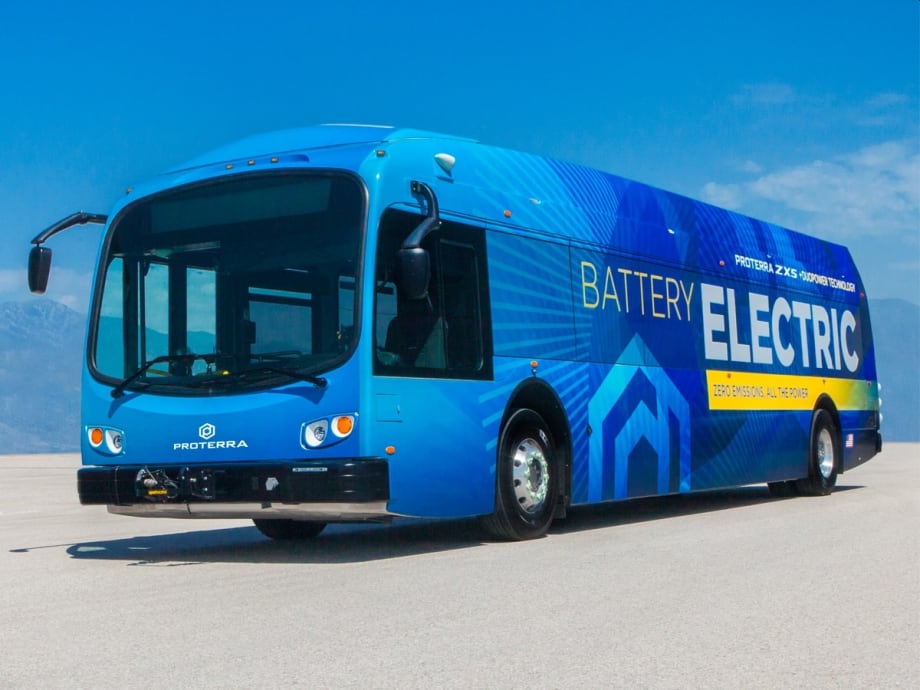
Proterra introduced zero-emission, electric transit buses to the North American market in 2010, which have now cumulatively amassed more than 40 million real-world service miles and displaced over 180 million pounds of CO2 emissions.
Photo: Proterra
Proterra Inc. announced it is taking action to maximize the value of its business and enhance the potential of each of its product lines by voluntarily filing for protection under Chapter 11 of the U.S. Bankruptcy Code in the District of Delaware.
The move is an effort to strengthen its financial position through a recapitalization, or going-concern sale, according to the company.
Moving Ahead
The company intends to continue to operate in the ordinary course of business as it moves through this process and plans to file the customary motions with the Bankruptcy Court to use existing capital to fund operations, including paying employee salaries and benefits, and compensating vendors and suppliers on a go-forward basis in accordance with Chapter 11 rules, all while ensuring business continuity for customers.
“Proterra is at the forefront of the innovations that are driving commercial vehicle electrification. We know we’re building industry-leading products that our customers want and need,” said Gareth Joyce, Proterra CEO. “The foundation we have built has set the stage for decarbonization across the commercial vehicle industry as a whole, and we recognize the great potential in all of our product offerings to enable this important transformation. This is why we are taking action to separate each product line through the Chapter 11 reorganization process to maximize their independent potential.”
Proterra introduced zero-emission, electric transit buses to the North American market in 2010, which have now cumulatively amassed more than 40 million real-world service miles and displaced over 180 million pounds of CO2 emissions.
Today, the company’s battery technology is powering more than 20 commercial vehicle applications, spanning Class 3 cargo vans through to Class 8 semi-trucks, as well as off-highway equipment in the construction and mining segments, in the U.S., European, and Asia-Pacific markets. The company has further installed more than 100 megawatts of heavy-duty EV charging infrastructure to support commercial vehicle fleets across North America.
“While our best-in-class EV and battery technologies have set an industry standard, we have faced various market and macroeconomic headwinds that have impacted our ability to efficiently scale all of our opportunities simultaneously. As commercial vehicles accelerate towards electrification, we look forward to sharpening our focus as a leading EV battery technology supplier for the benefit of our many stakeholders,” said Joyce.
Continuing its Plan to Charge Ahead
In January, the company said it would cut 300 jobs, shutter its California plant, and move the manufacture of its battery and bus manufacturing to its South Carolina facility as a cost savings move.
As a result of the announcement, Proterra said it will no longer be holding an earnings conference call that was scheduled for August 9.
Moelis & Company LLC is acting as the Company’s investment banker; FTI Consulting as financial advisor; and Paul, Weiss, Rifkind, Wharton, & Garrison LLP is acting as legal advisor.
More Zero Emissions

Caltrain’s Electrification Drives a New Era of Ridership Growth
The railroad’s shift to electric service has brought more frequent trains, stronger customer satisfaction, and increased ridership, earning it APTA’s Outstanding Public Transportation System award.
Read More →
Building a Flexible Path to Transit Electrification with BAE's John Hroncich
John Hroncich discusses BAE Systems’ modular and scalable approach, lessons learned from decades of real-world operations, and how agencies can identify electrification strategies that fit their fleets.
Read More →
LA Metro Board Awards 220 Battery-Electric Bus Contract to ENC
The contract, which is the largest base award of battery-electric buses by a U.S. transit agency, will be built in Southern California, sustaining good jobs as LA prepares to welcome the world in 2028
Read More →
Public Transit Conference Returning to GFX in 2027, Call for Papers Now Open
The Call for Papers is now open, allowing transit agency professionals and industry experts to help shape the PTC educational program by submitting session ideas for consideration.
Read More →
Report: Transit Bus Manufacturing Supports 34,100 Jobs, $5.1B in GDP
The “Buses Mean Business” report examines the transit bus manufacturing industry’s economic footprint, supply chain, and rising demand for vehicle replacements.
Read More →
Ohio’s METRO RTA Turns Electric Buses into Mobile Power Sources at PorchROKR
See how three Gillig battery-electric buses powered festival stages while the agency’s new Park & Ride service carried approximately 1,000 attendees, demonstrating another potential use for transit agencies’ electric fleets.
Read More →
CALSTART and Forth Combine to Form Catalyst Mobility
The new name represents a renewed vision for the nonprofit focused on advancing clean, equitable, and affordable transportation solutions that move people and goods.
Read More →
Building a Flexible Path to Transit Electrification
John Hroncich discusses BAE Systems’ modular and scalable approach, lessons learned from decades of real-world operations, and how agencies can identify electrification strategies that fit their fleets.
Read More →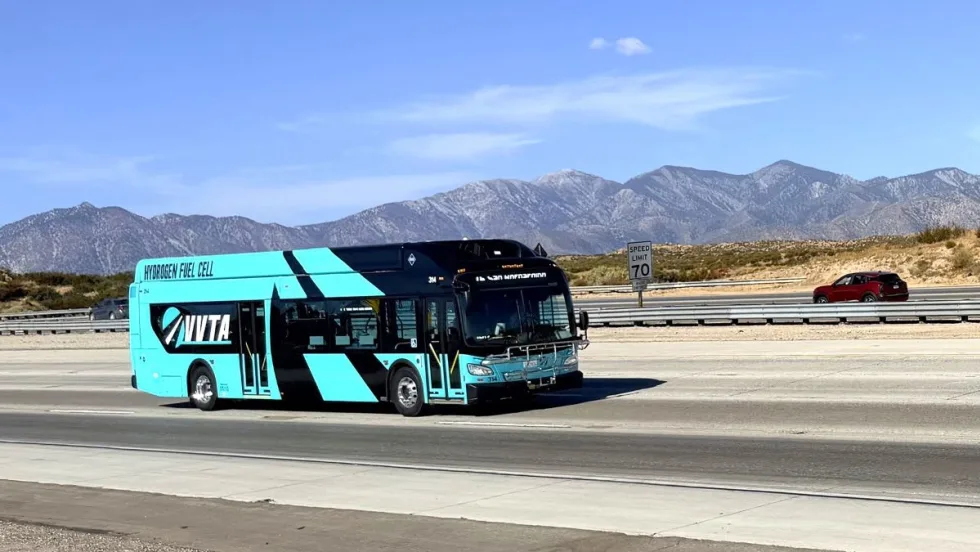
California's VVTA Begins Phased Rollout of Hydrogen Fuel Cell Buses
The agency is introducing 13 zero-emission buses into revenue service while evaluating performance across its urban, rural, and long-distance routes.
Read More →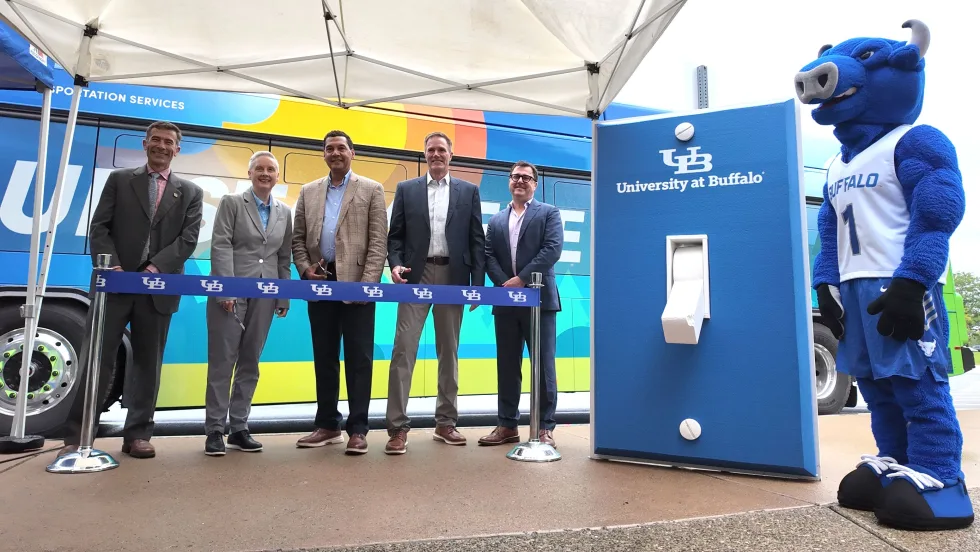
Inside Look: University at Buffalo Puts First 8 Electric Buses Into Stampede Service
UB, transportation solutions provider WeDriveU, and fleet electrification specialist Zenobē marked the deployment in the presence of students, university administrators, and local officials.
Read More →