



Report: 67,000 U.S. bridges 'structurally deficient'
Nearly 8,000 bridges are both structurally deficient and “fracture critical,” meaning they are designed with no redundancy in their key structural components, so that if one fails the bridge could collapse.

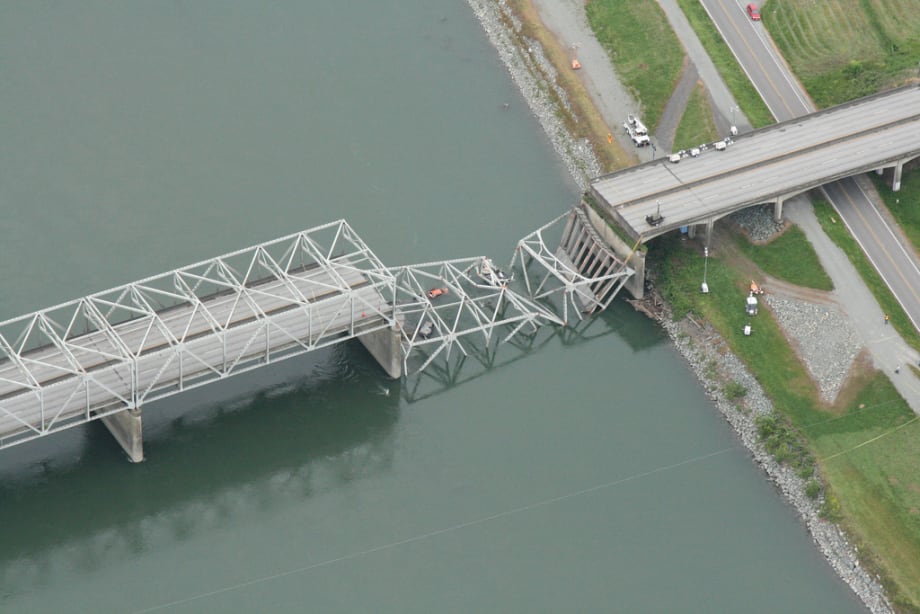
I-5 Skagit River Bridge photo courtesy WSDOT via Flickr
Nearly 67,000 of the nation’s 605,000 bridges are rated “structurally deficient” and are in need of substantial repair or replacement, according to a new bridge inspections analysis.
Nearly 8,000 are both structurally deficient and “fracture critical," meaning they are designed with no redundancy in their key structural components, so that if one fails the bridge could collapse. The Federal Highway Administration estimates that the backlog of troubled bridges would cost $76 billion to eliminate.
The report, “The Fix We’re In For: The State of the Nation’s Bridges 2013,” conducted by Transportation for America’s (T4America), ranks states and the District of Columbia in terms of the overall condition of the their bridges, with one having the largest share of deficient bridges, 51 the lowest. Twenty-one states have a higher percentage of deficient bridges than the national average of 11%.
The five states with the worst bridge conditions have a share over 20%: Pennsylvania has the largest share of deteriorating bridges (24.5%), followed by Oklahoma (22.0%), Iowa (21.7%), Rhode Island (21.6%) and South Dakota (20.3%).
At the other end of the spectrum, five states have less than 5%t of their bridges rated structurally deficient: Nevada and Florida lead the rankings with 2.2%, followed by Texas (2.6%), Arizona (3.2%) and Utah (4.3%).
“With the collapse of the I-5 bridge in Washington state last month, coming just six years after an interstate collapse in Minnesota, Americans are acutely aware of the critical need to invest in our bridges as our system shows its age,” said James Corless, director of Transportation for America. “Today, though, there more deficient bridges in our 100 largest metropolitan areas than there are McDonald’s locations nationwide.”
Congress has repeatedly declared the condition and safety of our bridges to be of national significance. However, the money to fix them is getting harder to come by with declining gas tax revenues and a fiscal squeeze at all levels of government.
At the same time, Congress made the prospects for bridges even more uncertain last year by eliminating a dedicated fund for them in its update of the federal transportation program. The new law also reduces access to funds for 90% of structurally deficient bridges, most of which are owned by cash-strapped local governments.
“Unfortunately, the changes Congress made last year left the health and safety of our bridges to compete with every other priority,” Corless said. “When it updates the law again next year, Congress should ensure that we have both adequate funding and accountability for fixing all our bridges, regardless of which level of government owns them.”
The authors suggest several recommendations to ensure that there is both funding for safe and well-maintained bridges and accountability for getting the job done, including:
Increase investment: Current spending levels are precarious and inadequate. In order to bring our rapidly aging infrastructure up to a state of good repair, Congress should raise new, dedicated revenues for surface transportation programs, including bridge repair.
Restore funding for the 180,000-plus bridges that lost eligibility under the new federal transportation program: Under MAP-21, all of the money previously set aside for bridge repair was rolled into the new National Highway Performance Program, and only 10% of deficient bridges — and 23% of all bridges — are eligible. Congress must restore funding access for all previously eligible bridges.
Prioritize Repair: Congress should require states to set aside a share of their NHPP funds for bridge repair unless the state’s bridges are certified as being in a state of good repair.
More Management

METRO Opens Submissions for 2026 Motorcoach Awards
Nominations are now being accepted for METRO Magazine’s Operator of the Year and Innovative Operator of the Year awards.
Read More →
New York MTA Advances Final Contract for Second Avenue Subway Expansion
Contract Four is the largest in the Second Avenue Subway Phase 2 project and includes construction of station infrastructure, tracks, and signals for the subway expansion, MTA officials said. Work on Contract Four will begin in 2027.
Read More →
Transit Agencies Highlight Safety Gains at National Summit
Leaders from 15 major transit systems shared crime-reduction results and safety initiatives while discussing the role of continued federal support.
Read More →

NITA Names New Leadership, Expands Reduced-Fare Program at First Board Meeting
The new regional transit authority appointed its first board chair and interim executive director while extending reduced fares across CTA, Metra, and Pace for eligible riders.
Read More →
Beyond the Checklist: A Structured Approach to Transit Maintenance
Reliability-Centered Maintenance helps transit agencies move beyond routine checklists to focus limited resources on the assets and failures that have the greatest impact on safety, reliability, and service.
Read More →
APTA 2026 Nominating Committee Selects Leadership Slate, Names Chair and Vice Chair Nominees
Leadership changes will help shape the association’s priorities and its representation of the transportation industry during the 2026–2027 term.
Read More →
DART Launches Major Security, Fare Enforcement Initiative
The 90-day demonstration will deploy coordinated security teams at five light rail stations while testing controlled access and gathering data to guide future investments.
Read More →
Advancing Fare Collection Through Technology and Innovation
Learn about delivering 1300 gates at 91 stations while managing fare evasion. Explore the large scale deployment, solution customization and real-world results that affect the region. Prepare for deployment in your region now.
Read More →
Game Day in Motion: Moving Millions During the 2026 World Cup
Between packed transit stations and team motorcoaches, see how agencies and operators across North America tackled the transportation demands of the 2026 FIFA World Cup.
Read More →
Surface Transportation Extension Averts Shutdown, Leaves Transit Funding Gap
The stopgap keeps federal transportation programs moving, but missing advance funding could complicate the transit and rail projects agencies are planning next.
Read More →