



Report: Effects of gas prices vary by modes, other factors
The study focused on 10 U.S. census urbanized areas from 2002 to 2011 and provided information that could help transit agencies prepare to accommodate higher transit travel needs through pricing strategies, general financing, capacity management and operations planning of transit services during times of substantial gasoline price increases.

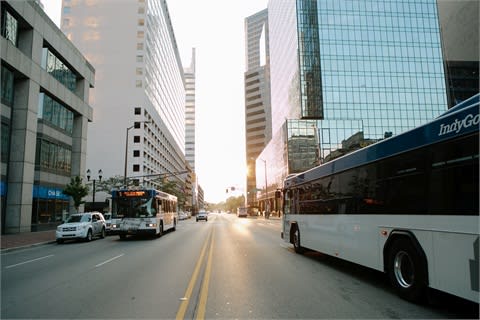
Courtesy IndyGo
Transit agencies should prepare for ridership increases when gasoline prices increase, however, the net effect varies depending on the transit mode, the range of gasoline prices and response time, concludes the Mineta Transportation Institute’s latest peer-reviewed research report, “Net Effects of Gasoline Price Changes on Transit Ridership in U.S. Urban Areas.”
The study focused on 10 U.S. census urbanized areas from 2002 to 2011 and provided information that could help transit agencies prepare to accommodate higher transit travel needs through pricing strategies, general financing, capacity management and operations planning of transit services during times of substantial gasoline price increases. Principal investigator was Hiroyuki Iseki, PhD, working with Rubaba Ali, both from the University of Maryland, College Park. To view the free report, click here.
“While previous studies have been published, this report improved on the four specifications of panel data regression analysis and other factors to obtain more robust results that can be generalized,” Dr. Iseki said. “A ridership increase may be good news for transit agencies during the off-peak periods, but even a small percentage of ridership increase can require a substantial increase in service supply and facility capacity during the peak periods, when the service level is at or near the maximum supply capacity. If transit agencies can anticipate when and at what levels those ridership increases could reach, they can plan their services more accurately.”
The results of this study suggest that transit agencies should prepare for a potential increase in ridership during peak periods that can be generated by substantial gasoline price increases over $3 per gallon for bus and commuter rail modes, and over $4 per gallon for light rail.
The two main variables analyzed in this study are: (1) monthly average gasoline prices based on weekly prices of three different types of gasoline — regular, midgrade and premium — collected from the U.S. Energy Information Administration, and (2) monthly unlinked passenger trips obtained from the Federal Transit Administration's National Transit Database from January 2002 to December 2011 for Boston, Chicago, Cleveland, Denver, Houston, Los Angeles, Miami, New York, San Francisco and Seattle.
In addition to several important variables related to transit service and demographics, the research team accounted for factors that were not comprehensively included in previous studies, such as the effects of number of recent immigrants, highway miles and unemployment rate.
The study also examines the endogeneity problem in regression analysis that potentially arises from the simultaneity issue between transit service supply and ridership, and estimates the short- and long-term effects of gasoline prices as well as the threshold effects of $3 and $4 marks on transit ridership for bus, light rail, heavy rail, commuter rail and these four modes combined.
More Bus
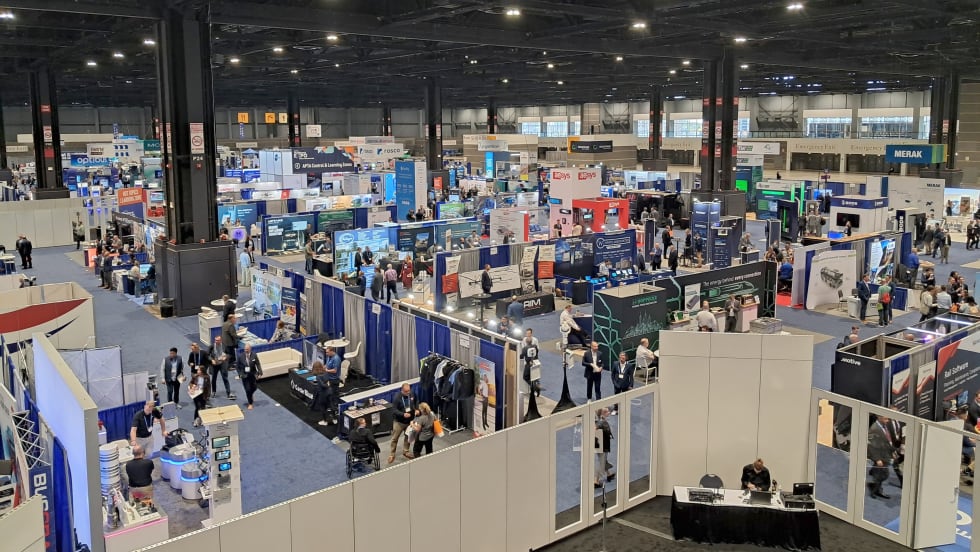
Scenes from APTA TRANSform & EXPO 2026
Transit leaders, manufacturers, and industry professionals gathered in Chicago to explore new technologies, share ideas, and discuss the future of public transportation.
Read More →
More Than a Summer Job: Building the Next Generation of Transit Talent
The Delaware River Port Authority and PATCO have transformed their internship program into a hands-on professional development experience that introduces students to the breadth of transportation careers — and creates a pipeline for future employees.
Read More →
LA Metro Board Awards 220 Battery-Electric Bus Contract to ENC
The contract, which is the largest base award of battery-electric buses by a U.S. transit agency, will be built in Southern California, sustaining good jobs as LA prepares to welcome the world in 2028
Read More →
Public Transit Conference Returning to GFX in 2027, Call for Papers Now Open
The Call for Papers is now open, allowing transit agency professionals and industry experts to help shape the PTC educational program by submitting session ideas for consideration.
Read More →
Indian River Transit’s Community-Focused Approach Earns National Recognition
Named APTA’s 2026 Outstanding Public Transportation System in its size category, Florida’s Indian River County transit system continues to grow ridership through fare-free service and a focus on evolving community needs.
Read More →
ENC Lands MATA Contract and More in Biz Briefs
In this edition of Biz Briefs, we spotlight the latest developments shaping the future of mobility.
Read More →
From Surviving to Thriving: Building Stronger Transportation Organizations
Bus Business Consultants founder Brian Dickson shares lessons on leadership, organizational health, and creating options for long-term success in a changing transportation industry.
Read More →
Everett Transit, Community Transit Outline Consolidation Agreement
The proposed agreement calls for a 50% increase in bus service in Everett, a new microtransit zone, continued paratransit service, and the transfer of Everett Transit operations to Community Transit.
Read More →
SEPTA Details Accelerate Vision for Transit System
The plan outlines investments in trolley modernization, new Metro and Regional Rail vehicles, accessible stations, and more frequent bus and rail service.
Read More →
Report: Transit Bus Manufacturing Supports 34,100 Jobs, $5.1B in GDP
The “Buses Mean Business” report examines the transit bus manufacturing industry’s economic footprint, supply chain, and rising demand for vehicle replacements.
Read More →