



RTD Taps HDR to Study Feasibility of ‘Peak Service’ Rail to NW Denver Communities
The approximately two-year study will aim to provide updated engineering and cost estimates to determine recommendations for service to northwestern metropolitan communities, which include Broomfield, Louisville, Boulder, and Longmont.
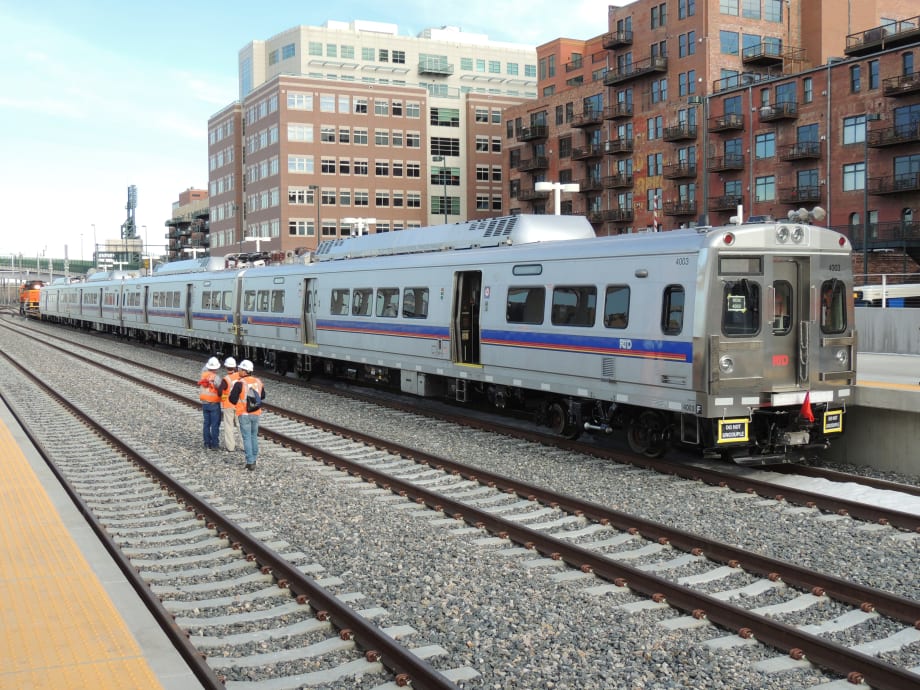
At an estimated cost of $1.5 billion, the Northwest Rail Line remains the costliest of the unfinished FasTracks projects.
Denver RTD
Denver’s Regional Transportation District (RTD) selected HDR Engineering Inc. to study the feasibility of implementing a “peak service” rail schedule between Denver Union Station and downtown Longmont.
Following RTD board approval in August 2021, the agency sought proposals from qualified firms for the Northwest Rail Line Peak Service Study. HDR Engineering was selected among three qualified firms that submitted proposals.
The approximately two-year study will aim to provide updated engineering and cost estimates to determine recommendations for service to northwestern metropolitan communities, which include Broomfield, Louisville, Boulder, and Longmont. Additional goals include positioning the project for the possibility of federal funding, planning peak service to allow for future build-out of the Northwest Rail Line, and aligning RTD strategically with the agency’s stated goals of partnering with agencies such as the Front Range Passenger Rail Service and the Colorado Department of Transportation.
“This feasibility study will provide RTD with public input and 2022 data that will enable the agency and interested parties to utilize a common set of facts in determining how best to serve the northern suburbs within the District,” RTD GM/CEO Debra A. Johnson said. "Like taxpayers throughout RTD’s service area, residents of these communities have contributed to the FasTracks transit-expansion program since its approval 18 years ago, and they continue to express their support for rail service to this part of the region. I anticipate that the collective efforts with HDR Engineering will advance the path forward in a meaningful way."
The plan will examine use of RTD’s existing B Line commuter rail alignment, along with the possibility of leasing BNSF Railway right-of-way and tracks, to extend service during peak commuting hours from Westminster Station 35.3 miles north to Boulder and Longmont.
The peak-hour service plan to be explored in the study would offer three morning trips from Longmont to Denver and three evening trips from Denver to Longmont. The peak service study will examine whether the plan would identify a viable option that would potentially enable RTD to advance service to the northwest suburbs.
At an estimated cost of $1.5 billion, the Northwest Rail Line remains the costliest of the unfinished FasTracks projects, the others being the .8-mile extension of the Central Rail Corridor, the final 5.5 miles of the N Line, and the 2.5-mile extension of the Southwest Corridor. RTD estimates that, given current FasTracks funding, it could take until 2050 to complete infrastructure improvements needed to operate B Line train service throughout the day between Denver and Longmont.
FasTracks is RTD's voter-approved transit expansion program that is transforming transportation through the Denver metro region. Since 2004, RTD has built 25.1 miles of light rail track and 53 miles of commuter rail track, launched the Flatiron Flyer bus rapid transit service, and opened an intermodal hub at Union Station right in downtown Denver.
More Rail
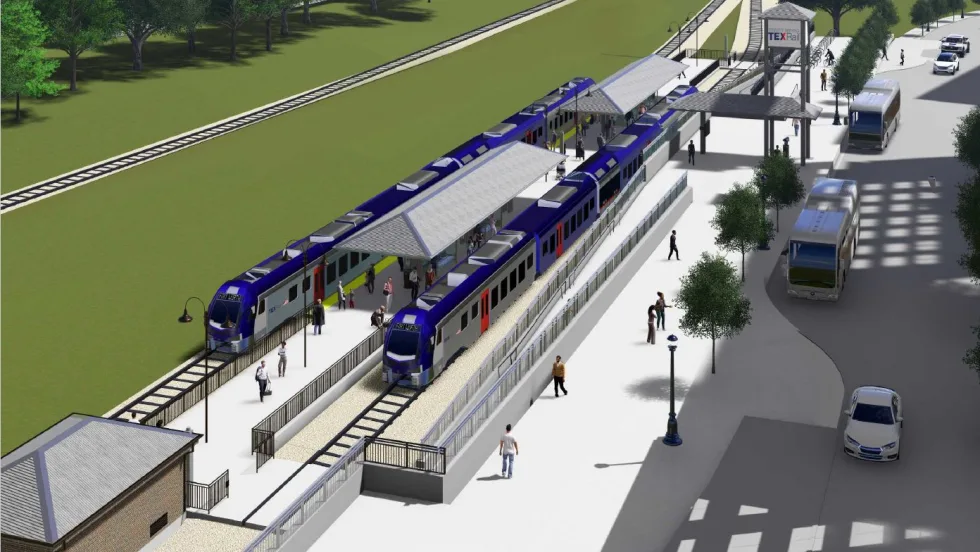
Trinity Metro Breaks Ground on $270M TEXRail Extension
The 2.1-mile extension will connect Fort Worth’s Medical District and Near Southside to downtown, surrounding communities, and Dallas-Fort Worth International Airport.
Read More →
Bringing Austin’s First Light Rail System to Life
Austin Transit Partnership CEO Greg Canally discusses the city's nearly 10-mile light rail project, its collaborative approach to project delivery, the importance of community engagement, and the milestones ahead as construction approaches in 2027.
Read More →
Metra Draft Plan Outlines Costs, Service Improvements for Regional Rail
The Systemwide Network Plan identifies infrastructure needs and potential investments to expand all-day, bidirectional rail service across the Chicago region.
Read More →
Amtrak Completes First Street Tunnel Upgrades, Restores Service
The nine-day construction project included replacing aging track infrastructure and modernizing switch systems near Washington Union Station.
Read More →
FRA Announces $2.3B for Passenger, Freight Rail Projects Nationwide
The CRISI Grant Program funding will support rail infrastructure improvements, safety upgrades, and projects aimed at improving freight and passenger rail service across 45 states and Washington, D.C.
Read More →
Caltrain’s Electrification Drives a New Era of Ridership Growth
The railroad’s shift to electric service has brought more frequent trains, stronger customer satisfaction, and increased ridership, earning it APTA’s Outstanding Public Transportation System award.
Read More →
FTA Advances $164M Broward County Commuter Rail Project
The proposed 10.5-mile commuter rail extension would connect Fort Lauderdale and Aventura, expanding passenger rail options in South Florida.
Read More →
New York MTA Launches Historic $1.9B Signal, Track Modernization Project
Funded in part by congestion pricing revenue, the project will replace nearly century-old signals along the A and C lines in Brooklyn and Queens.
Read More →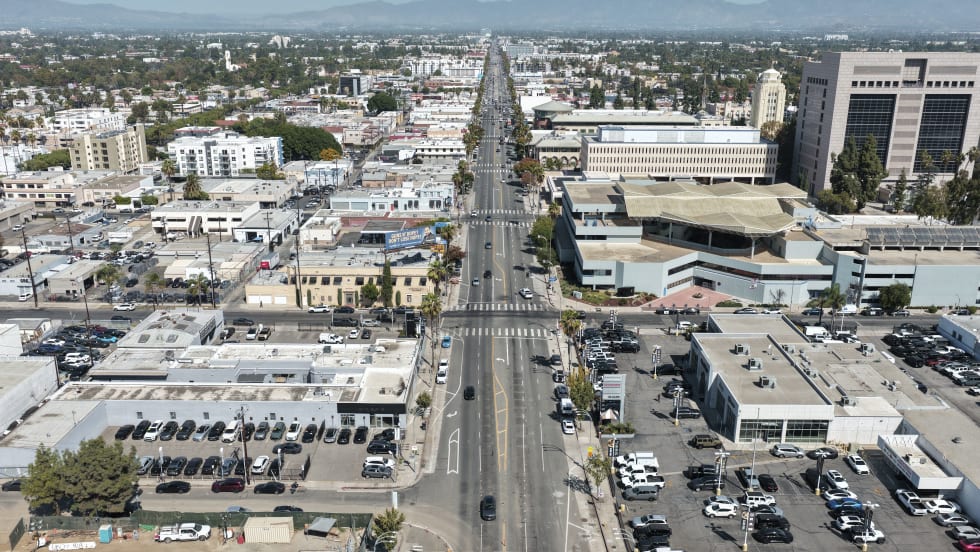
LA Metro Breaks Ground on East San Fernando Valley Light Rail Project
The 6.7-mile line will add 11 stations along Van Nuys Boulevard, expand access to jobs and regional transit connections, and support Metro’s broader efforts to improve mobility as rail ridership grows.
Read More →
CSA Group Releases Climate Resilience Standard for Transit, Passenger Rail
Developed with support from the Standards Council of Canada, CSA D700 guides assessing climate-related risks and planning adaptation measures for transit and passenger rail systems.
Read More →