



Startups tap technology to create 'smart routes' to provide greater mobility options
With smart phones, sharing our location can be as easy as logging into an app. And, pop-up transit companies like Bridj and Shift are taking advantage of this data and creating a flexible transit system that comes to the customer instead of vice versa.

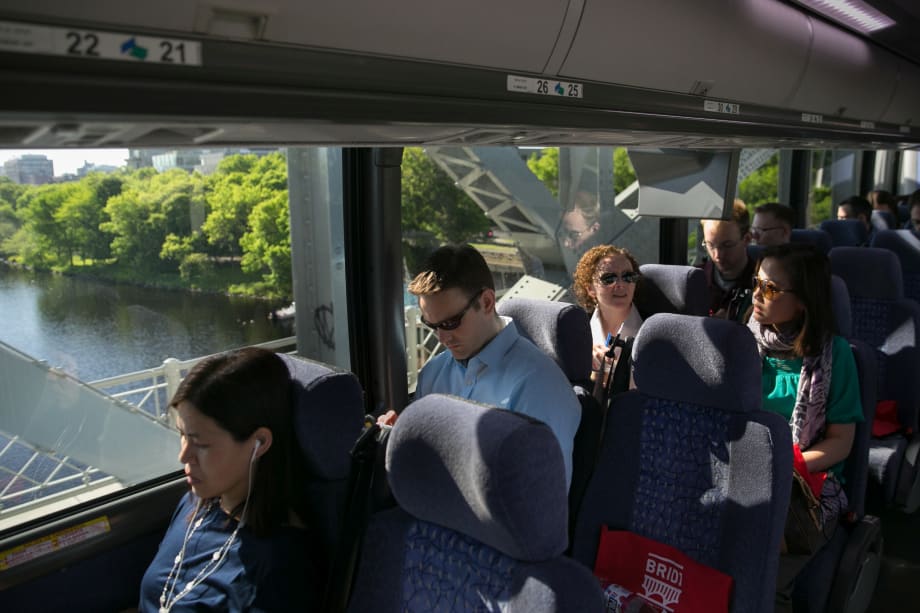
Bridj stemmed from a transit network George designed to take college students home for breaks called BreakShuttle. The system is now the largest provider of collegiate academic break transit services in the country.
Bridj stemmed from a transit network George designed to take college students home for breaks called BreakShuttle. The system is now the largest provider of collegiate academic break transit services in the country.
Technology is playing a key role in changing public transportation in cities. With smart phones, sharing our location can be as easy as logging into an app. And, pop up transit companies like Bridj and Shift are taking advantage of this data and creating a flexible transit system that comes to the customer instead of vice versa.
For Boston-based Bridj, the idea of pop up transit started in the dorm room of Middleberry College student Matthew George. Bridj stemmed from a transit network George designed to take college students home for breaks called BreakShuttle. The system is now the largest provider of collegiate academic break transit services in the country.
“He [Geroge] had experience in the transit realm after BreakShuttle, and then realized there was this opportunity within cities,” said Ryan Kelly, marketing manager of Bridj.
However, George isn’t the only one on the Bridj team with transit experience, Gabe Klein, former head of the transportation departments in Chicago and Washington, D.C., joined the team as the company’s chief operating officer earlier in 2014. Also leading the company’s data team is former Massachusetts Bay Transportation Authority’s (MBTA) Director of Research and Analytics David Block-Schacter.
Bridj has been in its beta testing phase for a few months, but has its Jitney License in Boston and Brookline and just got the green light for the Cambridge area. With $4 million in funding from Atlas Ventures, NextView Ventures, Suffolk Equity, Freshtracks Capital and a group of angel investors who were also early investors in ZipCar, the company’s momentum will only continue to build.
On the other side of the country, is Shift. Like Bridj, Shift started from another venture. Project 100, aka Shift, caught media attention after Las Vegas venture capitalist Tony Hsieh invested a whopping $10 million in the startup. Another noteworthy part of the company was the acquisition of 12 Tesla Model S vehicles. Although the flashy sedans are part of Shift’s fleet, Zach Ware, founder/ CEO of Shift, insists that focusing on the Teslas would be like “focusing on the carpet order for a massive art museum.”
The breakdown of vehicles in Shift’s fleet are 49 smart cars, 102 bicycles, 30 Chevrolet Volts, 12 Tesla Model Ss and one circulator trolley.
How They Work
Both companies have an algorithm combining data from users and social media to create routes in real time and pick up passengers on the fly.
For Bridj, bus routes fluctuate based on demand and traffic. Once a user has requested a pickup location and destination, Bridj lets the customer know where to meet based on the amount of commuter responses, and sends one of its 14-passenger Mercedes-Benz Sprinters on routes in four areas of Boston.
The premise of Shift is slightly different from Bridj’s, in that the choice of transportation varies by what the customer needs to do. “The nature of mobility is different every time,” Ware said. Also, Shift is based off a monthly membership.
When a customer logs onto the app, the user answers a series of questions about their trip like how far they plan to go, and if they have a preference for how they want to get there whether it be bike, car or shuttle.
Although the concept sounds similar to Lyft or Uber, Ware and Kelly emphasized that neither companies inspired Shift or Bridj.
“Lyft and Uber were trying to solve the problem of the taxi industry, but we are trying to figure out how people are moving around in the city,” said Kelly. “We think in order to keep up with the pace of city populations we need a dynamic transit system that doesn’t cost a lot to build.”
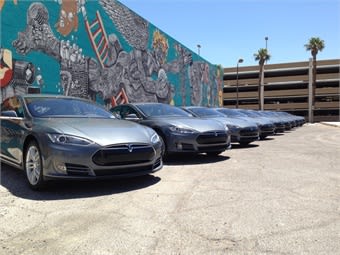
The breakdown of vehicles in Shift’s fleet are 49 smart cars, 102 bicycles, 30 Chevrolet Volts, 12 Tesla Model Ss and one circulator trolley.
Public Transit’s Response
Despite the heavy resistance from taxis to Uber and Lyft, Joe Pesaturo, communications director at MBTA says they are pleased that Bridj will make it easier for some people to make connections with the MBTA subway system.
Pesaturo does acknowledge MBTA offers Boston area commuters more options at a lower cost.
“Bridj’s fares are more in line with taxi fares. The vast majority of public transit users can‘t afford to pay for taxicabs every day,” Pesaturo said.
Placing the fares side-by-side, MBTA charges $1.60 for adult riders, while the current price for Bridj wavers from $1 to $3. Ware says fares will be slightly more than the subway but less than taking a cab.
Shift hasn’t run into any compliance issues. In fact, Ware says he sees both the regional transit commission and city planner as friends.
“We have this really cool back and forth with the city because they like what we are doing. It reduces the pressure on them to do things that their transit systems don’t support well,” Ware said.
Ware also clarifies that Shift users aren’t necessarily the same as those using public transportation.
“We are going to cover the last mile problem, and the people using shift are moving in patterns that public transit doesn’t cover, so we aren’t deferring anyone from public transit,” he said.
Expansion in Future
Bridj is proving to be a popular form of transportation even during its beta phase, but the company wants to expand the service in Boston and refine the technology before launching in new markets, said Kelly.
As for Shift, talks of expansion are underway. The company wouldn’t disclose which cities they have their eyes on specifically, but Ware says this time next year Shift will be in one if not two more cities.
More New Mobility

From Hardware to Digital Partner: Luminator Charts Its Next Chapter
CEO Magnus Friberg discusses Luminator’s shift toward becoming a digital partner, the growing importance of software and interoperability, and how AI can help agencies improve operations and passenger experience.
Read More →
Biz Briefs: Alstom Lands Canadian Contract, LYT to Supply California TSP, and More
In METRO's latest installment, we take a look at recent news from Complete Coach Works, Beep, FlixBus, and more partnerships making headlines across the transportation sector.
Read More →
CharterUP’s Armir Harris on Technology, AI, and the Future of Group Mobility
In a recent episode of METROspectives, CharterUP Founder/CEO Armir Harris discussed the company’s evolution from an online charter bus marketplace into a technology platform supporting public- and private-sector mobility and much more.
Read More →
Jacksonville’s NAVI Project Charts a New Course for Autonomous Public Transportation
Through its NAVI program, JTA is showing how autonomous vehicles, intelligent infrastructure, and coordinated operations can work together to deliver everyday public transportation.
Read More →
Biz Briefs: Luminator Marks Milestone and More
From manufacturers and suppliers to transit agencies and motorcoach operators, these updates offer a snapshot of the projects, partnerships and business moves driving the industry forward.
Read More →
New Tricks for Old Bureaucracies: Joshua Schank on Making Transit Innovation Stick
Former LA Metro Chief Innovation Officer Joshua Schank discusses why good ideas aren't enough, how transit agencies can overcome resistance to change, and why today's challenges demand more innovation.
Read More →
How DART's GoPass Is Redefining Regional Mobility
Serving 14 transit agencies, GoPass simplifies multimodal travel by allowing riders to plan, pay for, and manage an entire trip through one app.
Read More →
Biz Briefs: OCTA Taps Clean Energy for Hydrogen Station, Stadler to Supply Via Rail Vehicles, and More
From manufacturers and suppliers to transit agencies and motorcoach operators, these updates offer a snapshot of the projects, partnerships and business moves driving the industry forward.
Read More →CharterUP Expands Into New Mobility and Autonomous Transportation
Vice President of New Mobility Stephen Joos discusses how CharterUP is leveraging its nationwide transportation network, technology platform, and autonomous vehicle partnerships to expand into workforce mobility, campus shuttles, and transit solutions.
Read More →
METRO Magazine Announces 2026 Innovative Solutions Awards Winners
Projects Recognized for Advancing Mobility Through Technology, Accessibility, Workforce Innovation, and Operational Excellence
Read More →