



Study finds growing support for raising taxes to pay for transportation projects
This year’s results of the Mineta Transportation Institute survey continue the trend of gradually rising support for increase in the gas tax rate.

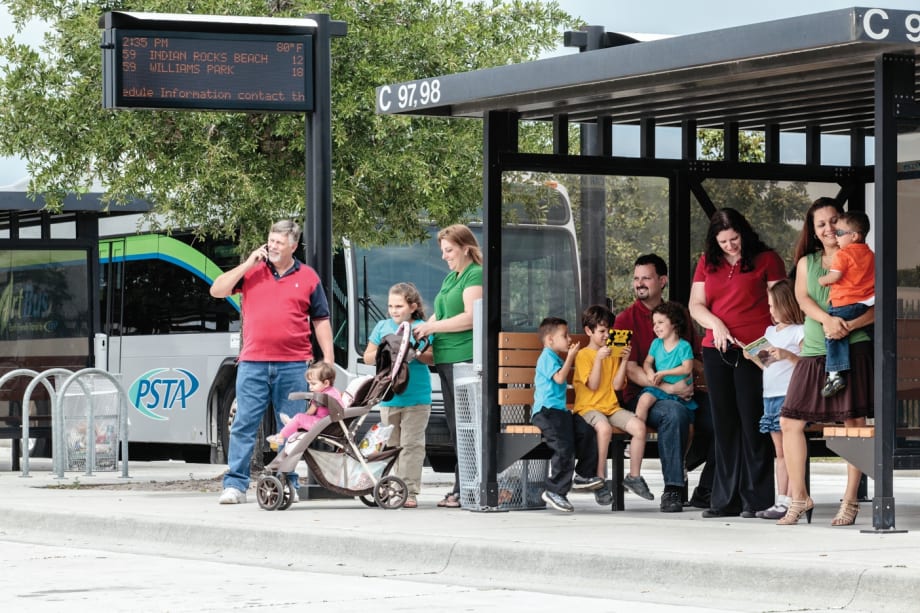
This year’s results continue the trend of gradually rising support for increase in the gas tax rate.
PSTA
This year’s results continue the trend of gradually rising support for increase in the gas tax rate.
PSTA
As the U.S. Congress considers raising the federal gas tax rate, a question underlying the discussion is whether Americans will support a tax increase. Researchers from the Mineta Transportation Institute (MTI) conducted their ninth annual public opinion survey on this topic: “What Do Americans Think about Federal Tax Options to Support Transportation? Results From Year Nine of a National Survey.” Results indicate that a majority of Americans would support higher taxes for transportation — given the right conditions. For instance, 72% of respondents supported a gas tax increase of 10 cents per gallon to improve road maintenance, whereas support dropped to just 34% if the revenues were to be used “for transportation” more generally.
The survey is the ninth in an annual series that asks the same questions each year. This year’s results continue the trend of gradually rising support for increase in the gas tax rate. Since 2010, support for each gas tax option has grown by 10 to 15 percentage points.
The survey also found support has grown for a “green” mileage fee option. Support has grown from 33% in 2010 to 46% this year. In this scenario, drivers would pay an average of a penny per mile driven, but the rate would be lower for vehicles that pollute less and higher for vehicles that pollute more.
“We face growing needs across our transportation system, but funding hasn’t kept pace,” says Dr. Asha Weinstein Agrawal, one of the study authors and Director of MTI’s National Transportation Finance Center. “To solve this dilemma, we must either lower our goals for system maintenance and improvements, or raise new revenues.”
The survey tested public support for ten different tax options: seven variants of a gas tax increase, two variants of a new mileage tax, and one new sales tax option.
Key 2018 findings include:
Six of the 10 transportation options tested had majority support.
Linking tax increases to safety, maintenance, or environmental benefits increased support by at least 10 percentage points among almost every sociodemographic group.
Since 2010, support for the taxes has increased.
More Management

LIT Marks 10-Year Milestone at Annual Summit
Hosted by the COTA from September 10 to 13, the Summit carried the theme “Celebrating 10 Years of Excellence, Leadership, and Impact,” with every part of the program honoring the people, agencies, and partners who built LIT over its first decade.
Read More →
People Movement: Dan Dipert Coaches Adds Third-Generation Leader, Keolis Names New Valley Metro VP/GM, and More
In this edition, we also cover recent appointments and announcements at the Wabtec, SilverRide, HNTB, and more, showcasing the individuals helping to shape the future of transportation.
Read More →
METRO Opens Submissions for 2026 Motorcoach Awards
Nominations are now being accepted for METRO Magazine’s Operator of the Year and Innovative Operator of the Year awards.
Read More →

New York MTA Advances Final Contract for Second Avenue Subway Expansion
Contract Four is the largest in the Second Avenue Subway Phase 2 project and includes construction of station infrastructure, tracks, and signals for the subway expansion, MTA officials said. Work on Contract Four will begin in 2027.
Read More →
Transit Agencies Highlight Safety Gains at National Summit
Leaders from 15 major transit systems shared crime-reduction results and safety initiatives while discussing the role of continued federal support.
Read More →
NITA Names New Leadership, Expands Reduced-Fare Program at First Board Meeting
The new regional transit authority appointed its first board chair and interim executive director while extending reduced fares across CTA, Metra, and Pace for eligible riders.
Read More →
Beyond the Checklist: A Structured Approach to Transit Maintenance
Reliability-Centered Maintenance helps transit agencies move beyond routine checklists to focus limited resources on the assets and failures that have the greatest impact on safety, reliability, and service.
Read More →
APTA 2026 Nominating Committee Selects Leadership Slate, Names Chair and Vice Chair Nominees
Leadership changes will help shape the association’s priorities and its representation of the transportation industry during the 2026–2027 term.
Read More →
DART Launches Major Security, Fare Enforcement Initiative
The 90-day demonstration will deploy coordinated security teams at five light rail stations while testing controlled access and gathering data to guide future investments.
Read More →
Advancing Fare Collection Through Technology and Innovation
Learn about delivering 1300 gates at 91 stations while managing fare evasion. Explore the large scale deployment, solution customization and real-world results that affect the region. Prepare for deployment in your region now.
Read More →