



Tolar lands five-year bus shelter contract with IndyGo
The majority of the bus shelters will be five-foot-by-10-foot in size and modeled after Tolar Manufacturing’s popular Signature Sunset line.

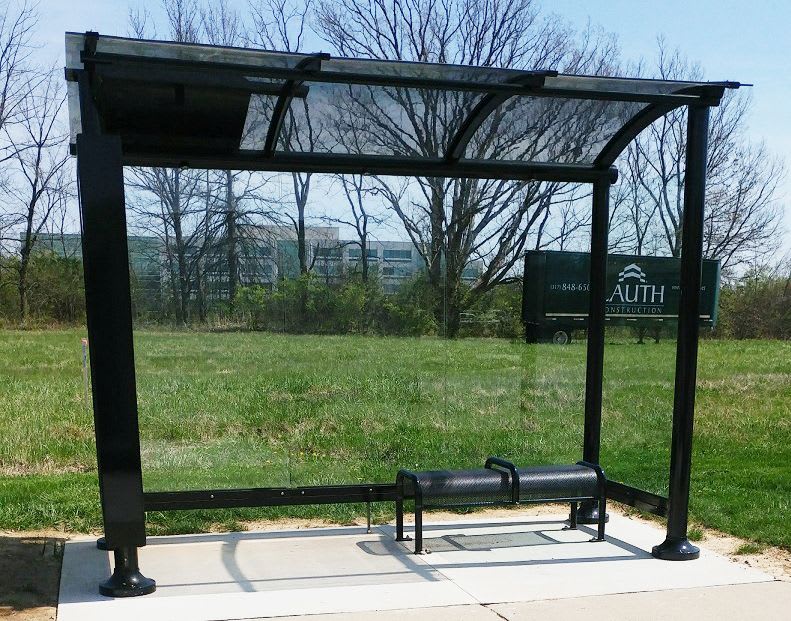
Tolar Manufacturing previously delivered 20 bus shelters for IndyGo through a contract ending December 2017.
Tolar Manufacturing previously delivered 20 bus shelters for IndyGo through a contract ending December 2017.
Tolar Manufacturing Co. was selected for IndyGo’s five-year, 90-plus bus shelter project. The contract was awarded by the Indianapolis Public Transportation Company’s (IndyGo) board in late September.
The majority of the bus shelters will be five-foot-by-10-foot in size and modeled after Tolar Manufacturing’s popular Signature Sunset line. Some shelters will have a larger footprint so as to be incorporated into the agency’s “Super Stops” program.
IndyGo states in a board report that the goal of this purchase is to, “enhance the experience for IndyGo riders by providing shelter from the elements while waiting for the bus.” An important component of the project is the addition of solar lighting for the utmost in passenger safety. Other shelter elements will include benches, advertising displays, and trash receptacles.
Tolar Manufacturing previously delivered 20 bus shelters for IndyGo through a contract ending December 2017.
More Management

LIT Marks 10-Year Milestone at Annual Summit
Hosted by the COTA from September 10 to 13, the Summit carried the theme “Celebrating 10 Years of Excellence, Leadership, and Impact,” with every part of the program honoring the people, agencies, and partners who built LIT over its first decade.
Read More →
People Movement: Dan Dipert Coaches Adds Third-Generation Leader, Keolis Names New Valley Metro VP/GM, and More
In this edition, we also cover recent appointments and announcements at the Wabtec, SilverRide, HNTB, and more, showcasing the individuals helping to shape the future of transportation.
Read More →
METRO Opens Submissions for 2026 Motorcoach Awards
Nominations are now being accepted for METRO Magazine’s Operator of the Year and Innovative Operator of the Year awards.
Read More →

New York MTA Advances Final Contract for Second Avenue Subway Expansion
Contract Four is the largest in the Second Avenue Subway Phase 2 project and includes construction of station infrastructure, tracks, and signals for the subway expansion, MTA officials said. Work on Contract Four will begin in 2027.
Read More →
Transit Agencies Highlight Safety Gains at National Summit
Leaders from 15 major transit systems shared crime-reduction results and safety initiatives while discussing the role of continued federal support.
Read More →
NITA Names New Leadership, Expands Reduced-Fare Program at First Board Meeting
The new regional transit authority appointed its first board chair and interim executive director while extending reduced fares across CTA, Metra, and Pace for eligible riders.
Read More →
Beyond the Checklist: A Structured Approach to Transit Maintenance
Reliability-Centered Maintenance helps transit agencies move beyond routine checklists to focus limited resources on the assets and failures that have the greatest impact on safety, reliability, and service.
Read More →
APTA 2026 Nominating Committee Selects Leadership Slate, Names Chair and Vice Chair Nominees
Leadership changes will help shape the association’s priorities and its representation of the transportation industry during the 2026–2027 term.
Read More →
DART Launches Major Security, Fare Enforcement Initiative
The 90-day demonstration will deploy coordinated security teams at five light rail stations while testing controlled access and gathering data to guide future investments.
Read More →
Advancing Fare Collection Through Technology and Innovation
Learn about delivering 1300 gates at 91 stations while managing fare evasion. Explore the large scale deployment, solution customization and real-world results that affect the region. Prepare for deployment in your region now.
Read More →