




Similar Content: May Mobility, T-Mobile Team to Bring AVs to Georgia
TRC Launches One Transit; Enters 132 Vehicle Partnership
The Routing Company is using their Pingo platform to enable their One Transit model and seamlessly integrate paratransit, microtransit, and fixed-route services.
October 1, 2024
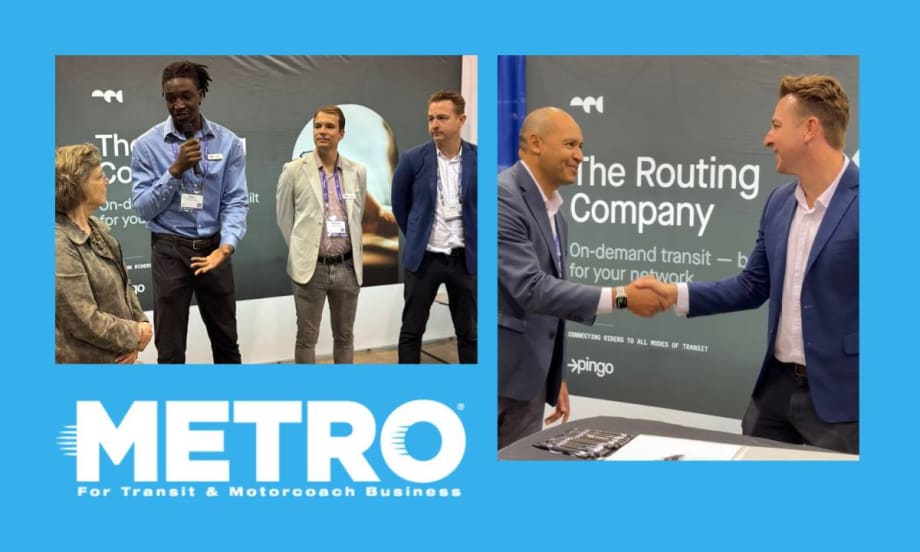
TRC officially launched it's One Transit model and will be implementing it in New York.
Photo: TRC/Canva
4 min to read
The Routing Company (TRC) officially launched its One Transit model during a special event at the American Public Transportation Association (APTA) TRANSform Conference.
TRC also signed a new five-year 132 vehicle contract with the Rochester-Genesee Regional Transportation Authority (RGRTA).
Unveiling One Transit
Introduced in June 2024, One Transit offers real-time, same-day intermodal transit integration for paratransit, microtransit, and fixed-route services.
“One Transit isn’t just a vision,” said James Cox, chief executive officer of TRC. “It’s a proven solution for cities looking to enhance the rider experience, optimize transit operations, and scale their systems efficiently. The interest we’ve seen from cities worldwide shows that this model not only addresses today’s transit challenges, but also scales effectively to meet future demands.”
Attendees at the APTA conference witnessed the official launch of the platform at TRC’s booth led by Cox alongside industry executives, transit agency partners, and APTA representatives.
How One Transit Works
Operating a high-frequency intermodal accessible transit network, One Transit allows all transit modes to operate in-sync with seamless connectivity.
Agencies can achieve and maintain equity in transit accessibility and rider experience in a cost-effective manner. Any rider can get a trip within 15 minutes by being directed to the most effective mode.
One Transit is enabled through TRC’s Pingo platform with a feature called Pingo Access that seamlessly provides Americans with Disabilities Act (ADA) paratransit services in multiple modes.
“Our goal with One Transit is to build a unified, accessible transit network that works for everyone, especially those who depend on paratransit,” said Stephen Kuban, TRC’s head of partner growth. “By integrating transit modes, including commingling paratransit, and leveraging real-time routing and vehicle tracking, we’re making transit systems far more efficient, reducing wait times and operational costs while increasing flexibility, accessibility, and equity for riders.”
Improving Paratransit for All
The launch of One Transit builds on TRC’s foundation of paratransit product innovation, service design leadership, and experience with integrated transit deployments.
Pingo Access was first unveiled in 2023 and TRC continued investing in the development of new features.
TRC is directly improving the experience of Pingo Access for people who use paratransit every day including dispatchers, operators, reservationists, and riders.
Partnering in New York
TRC and RGRTA also entered into a five-year 132 vehicle contract that marks one of the industry’s largest on-demand transit deals this year. This is also TRC’s second partnership in New York.
RGRTA provides public transportation services in the eight-county area in and around Rochester, New York and delivers over 10 million rides per year.
TRC will support RGRTA as they provide weekday demand-responsive transit services including on-demand and deviated route service operated from seven properties. The deployment will be across Wayne, Ontario, Livingston, Wyoming, Genessee, Seneca, and Orleans counties.
Pre-booking will also be available to riders.
“This bid and partner selection process was unique in terms of its rigor and detail, which included onsite product testing with TRC and the other finalist,” said Dami Adebayo, director of partnerships for RGRTA. “The outcome here is a testament to the effort our team invested in tailoring our solutions to this specific partner, from the request for proposals right through to the actual service delivery.”
One Transit in New York
The launch of this partnership is an example of realizing the One Transit operating model, seamlessly integrating deviated routes with on-demand services to create a truly unified transit system.
The Pingo platform makes it possible to intelligently deploy vehicles across rural communities bringing the spontaneity in transit typically only associated with urban communities.
This integration enhances operational efficiency and represents a significant move towards equitable and inclusive public transportation.
“We have been focused on improving the convenience, accessibility, scheduling and tracking, and overall customer experience of the public transit service we provide, and we are happy that we found a partner in TRC that can deliver on all those elements,” said Miguel Velázquez, RGRTA CEO. “We look forward to piloting on-demand service in some of the more rural areas we serve, and leveraging TRC’s 24/7 support to ensure our customers have more access to more of the critical destinations they need to reach each day.”
Service is anticipated to start in late 2024 and aims to expand transit access in rural areas while digitizing and modernizing RGRTA’s rural transit operation.
The new on-demand deployment will leverage TRC’s full suite of Pingo products. RGRTA will also rely on TRC’s 24/7 rider support for prompt responses to rider inquiries and trouble shooting questions.
More Technology

From Hardware to Digital Partner: Luminator Charts Its Next Chapter
CEO Magnus Friberg discusses Luminator’s shift toward becoming a digital partner, the growing importance of software and interoperability, and how AI can help agencies improve operations and passenger experience.
Read More →
Beyond the Checklist: A Structured Approach to Transit Maintenance
Reliability-Centered Maintenance helps transit agencies move beyond routine checklists to focus limited resources on the assets and failures that have the greatest impact on safety, reliability, and service.
Read More →
NJ TRANSIT Advances Bus Technology Upgrades Across Statewide Fleet
More than 1,500 buses now feature upgraded technology designed to improve arrival predictions and provide free Wi-Fi, with deployment expected to reach nearly 2,000 buses by the end of 2026.
Read More →

Building a Flexible Path to Transit Electrification
John Hroncich discusses BAE Systems’ modular and scalable approach, lessons learned from decades of real-world operations, and how agencies can identify electrification strategies that fit their fleets.
Read More →
Biz Briefs: Alstom Lands Canadian Contract, LYT to Supply California TSP, and More
In METRO's latest installment, we take a look at recent news from Complete Coach Works, Beep, FlixBus, and more partnerships making headlines across the transportation sector.
Read More →
Sponsored•September 8, 2026
From Legacy Silos to Conversational Intelligence
What if transit leaders could ask any operational question and get a trusted answer in seconds? Conversational AI is transforming how agencies use their data.
Read More →
USDOT Announces Rail Vehicle Replacement Grants, Chattanooga AV Shuttle Funding
More than $191 million in federal funding will help three transit agencies replace aging rail vehicles and support a new autonomous shuttle service in Chattanooga.
Read More →
Bus Tech Talk: Keeping Transit Technicians Ahead of the Technology Curve
LA Metro’s Obed Mejia discusses technician training, evolving maintenance technology, fleet replacement, and strategies for getting the most out of today’s transit fleets.
Read More →
Biz Briefs: RIPTA Unveils New Frontrunners, Clevland RTA Adds New Siemens, and More
In METRO's latest installment, we take a look at recent news from Siemens, Prevost, Dodge, and more partnerships making headlines across the transportation sector.
Read More →
Why Simulating Pedestrian Movement Has Become Essential for Modern Rail Stations
Pedestrian microsimulation is helping rail planners identify bottlenecks, test station designs, and prepare complex transit hubs for growing passenger volumes.
Read More →