



Two-thirds of Americans likely to use HSR if available, survey says
The likelihood of respondents using high-speed rail for their work and leisure travel increases as they were informed that it will be less expensive than flying and that it will take less time than driving to their destination.

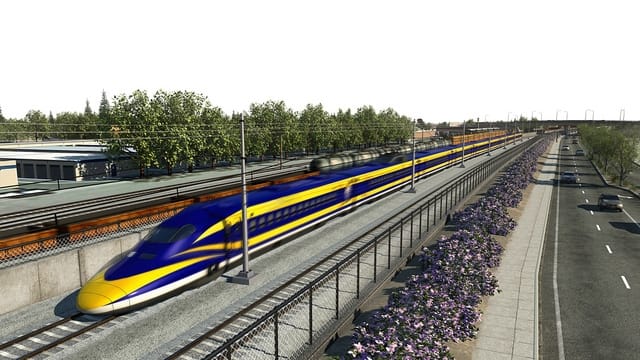
CHSRA
CHSRA
If high-speed rail were available today, two-thirds (63%) of Americans are likely to use high-speed trains and this jumps to nearly seventy percent (67%) when respondents were informed of the costs and time saving benefits of high-speed rail service, according to a 2015 survey released by the American Public Transportation Association (APTA).
"People want high-speed rail in America and we are seeing support among various ages and in different regions of the country regardless of political party," said APTA President/ CEO Michael Melaniphy. "In addition, the millennial generation and younger adults will lead the way with their preferences to have a multi-modal transportation system that supports their lifestyle. It is critical that we include implementation of high-speed rail as we look to plan for the nation's future transportation needs."
In the survey "High-Speed Rail in America 2015", conducted by TechnoMetrica for APTA, the likelihood of respondents using high-speed rail for their work and leisure travel increases as they were informed that it will be less expensive than flying and that it will take less time than driving to their destination. When told of these cost and time saving benefits, Millennials and young people (18 - 44) strong likelihood of use at 71% jumps to 76%. Those respondents who identify as Republican represent the largest growth of intended use, their likelihood of using high-speed rail increases from 58 to 65%, followed by Independents, 61 to 67%, and Democrats' already strong likelihood of use goes from 73 to 75% when informed of the savings of time and costs.
"A high-speed rail network will have a tremendous benefit to our entire transportation system," said Melaniphy. "It will enable America's air, rail, bus, ferry and highway systems to each function effectively and efficiently as we face a dramatic population growth that adds more travelers than our current capacity can accommodate."
The survey also revealed that Americans overwhelmingly support efforts to streamline government regulations that will promote real-estate development near high-speed rail. This development could include amenities such as popular retail shops, walkable neighborhoods, and unique dining experiences. Overall, nearly three quarters of respondents (71%) support reducing regulations so that amenities can be built near high-speed rail stations.
"High-speed rail not only provides a great transportation option, but the public's interest in amenities near high-speed rail stations is another way to create economic growth and jobs in local communities across the country," said Melaniphy. "If we have strong investment in high-speed rail, it will be an opportunity to generate real-estate and land use income for the private sector as well as local tax revenue for communities for decades to come."
High-Speed Rail in America 2015 survey was conducted by Techno Metrica for APTA. The survey includes 1,005 interviews using random digit dial sample of both landline and cell phone numbers. At the 95% confidence level, the margin of error for the respondents' overall sample is +/-3.2 percentage points.
More Rail
Amtrak, CN Reach Agreements to Strengthen Passenger Rail Service, Safety
The agreement resolves a more than decade-long proceeding before the Surface Transportation Board concerning the terms and conditions for Amtrak services, such as the City of New Orleans, Illini/Saluki, and Wolverine.
Read More →
New York MTA Advances Final Contract for Second Avenue Subway Expansion
Contract Four is the largest in the Second Avenue Subway Phase 2 project and includes construction of station infrastructure, tracks, and signals for the subway expansion, MTA officials said. Work on Contract Four will begin in 2027.
Read More →
San Diego MTS Breaks Monthly Trolley Ridership Record
Agency officials said July’s ridership indicates MTS’s continued recovery from the pandemic.
Read More →
Report Examines NJ TRANSIT Reliability, Funding Challenges
The Garden State Initiative analysis examines the roles of Amtrak infrastructure, fleet management, and agency operations while recommending a more performance-based approach to improving reliability.
Read More →
Stadler, CapMetro Sign Long-Term Rail Fleet Support Agreement
Beginning in 2027, Stadler will provide on-site technical expertise, spare parts support, training, and obsolescence management to help extend the reliability and longevity of CapMetro’s GTW fleet.
Read More →
Biz Briefs: Alstom Lands Canadian Contract, LYT to Supply California TSP, and More
In METRO's latest installment, we take a look at recent news from Complete Coach Works, Beep, FlixBus, and more partnerships making headlines across the transportation sector.
Read More →
CATS Gold Line Marks 5 Years of Service, 2.8M Passenger Trips
With a six-mile expansion planned, the Charlotte streetcar is positioned to connect more neighborhoods and major transit hubs across the region.
Read More →
Why Simulating Pedestrian Movement Has Become Essential for Modern Rail Stations
Pedestrian microsimulation is helping rail planners identify bottlenecks, test station designs, and prepare complex transit hubs for growing passenger volumes.
Read More →
Amtrak Begins Major Construction at New York’s Sunnyside Yard
The new maintenance facility will support Amtrak’s Airo trainsets while improving maintenance efficiency and turnaround times in New York.
Read More →
Chicago Leaders Unveil Plans for O’Hare Airport Express Train
The privately developed project would offer a 15-minute trip between downtown and O’Hare’s Terminal 2, with trains operating every 15 minutes on a dedicated track. The service would use battery-electric trains and three existing freight rail rights-of-way.
Read More →