




Read More: USDOT Launches New Center Focused on Delivering Infrastructure Projects
USDOT Accepting Applications for Second Year of SMART Grants
The SMART Grants Program was made possible by the Bipartisan Infrastructure Law, signed by President Biden on November 15, 2021.
August 8, 2023
This SMART Notice of Funding Opportunity (NOFO) will accept applications for Stage 1 Planning and Prototyping grants.
Photo: USDOT
2 min to read
The U.S. Department of Transportation (USDOT) announced that it is accepting applications for the second year of its Strengthening Mobility and Revolutionizing Transportation (SMART) Grants Program.
The SMART Grants Program was made possible by the Bipartisan Infrastructure Law, signed by President Biden on November 15, 2021. As part of the President’s Investing in America agenda, the program will fund up to $500 million in grants over five years to conduct demonstration projects focused on advanced smart community technologies and systems that improve transportation efficiency and safety.
“New technologies like connected vehicles, smart traffic signals, and more have the potential to make our transportation system dramatically safer and more efficient, yet many public sector agencies aren’t equipped to harness the full potential of these innovations,” said U.S. Transportation Secretary Pete Buttigieg. “Our SMART program helps give State, local, and Tribal governments the resources they need to find technological solutions to some of their most pressing transportation challenges.”
Stage 1 Planning and Prototyping Grants
This SMART Notice of Funding Opportunity (NOFO) will accept applications for Stage 1 Planning and Prototyping grants.
During Stage 1, the SMART program seeks to fund innovation aimed at solving real-world transportation problems and focused on building data and technology capacity and experience for State, local, and Tribal governments.
The program also recognizes that many public sector transportation agencies face challenges finding the resources and personnel to leverage new technologies; so, the program builds in the time and support to enable successful deployment.
The funding opportunity is open to public sector entities seeking to carry out transportation projects that demonstrate at least one of the following technology areas:
Coordinated automation
Connected vehicles
Sensors
Systems Integration
Delivery/Logistics
Innovative aviation
Smart grid
Traffic signals
“The Department is investing in new technology solutions that make our transportation systems safer and more efficient. Last year’s inaugural SMART grants reflected this dynamic, centering on solutions in areas like safety, transit innovation, and managing public space, addressing pressing challenges in communities with right-sized innovations,” said Dr. Robert C. Hampshire, deputy assistant secretary for Research and Technology and chief scientist at USDOT.
The NOFO is open now and can be found on the SMART Grants Program website. It will also be posted on grants.gov later in the week. Applications must be submitted by 5:00 p.m. EDT on Tuesday, October 10, 2023, to the Valid Eval submission website
More Technology

ETA CEO John Maglio on Transit Technology, Innovation, and Building Agency Trust
ETA founder and CEO John Maglio explores the evolution of transit technology, the importance of reliable systems, and how stronger partnerships can help agencies improve operations and the passenger experience.
Read More →
Lextran, Via Team for On Demand, HDR to Work on Twin Cities BRT, and More
In METRO's latest installment, we also take a look at recent news from Keolis, Complete Coach Works, Anchor Transportation, and more partnerships making headlines across the transportation sector.
Read More →
Caltrain’s Electrification Drives a New Era of Ridership Growth
The railroad’s shift to electric service has brought more frequent trains, stronger customer satisfaction, and increased ridership, earning it APTA’s Outstanding Public Transportation System award.
Read More →
Video Surveillance in Public Transit: What Riders Really Think
As video surveillance gains public acceptance, new research from Axis Communications reveals what transit riders expect from agencies when it comes to safety, privacy, and AI.
Read More →
New York MTA Launches Historic $1.9B Signal, Track Modernization Project
Funded in part by congestion pricing revenue, the project will replace nearly century-old signals along the A and C lines in Brooklyn and Queens.
Read More →
Biz Briefs: New Electric Offering from Alexander Dennis/Volvo, Transdev in Boston, and More
In METRO's latest installment, we also take a look at recent news from STV, WSP, Prevost, and more partnerships making headlines across the transportation sector.
Read More →
Roman Cornell on ABC Companies’ Evolution and the Future of Passenger Transportation
The company’s CEO discusses carrying forward a third-generation family legacy, ABC’s continued evolution in passenger transportation, support for increasingly complex fleets, and how technology and continued investment could help operators improve uptime.
Read More →
ETA CEO John Maglio on Transit Technology, Innovation, and Building Agency Trust
ETA founder and CEO John Maglio explores the evolution of transit technology, the importance of reliable systems, and how stronger partnerships can help agencies improve operations and the passenger experience.
Read More →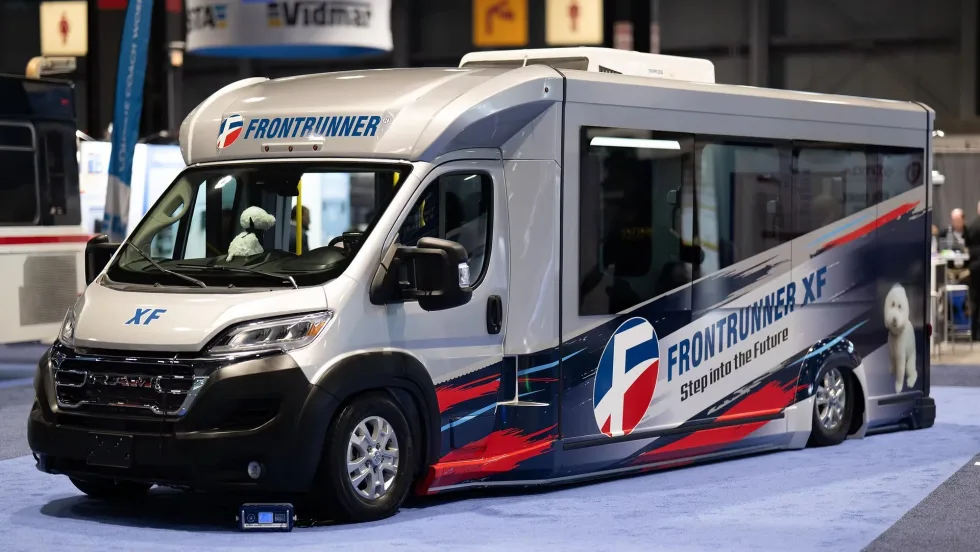
Frontrunner Bus Group Introduces XF Low-Floor Bus with Enhanced Accessibility
The new mid-sized bus features a full flat-floor design, eight-inch curbside step-in height, and zero-entry rear ramp to improve passenger access and operational flexibility.
Read More →
Building a Flexible Path to Transit Electrification with BAE's John Hroncich
John Hroncich discusses BAE Systems’ modular and scalable approach, lessons learned from decades of real-world operations, and how agencies can identify electrification strategies that fit their fleets.
Read More →