




Plan in Place: USDOT Releases 5-Year RD&T Strategic Plan
USDOT Announces Funding for Safety Research
Project focus areas include, but are not limited to, improving the mobility of disadvantaged populations to mitigating the impacts of extreme weather.
February 21, 2023

USDOT received a total of 230 grant applications during this competition.
3 min to read
U.S. Transportation Secretary Pete Buttigieg announced up to $435 million in grant awards for 34 University Transportation Centers (UTC) that will help the next generation of transportation professionals make roads, bridges, rail, shipping, and airspace safer, according to the U.S. Department of Transportation's news release.
UTCs advance transportation expertise and technology through education, research, and technology transfer activities.
Project focus areas include, but are not limited to, improving the mobility of disadvantaged populations to mitigating the impacts of extreme weather on U.S. transportation systems to identifying and mitigating cybersecurity risks.
“The work performed by our next generation of diverse transportation researchers at these Centers will help the American people travel more safely, quickly, and affordably," said Dr. Robert C. Hampshire, deputy assistant secretary for research and technology. "The Centers at these two-and-four-year colleges and universities advance U.S. technology and expertise in the many disciplines comprising transportation through education, solutions-oriented research and technology transfer, and the exploration and sharing of cutting-edge ideas and approaches."
President Joe Biden’s infrastructure package included $90 million in funding per year for the selected UTC Program grants.
USDOT received a total of 230 grant applications during this competition.
Prairie View A&M University is the first Historically Black College and University (HBCU) to become a national UTC grantee.
An additional four HBCUs are consortia members of UTCs selected for an award, and another five consortia members are Hispanic-Serving Institutions/Minority Serving Institutions (MSIs). Overall, there is a record number of HBCUs, MSIs, and Tribal colleges participating this year.
Selected National UTCs include:
$4 million/year for Clemson University to lead a group focused on cybersecurity: This UTC will continuously monitor and address the vulnerabilities of cybersecurity associated with transportation cyber-physical-social systems (TCPSS). TCPSS uses computations and communication embedded in and interacting with physical processes to add new capabilities to transportation systems. This UTC will work on identifying challenges and threats across transportation modes, geographies, and applications; and pioneering advanced cybersecurity strategies and solutions for multimodal transportation.
$4 million/year for the University of California, Davis to lead a group focused on the environment: This UTC will focus on accelerating equitable decarbonization that benefits both the transportation system and the well-being of people in overburdened and historically disadvantaged communities. It will concentrate research activities in three critical domains: vehicle technology to accelerate lower greenhouse gas emissions, infrastructure provision, and reshaping travel demand.
$4 million/year for Prairie View A&M (TX) University to lead a group focused on infrastructure: This HBCU-led UTC will develop and transfer into practice new technologies or approaches not currently deployed in the transportation system, including novel data and technology approaches related to artificial intelligence and environmental stewardship/resilience. The research activities will aim to develop and deploy interoperable data platforms and technology systems for transportation planning and infrastructure operations.
$4 million/year for the University of Texas at Austin to lead a group focused on mobility: This UTC will execute the Transportation Heartbeat of America Survey to collect longitudinal data to understand how travel behavior and demand are evolving. By undertaking this breakthrough research for measuring, monitoring, modeling, and managing traveler behaviors, it aims to foster the design, development, and operation of a people-centric, multimodal, intelligent transportation system that meets the needs of people, institutions, and businesses.
$4 million/year for Carnegie Mellon University to lead a group focused on safety: This UTC will implement an innovative system-of-systems approach to integrate autonomous, connected, electric, and shared vehicles (ACES) technologies into transportation networks. The research will address challenges of connected/automated vehicles (simulation, systems design, validation, and testing) and infrastructure (planning, design, condition assessment, and monitoring) to equip U.S. companies with innovative technologies including AI, data analytics, connectivity, edge computing, and smart infrastructure.
More Security and Safety

Transit Agencies Highlight Safety Gains at National Summit
Leaders from 15 major transit systems shared crime-reduction results and safety initiatives while discussing the role of continued federal support.
Read More →
DART Launches Major Security, Fare Enforcement Initiative
The 90-day demonstration will deploy coordinated security teams at five light rail stations while testing controlled access and gathering data to guide future investments.
Read More →
RTD Launches NextRide App to Consolidate Trip Planning, Fares, Security Reporting
The app expands on RTD’s existing NextRide web application and allows customers to view real-time vehicle locations and service alerts, purchase and store digital fares, and access customer support.
Read More →
TAPTCO Updates OSHA Compliance Training for Transit Maintenance Operations
The revamped program addresses 26 OSHA standards for maintenance facilities, with TAPTCO pointing to training, documentation, and everyday shop hazards as continuing challenges for transit operations.
Read More →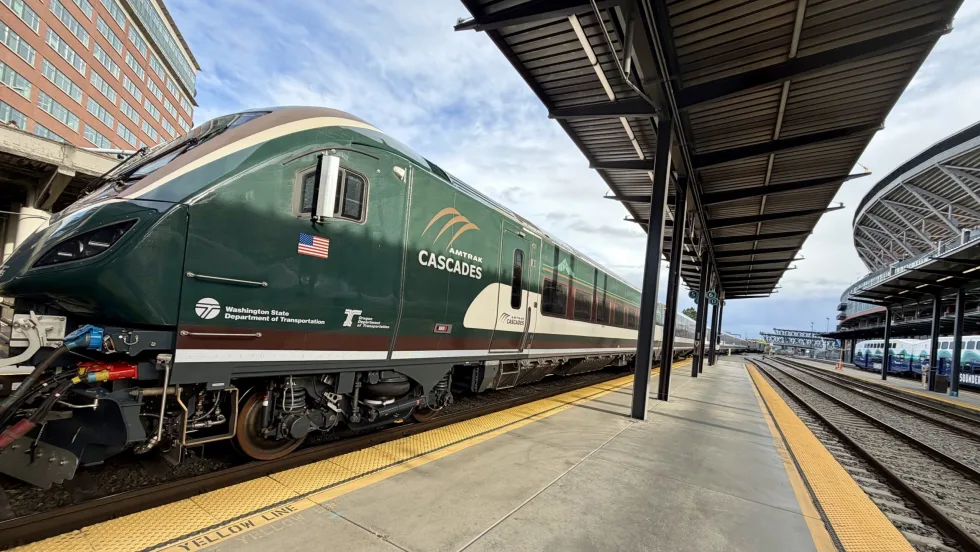
FRA Announces $5.3B in Rail Investments, Including $2B for Amtrak
Funding will support grade-crossing improvements, infrastructure upgrades, and new Amtrak equipment in 23 states.
Read More →
Chicago, Maryland Expand Non-Law-Enforcement Safety, Rider Support
The CTA and MTA are launching new programs aimed at de-escalation, crisis response, rider assistance, and greater transparency.
Read More →
LA Metro, City of West Hollywood, and Partners Advance Smarter Bus Lane Enforcement
The award-winning partnership combines AI-powered detection with human oversight to improve bus reliability, accessibility, and enforcement efficiency.
Read More →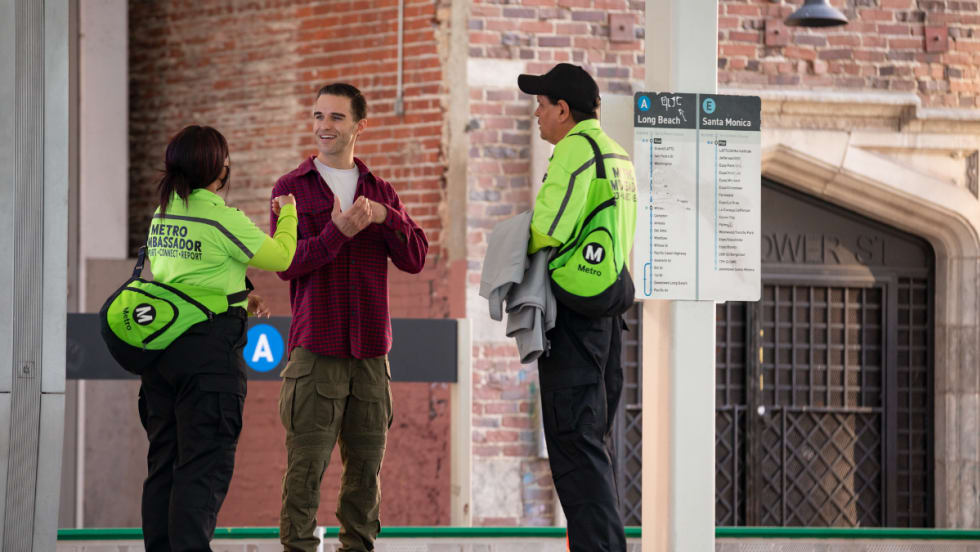
LA Metro Reports 57% Decline in Homelessness on Transit System Since 2024
The agency's latest homelessness count offers new data on how care-based services and cross-sector partnerships can complement traditional transit security strategies.
Read More →
FTA Launches 'Transit Moves America' Dashboard to Highlight Agency Safety and Performance
The online dashboard transforms National Transit Database information into a public-facing resource that allows users to compare transit agencies on key operational and safety metrics.
Read More →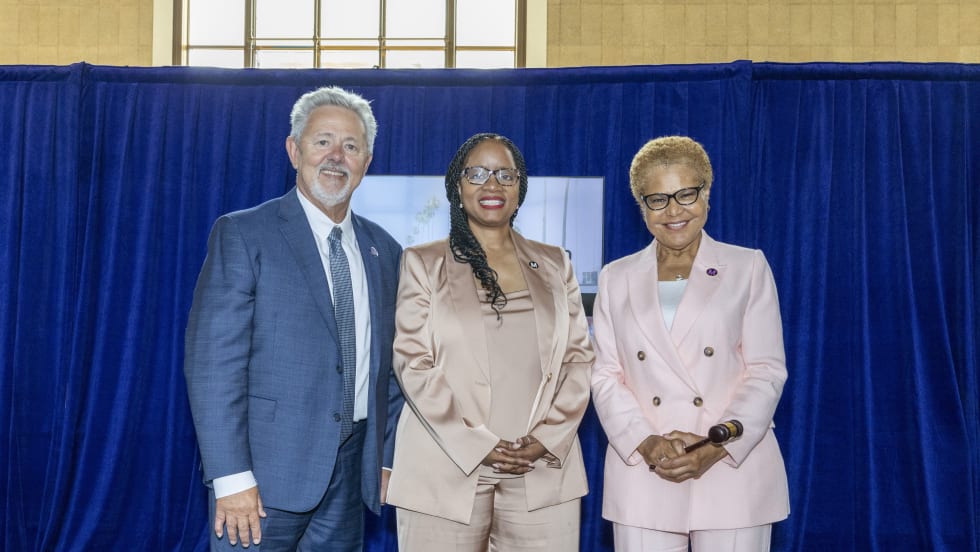
LA Metro Marks Banner Year, Sets Ambitious Goals for New Fiscal Year
Incoming LA Metro Board Chair and Los Angeles Mayor Karen Bass joined outgoing Board Chair Fernando Dutra and LA Metro CEO Stephanie Wiggins to review accomplishments from fiscal year 2026, which included the opening of new rail extensions, advancement of major transit projects, expanded safety programs, and new rider amenities.
Read More →