



UTA, Community Transit Among 4 Agencies to Land BRT Funds
The four BRT projects receiving allocations are nearing completion of the statutory and regulatory requirements to receive a grant agreement.
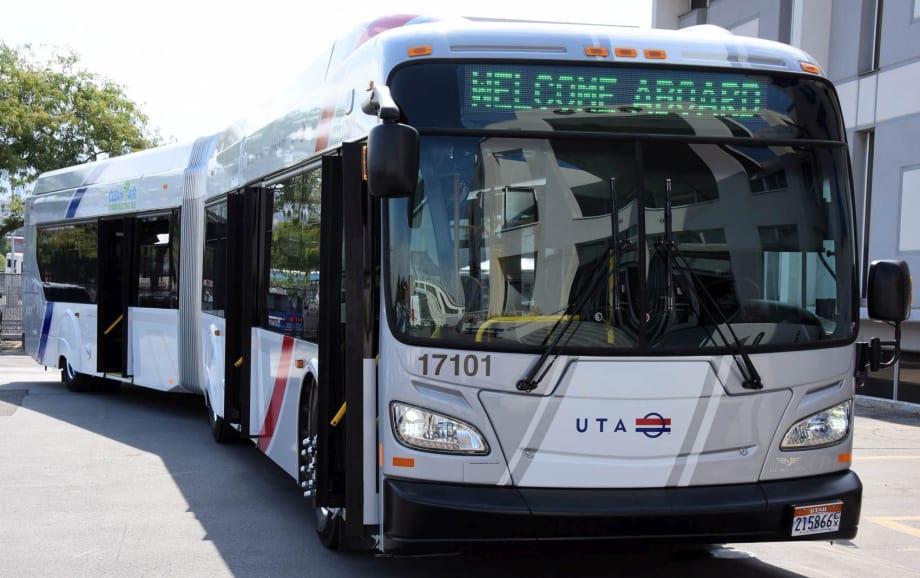
Utah Transit Authority will receive a $3.2 million allocation for the Ogden/Weber State University BRT Project.
UTA
The Federal Transit Administration (FTA) announced a total of $187 million in federal funding will be allocated to four bus rapid transit (BRT) infrastructure projects in California, Utah, and Washington State. Funding is provided through FTA’s Capital Investment Grants (CIG) Small Starts Program.
U.S. Transportation Secretary Pete Buttigieg said, “Millions of Americans rely on public transit to get to work, services, and family — and communities need support to create more public transit options. The Biden-Harris Administration is committed to modernizing and expanding our public transit systems, and that includes support for these great projects.”
The four BRT projects receiving allocations are nearing completion of the statutory and regulatory requirements to receive a grant agreement. The projects must meet these additional requirements before a grant can be awarded.
“The local communities will greatly benefit from improved access and mobility to transit service, helping people reach vaccination sites, jobs, schools and other important destinations,” said FTA Acting Administrator Nuria Fernandez.
The CIG Program provides funding for major transit infrastructure capital investments nationwide. Projects accepted into the program must go through a multi-year, multi-step process according to requirements in law to be eligible for consideration to receive program funds.
CIG Small Starts Projects Receiving Allocations
San Bernardino, Calif.:West Valley Connector BRT Project - San Bernardino County Transportation Authority will receive an $86.75 million allocation for the West Valley Connector BRT project. The 19-mile, zero-emission BRT line will connect Pomona to Rancho Cucamonga and will operate as part of Omnitrans’ sbX BRT service. The project includes the purchase of 40-foot, zero-emission buses, and construction of 21 new bus stations. The BRT will improve transit connections to Ontario International Airport (ONT), two Metrolink lines (San Bernardino and Riverside) and multiple major activity centers along Route 61 including Ontario Mills and Victoria Gardens.
Ogden, Utah:Ogden/Weber State University BRT Project -Utah Transit Authority will receive a $3.2 million allocation for the Ogden/Weber State University BRT Project. The 5.3-mile BRT will run electric buses from the Ogden FrontRunner Station, through downtown, along dedicated bus lanes in the center of the road on Harrison Boulevard and through the Weber State University campus, and to McKay-Dee Hospital. The project will benefit the community by reducing vehicle trips, supporting the economy, and providing more transportation options.
Everett, Wash.: Swift Orange Line BRT Project - Community Transit will receive a $37 million allocation for the Swift Orange Line BRT project, an 11.3-mile BRT corridor with 13 stations between Edmonds Community College in Lynnwood and the McCollum Park and Ride in Mill Creek. The project connects with two other Swift BRT lines, as well as Sound Transit’s Lynnwood Link Extension light rail project. Swift Orange Line service will improve connectivity in the region, better meet the needs of riders, and is scheduled to begin operating by March 2024.
Seattle: Madison Street BRT Project - The City of Seattle Department of Transportation will receive a $59.9 million allocation for the Madison Street BRT project, a 2.3-mile east-west BRT line operating diesel-electric buses along Madison Street spanning from downtown Seattle in the west to the Madison Valley neighborhood in the east, with connections in First Hill, Capitol Hill, and the Central Area. It will connect people to hospitals, schools, businesses, and other destinations as well as to dozens of bus routes, the First Hill Streetcar, and ferry service at the Colman Dock Ferry Terminal.
More Bus

Improving Transit Safety and Reliability Through AI
Hayden AI’s Chief Growth Officer, Charley Territo, discusses how AI-powered camera enforcement is helping transit agencies keep bus lanes and stops clear, improve accessibility, and move from pilot programs to full-scale deployments.
Read More →
Castro to Lead RTC of Southern Nevada and More in People Movement
In this edition, we also cover recent appointments and announcements at the STV, MCI, and more, showcasing the individuals helping to shape the future of transportation.
Read More →
Study: Denver RTD Generates $2.1 Billion in Annual Economic Activity
An economic impact study finds the agency supports approximately 17,500 jobs, delivers $1.6 billion in annual community and mobility benefits, and generates $2.42 in economic value for every dollar invested.
Read More →
Mark Aesch Nominated to Lead Federal Transit Administration
The former Rochester transit chief and TransPro founder, who has also contributed to METRO Magazine, brings decades of industry experience and a focus on performance, accountability, and financial sustainability to the nomination.
Read More →
Pierce Transit Moves to Expand Fleet Following Proposition 1 Approval
The agency authorized the purchase or refurbishment of up to 60 buses to support a 47% service expansion, as voters nationwide approved billions in new transit funding.
Read More →
Transit Expands Agency Partnerships, Reaching 200 Official App Partners
COO Jake Sion discusses Transit’s growth, the success of its Transit Royale program, and how technology is helping agencies improve the rider experience.
Read More →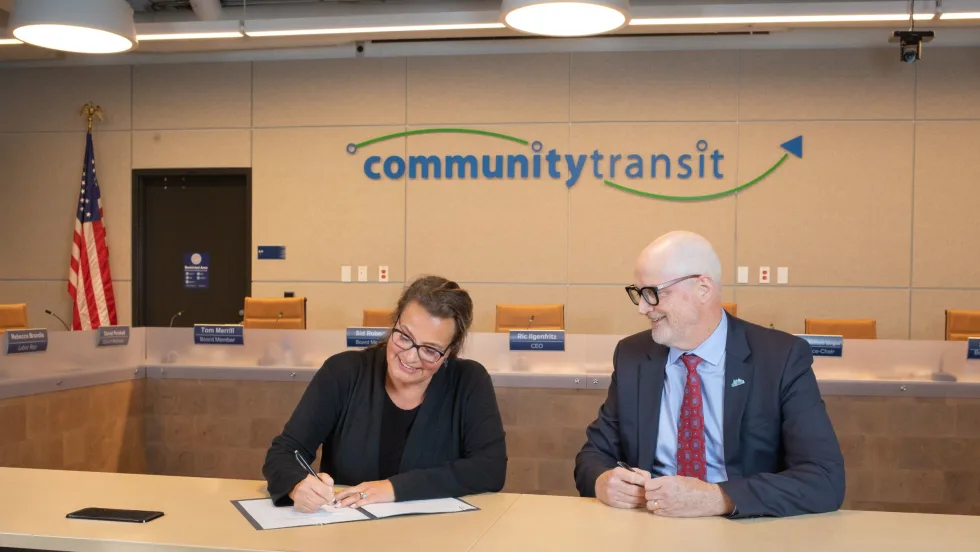
Everett Transit, Community Transit Approve Consolidation of Services
The agreement will bring Everett Transit into Community Transit’s network in April 2027, with plans to increase bus service by 50% by 2031 and expand regional connections.
Read More →
Brian Dickson on Building Stronger, More Resilient Transportation Organizations
Bus Business Consultants Founder Brian Dickson discusses the leadership principles, operational discipline, and strategic planning that separate transportation companies positioned for long-term success from those stuck in survival mode.
Read More →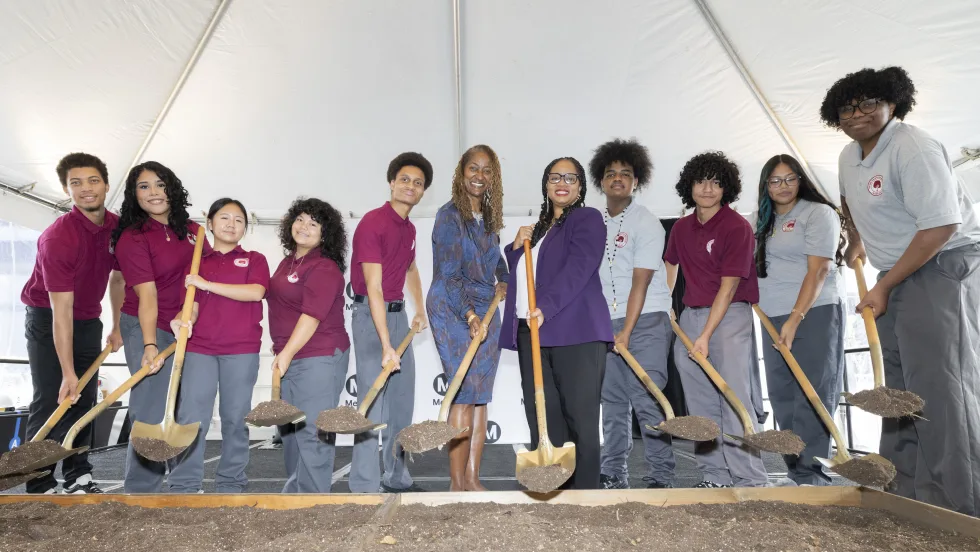
LA Metro Breaks Ground on Vermont BRT Project
The 12.4-mile corridor is projected to serve 66,200 daily riders, reduce travel times by up to 24%, and create the nation's busiest bus rapid transit corridor.
Read More →
Roman Cornell on ABC Companies’ Evolution and the Future of Passenger Transportation
The company’s CEO discusses carrying forward a third-generation family legacy, ABC’s continued evolution in passenger transportation, support for increasingly complex fleets, and how technology and continued investment could help operators improve uptime.
Read More →