



WMATA's gradual recovery plan promotes safety first, while ramping up regional mobility
Its success depends on a sustained downward trajectory in infections and a gradual ramp-up in service and ridership.

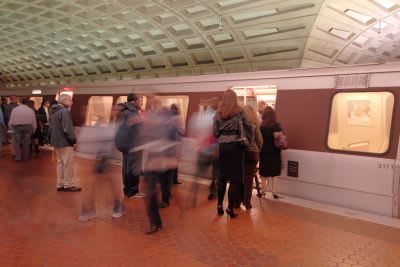
WMATA’s plan is closely aligned with steps planned by local governments and employers, including the federal government.
Larry Levine

WMATA’s plan is closely aligned with steps planned by local governments and employers, including the federal government.
Larry Levine
The Washington Metropolitan Area Transit Authority (WMATA) released preliminary details of its covid-19 pandemic recovery plan, outlining a flexible blueprint for ramping up service, while protecting customers and employees, as the region prepares for recovery from the public health crisis. The recovery strategy will be discussed at WMATA’s meeting on May 14.
WMATA’s plan is closely aligned with steps planned by local governments and employers, including the federal government. Its success depends on a sustained downward trajectory in infections and a gradual ramp-up in service and ridership. The phases of the plan coincide with the relaxing of stay-at-home policies, return to workplaces, and the widespread availability of testing, treatment and a vaccine, among other variables.
Protecting Customers and Employees
WMATA’s priority continues to be protecting the health and safety of its customers and employees while providing transportation for essential trips throughout the region. Efforts to reduce exposure to the virus will continue until treatments and/or a vaccine are developed to lessen the public health risk. WMATA’s Pandemic Task Force is monitoring infection and ridership trends as well as actions by local governments and employers and will aim to increase service ahead of demand to allow for adequate social distancing. Modified work schedules and practices for employees will continue for the foreseeable future, with adjustments possible, to limit risk to employees.
Phases of recovery
WMATA has been in a “crisis response” posture since moving into stage 3 of its Pandemic Response Plan on March 13. The next phase of Metro’s pandemic response includes:
Stabilization: As stay-at-home orders are expected to be lifted this summer, WMATA will continue to ask customers to use the system only for essential trips, and to protect themselves and others through hand hygiene and by wearing face masks or coverings when using the transit system.
Managed re-entry: As regional businesses and governments scale back teleworking and schools reopen, WMATA will aim to ramp up service ahead of demand to allow for proper social distancing for those who need to travel. In this phase, all Metrorail stations currently closed as part of the covid-19 response will reopen. All Metrobus routes will operate, with some service limitations such as reduced intervals between bus departures. The tentative managed re-entry period is this fall when schools reopen.
Recovery: When a treatment and /or vaccine is widely available, WMATA will continue to ramp up service to meet ridership demand as economic activity increases. The system will return to post-pandemic hours of service.
Resilience: Post-pandemic, the agency will analyze the response to COVID-19 to make the system safer and more resilient to future pandemics.
Summer track work
During the stabilization period this summer, WMATA will take advantage of low ridership to reduce impacts to customers from critical state of good repair construction projects. Its recovery plan includes targeted week-long shutdowns of three to five stations at a time for track maintenance and upgrades. Bus bridges will be provided in the shutdown zones, and headways throughout the rest of the system will not be affected. Track work will be announced weeks in advance. The first track work shutdown is currently targeted for June at L'Enfant Plaza, Waterfront, and Navy Yard stations.
More Management

METRO Opens Submissions for 2026 Motorcoach Awards
Nominations are now being accepted for METRO Magazine’s Operator of the Year and Innovative Operator of the Year awards.
Read More →
New York MTA Advances Final Contract for Second Avenue Subway Expansion
Contract Four is the largest in the Second Avenue Subway Phase 2 project and includes construction of station infrastructure, tracks, and signals for the subway expansion, MTA officials said. Work on Contract Four will begin in 2027.
Read More →
Transit Agencies Highlight Safety Gains at National Summit
Leaders from 15 major transit systems shared crime-reduction results and safety initiatives while discussing the role of continued federal support.
Read More →

NITA Names New Leadership, Expands Reduced-Fare Program at First Board Meeting
The new regional transit authority appointed its first board chair and interim executive director while extending reduced fares across CTA, Metra, and Pace for eligible riders.
Read More →
Beyond the Checklist: A Structured Approach to Transit Maintenance
Reliability-Centered Maintenance helps transit agencies move beyond routine checklists to focus limited resources on the assets and failures that have the greatest impact on safety, reliability, and service.
Read More →
APTA 2026 Nominating Committee Selects Leadership Slate, Names Chair and Vice Chair Nominees
Leadership changes will help shape the association’s priorities and its representation of the transportation industry during the 2026–2027 term.
Read More →
DART Launches Major Security, Fare Enforcement Initiative
The 90-day demonstration will deploy coordinated security teams at five light rail stations while testing controlled access and gathering data to guide future investments.
Read More →
Advancing Fare Collection Through Technology and Innovation
Learn about delivering 1300 gates at 91 stations while managing fare evasion. Explore the large scale deployment, solution customization and real-world results that affect the region. Prepare for deployment in your region now.
Read More →
Game Day in Motion: Moving Millions During the 2026 World Cup
Between packed transit stations and team motorcoaches, see how agencies and operators across North America tackled the transportation demands of the 2026 FIFA World Cup.
Read More →
Surface Transportation Extension Averts Shutdown, Leaves Transit Funding Gap
The stopgap keeps federal transportation programs moving, but missing advance funding could complicate the transit and rail projects agencies are planning next.
Read More →