



Metra's proposed 2020 budget includes $480M in capital spending
Funding will make major investments in locomotives and railcars, stations, bridges, and yards.

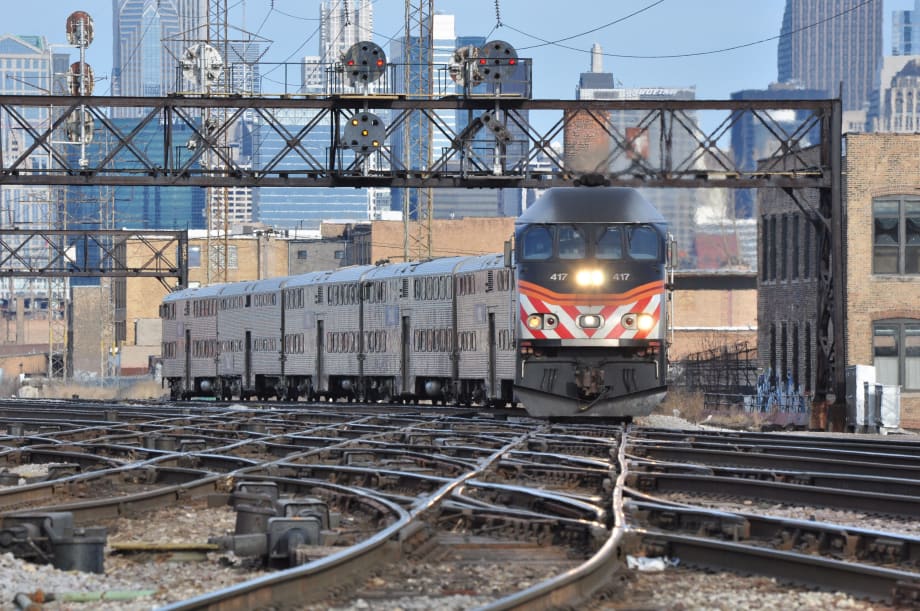
The capital budget was significantly bolstered by the new state capital program, which over the next five years is expected to deliver nearly $1.45 billion to Metra.
Metra
The capital budget was significantly bolstered by the new state capital program, which over the next five years is expected to deliver nearly $1.45 billion to Metra.
Metra
Chicago’s Metra unveiled a proposed $827.4 million operating budget that keeps expenses in check, does not require a fare increase, and outlines $480.5 million in proposed capital spending, including major investments in locomotives and railcars, stations, bridges, and yards.
The capital budget was significantly bolstered by the new state capital program, which over the next five years is expected to deliver nearly $1.45 billion to Metra. When combined with $961.8 million in expected federal formula funding, $146 million from the RTA, $26 million in fare revenue, and $4 million from other sources, Metra will have nearly $2.6 billion to invest in its system over the next five years — an unprecedented amount.
In 2020, Metra expects $205.2 million in state bond funds and $73.7 million in what has been labeled state “pay-as-you-go” or “Paygo” funding — an annual allotment of funding tied to the state gas tax that will grow with inflation. Funding from federal and local sources provide additional capital funding in 2020, bringing the total to $480.5 million.
The budget proposes to allocate $331.1 million, or about two-thirds, of the 2020 capital funds to five major areas:
New railcars and new locomotives, $138.8 million. Metra currently has a request for proposals pending for as many as 400 new cars, and it has asked manufacturers to propose new designs that maximize capacity and add customer amenities. It also is buying some new remanufactured locomotives and has set aside some money to buy a prototype alternative fuel locomotive.
Locomotive and car rehabilitation, $95.3 million. Metra will continue its innovative and cost-efficient locomotive and car rehab programs. It also will fund new programs to overhaul 21 recently purchased Amtrak locomotives and upgrade 54 locomotives with more reliable AC traction motors.
Stations and parking, $51.2 million. Metra is undertaking major efforts to upgrade its stations, with an emphasis on improving ADA accessibility and ensuring that every station has a warming shelter. Major station projects included in the 2020 program include a new Auburn Park Station on the Rock Island Line and major upgrades to the 147th Street Station on the Metra Electric Line and Hubbard Woods on the Up North Line.
Yard rehabilitation, $23.2 million. Major projects are funded to expand the Western Avenue Yard that services trains on the Milwaukee District lines, the North Central Service and Heritage Corridor, and the California Avenue Yard that services trains on the UP lines. A lack of yard space is a factor limiting Metra’s ability to add service.
Bridges, $22.6 million. Metra has nearly 500 bridges that are more than a century old. Funding will be used to design and construct the replacement of several bridges, including the next phase of the UP North bridge project involving the design for the replacement of bridges over 11 streets between Fullerton and Addison in Chicago.
Operating budget
As it does every year, Metra searched for ways to control or reduce its operating costs to head off the need for a fare increase. This year it identified nearly $6 million in efficiencies. In addition, it expects to save about $7 million by not filling vacancies and about $5 million by reducing overtime and other miscellaneous expenses.
Those $18 million in reductions will help offset an expected $23 million increase in operating expenses next year, including about $7 million in new operating expenses associated with Positive Train Control, and about $16 million in labor and various other operating expenses.
Metra expects its overall operating budget to increase by $5 million next year, from $822 million in 2019 to $827 million in 2020, a gain of 0.6%. Higher revenues from the regional transportation sales tax, which funds about half of Metra’s operating budget, will cover that $5 million and no fare increase will be needed.
More Rail
Amtrak, CN Reach Agreements to Strengthen Passenger Rail Service, Safety
The agreement resolves a more than decade-long proceeding before the Surface Transportation Board concerning the terms and conditions for Amtrak services, such as the City of New Orleans, Illini/Saluki, and Wolverine.
Read More →
New York MTA Advances Final Contract for Second Avenue Subway Expansion
Contract Four is the largest in the Second Avenue Subway Phase 2 project and includes construction of station infrastructure, tracks, and signals for the subway expansion, MTA officials said. Work on Contract Four will begin in 2027.
Read More →
San Diego MTS Breaks Monthly Trolley Ridership Record
Agency officials said July’s ridership indicates MTS’s continued recovery from the pandemic.
Read More →
Report Examines NJ TRANSIT Reliability, Funding Challenges
The Garden State Initiative analysis examines the roles of Amtrak infrastructure, fleet management, and agency operations while recommending a more performance-based approach to improving reliability.
Read More →
Stadler, CapMetro Sign Long-Term Rail Fleet Support Agreement
Beginning in 2027, Stadler will provide on-site technical expertise, spare parts support, training, and obsolescence management to help extend the reliability and longevity of CapMetro’s GTW fleet.
Read More →
Biz Briefs: Alstom Lands Canadian Contract, LYT to Supply California TSP, and More
In METRO's latest installment, we take a look at recent news from Complete Coach Works, Beep, FlixBus, and more partnerships making headlines across the transportation sector.
Read More →
CATS Gold Line Marks 5 Years of Service, 2.8M Passenger Trips
With a six-mile expansion planned, the Charlotte streetcar is positioned to connect more neighborhoods and major transit hubs across the region.
Read More →
Why Simulating Pedestrian Movement Has Become Essential for Modern Rail Stations
Pedestrian microsimulation is helping rail planners identify bottlenecks, test station designs, and prepare complex transit hubs for growing passenger volumes.
Read More →
Amtrak Begins Major Construction at New York’s Sunnyside Yard
The new maintenance facility will support Amtrak’s Airo trainsets while improving maintenance efficiency and turnaround times in New York.
Read More →
Chicago Leaders Unveil Plans for O’Hare Airport Express Train
The privately developed project would offer a 15-minute trip between downtown and O’Hare’s Terminal 2, with trains operating every 15 minutes on a dedicated track. The service would use battery-electric trains and three existing freight rail rights-of-way.
Read More →