



BART Silicon Valley Berryessa Extension begins revenue service
The milestone marks the culmination of the first phase of the BART Silicon Valley Extension Program that is expanding BART service into Santa Clara County.
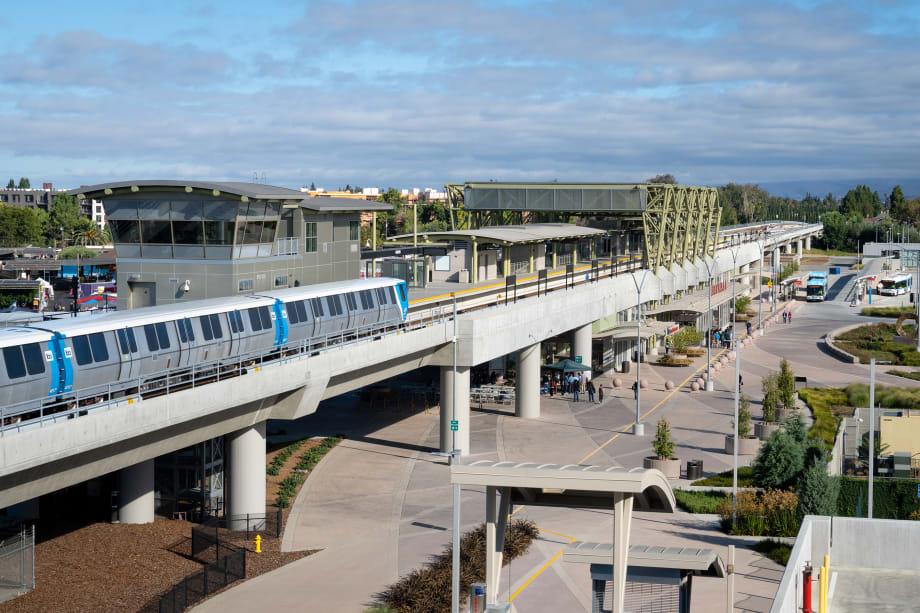
The $2.3 billion, 10-mile Berryessa Extension, which broke ground in April 2012, begins south of BART's Warm Springs Station in Fremont, proceeds through Milpitas, and ends in the Berryessa area of north San José.
VTA
The Santa Clara Valley Transportation Authority (VTA) and Bay Area Rapid Transit District (BART) is opening the Berryessa Extension for revenue service. The milestone marks the culmination of the first phase of the BART Silicon Valley Extension Program that is expanding BART service into Santa Clara County, bringing frequent and reliable regional rail service to more than 1.7 million residents.
The $2.3 billion, 10-mile Berryessa Extension, which broke ground in April 2012, begins south of BART's Warm Springs Station in Fremont, proceeds through Milpitas, and ends in the Berryessa area of north San José. VTA funded, designed, oversaw construction, and will own the infrastructure and BART will operate the extension. The design-build project was built under the Skanska, Shimmick and Herzog (SSH) joint venture. Lockwood, Andrews & Newnam Inc. (LAN), a national planning, engineering, and program management firm, served as the lead designer under the SSH joint venture contract.
“Bringing BART service to Santa Clara County leads us into an era for Silicon Valley where we are forging new pathways for mobility,” said VTA GM/CEO Nuria Fernandez. “With this new addition to our public transit network, we look forward to many years of improved connectivity throughout our region.”
Commuters traveling on I-880 and I-680, two congested corridors that connect residential areas in Alameda, Contra Costa, and San Joaquin Counties to high-technology and other employment centers in Silicon Valley, can now use the Berryessa Extension as an alternative. By taking cars of these congested corridors, the project will help eliminate 3,500 tons of greenhouse gases every year.
Transit-oriented development opportunities have flourished around the stations. To date, near the Milpitas Station, almost 7,000 housing units, more than 10,000 square feet of office space, and over 186,000 square feet of retail space have been occupied, entitled or under construction. Similarly, adjacent to the Berryessa Station, more than 3,300 residential units have been developed to date, with plans to increase the capacity to 5,100. Plans are also underway for a high-rise hotel with up to 175 rooms.
With the opening of the two new stations, BART will have a total of 50 stations and 131 miles of track serving five Bay Area counties. The project also provides numerous intermodal options, including connections to VTA light rail and buses, Caltrain, Altamont Commuter Express, Capitol Corridor and Amtrak, Mineta San Jose International Airport, and high-speed rail.
The project improves access to employment, educational, medical, entertainment, and retail centers near the two stations. These include the Great Mall of the Bay Area, connections to employment centers such as Google, eBay and Cisco Systems, Levi’s Stadium, Berryessa Flea Market in San Jose, San Jose State University, Stanford University, and Santa Clara University.
The second phase of the BART Silicon Valley Extension, which is currently in the design stage, will extend BART service six miles from the Berryessa Transit Center into downtown San José and terminating in Santa Clara. Four stations are planned for the second phase: 28th Street/Little Portugal, Downtown San Jose, Diridon, and Santa Clara. The second phase is expected to be completed in 2030.
More Rail

Scenes from APTA TRANSform & EXPO 2026
Transit leaders, manufacturers, and industry professionals gathered in Chicago to explore new technologies, share ideas, and discuss the future of public transportation.
Read More →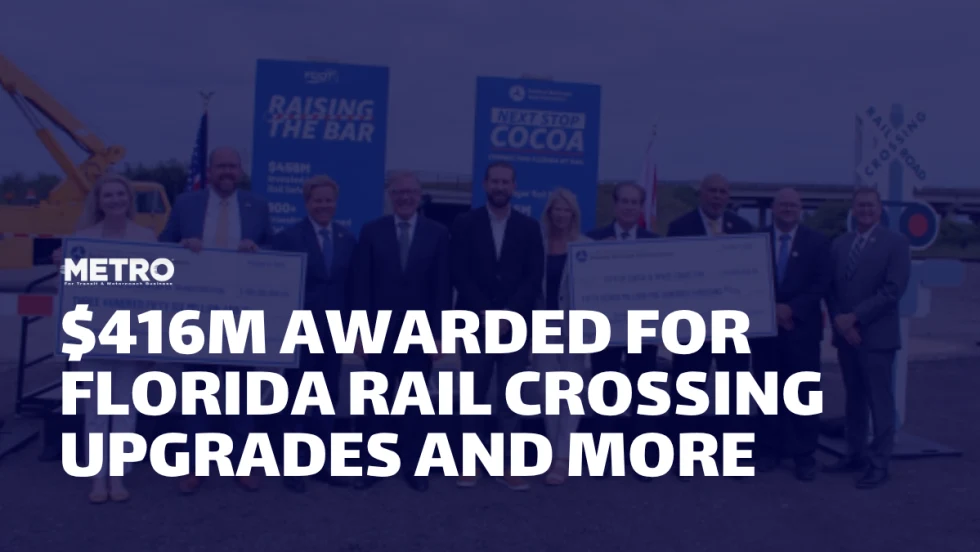
USDOT Awards $416 Million for Florida Rail Crossing Safety Upgrades, New Brightline Station
The projects aim to reduce risks for motorists and pedestrians at rail crossings while expanding passenger rail access along Florida’s Space Coast.
Read More →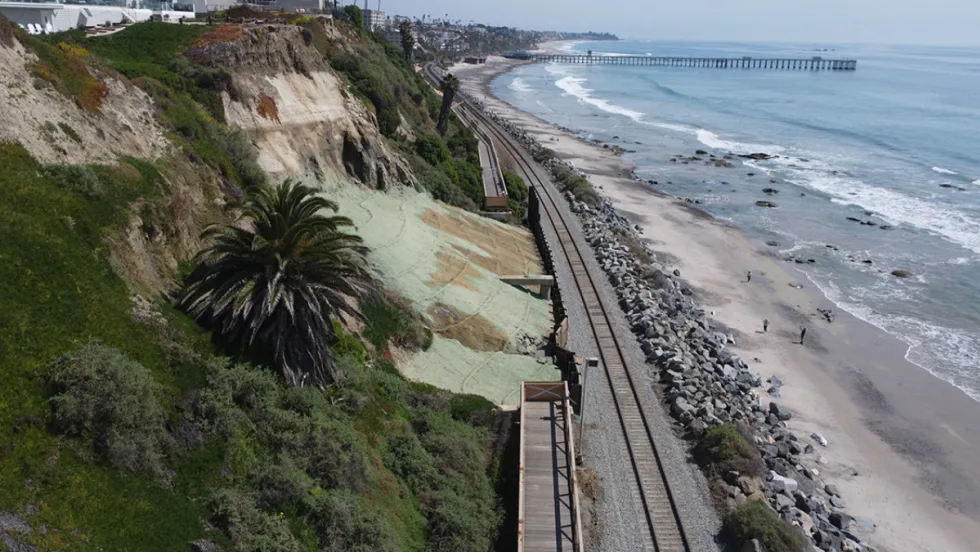
OCTA Declares Emergency to Protect Rail Corridor From Coastal Erosion
The California agency is accelerating shoreline protection and plans to place approximately 690,000 cubic yards of sand along the San Clemente coast to protect a key passenger and freight rail link.
Read More →
More Than a Summer Job: Building the Next Generation of Transit Talent
The Delaware River Port Authority and PATCO have transformed their internship program into a hands-on professional development experience that introduces students to the breadth of transportation careers — and creates a pipeline for future employees.
Read More →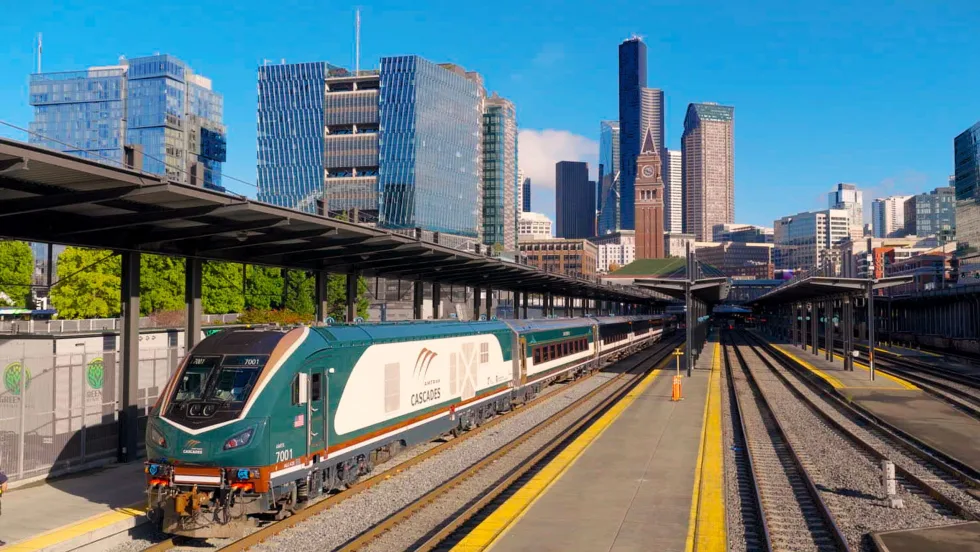
Airo Trains Make Their Amtrak Cascades Debut in the Pacific Northwest
Effective immediately, two cutting-edge Airo trainsets will join the Amtrak Cascades route, operating four daily trips between Vancouver, B.C., Seattle, Portland, and Eugene, Oregon, marking the first introduction of Airo trains into passenger service anywhere in the country.
Read More →
Florida's Brightline Announces Financial Restructuring
Brightline Florida says train operations will continue as normal as certain parent entities enter Chapter 11 and financial stakeholders provide $490 million in new long-term capital.
Read More →
ENC Lands MATA Contract and More in Biz Briefs
In this edition of Biz Briefs, we spotlight the latest developments shaping the future of mobility.
Read More →
Strada360’s Steve Lassey on Turning Transit Data Into Better Decisions
From breaking down data silos to preparing for AI, Strada360 CEO Steve Lassey discusses how transit agencies can use technology to improve operations, customer information, and long-term decision-making.
Read More →
SEPTA Details Accelerate Vision for Transit System
The plan outlines investments in trolley modernization, new Metro and Regional Rail vehicles, accessible stations, and more frequent bus and rail service.
Read More →
FTA Ends Direct Oversight of MBTA Safety Actions
The federal agency closed its remaining special directive to the Massachusetts Department of Public Utilities following a safety review that began in 2022.
Read More →