



Transit agencies can use FTA formula funds for coronavirus response
Use for operating expenses in addition to capital expenses and permits operating expenses to be covered at an 80% federal share.

Michael Dantzler
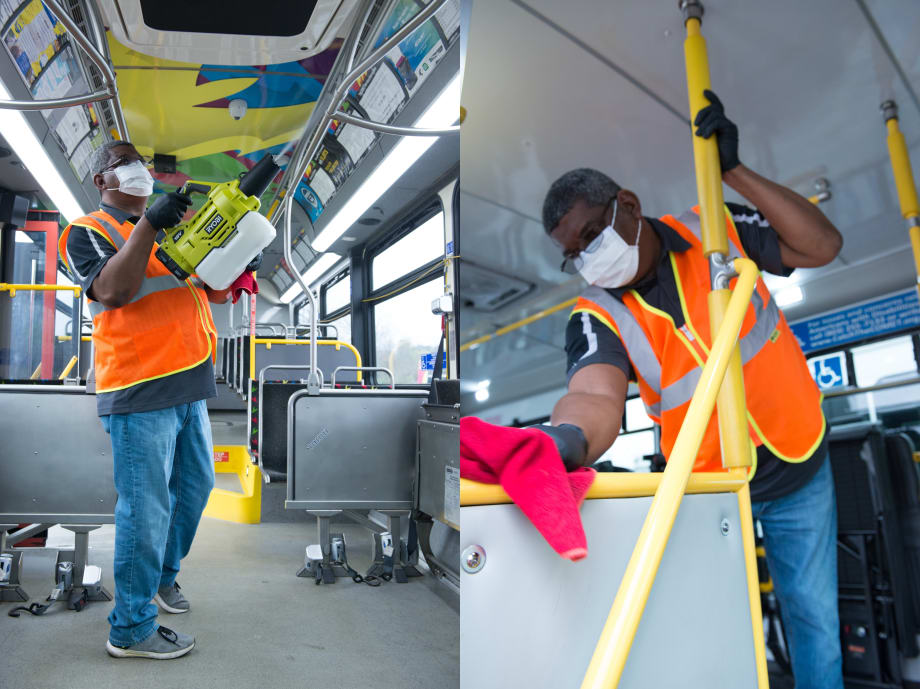
Due to the coronavirus, the S.C.-based Central Midlands Regional Transit Authority (The COMET) has increased the frequency of bio-clean disinfection of its fleet to nightly. Michael Dantzler
The Federal Transit Administration (FTA) announced that expanded eligibility of federal assistance is available under FTA’s Emergency Relief Program to help transit agencies respond to the coronavirus (COVID-19) in states where the Governor has declared an emergency. This includes allowing all transit providers, including those in large urban areas, to use federal formula funds for emergency-related capital and operating expenses, and raises the cap on the federal government’s share of those expenses.
“Today, I have issued a notice of concurrence with declarations of emergencies issued by Governors that relate to COVID-19. FTA grantees may now use their Urbanized Area and Rural formula funds to take measures to protect the health and safety of their riders and their workforce,” said FTA Acting Administrator K. Jane Williams. “Expansion of the permissible uses of federal funds will allow transit providers greater flexibility in the areas of the country that need it most. Invoking the eligibility of the Emergency Relief Program also provide funds at a higher federal share.”
The announcement allows all transit providers in states where the Governor has declared an emergency related to COVID-19 to use their federal formula funds for operating expenses in addition to capital expenses and permits operating expenses to be covered at an 80% federal share rather than 50%.
In addition to allowing the expanded use of formula funds for transit providers, FTA has established an Emergency Relief docket that allows transit providers in states where the Governor has declared an emergency related to COVID-19 to request temporary relief from Federal requirements under 49 U.S.C. Chapter 53 as well as any non-statutory FTA requirements.
The U.S. Department of Transportation is working closely with the Centers for Disease Control and Prevention and other federal partners to provide guidance to the public transportation industry in response to COVID-19.
More Security and Safety

Transit Agencies Highlight Safety Gains at National Summit
Leaders from 15 major transit systems shared crime-reduction results and safety initiatives while discussing the role of continued federal support.
Read More →
DART Launches Major Security, Fare Enforcement Initiative
The 90-day demonstration will deploy coordinated security teams at five light rail stations while testing controlled access and gathering data to guide future investments.
Read More →
RTD Launches NextRide App to Consolidate Trip Planning, Fares, Security Reporting
The app expands on RTD’s existing NextRide web application and allows customers to view real-time vehicle locations and service alerts, purchase and store digital fares, and access customer support.
Read More →

TAPTCO Updates OSHA Compliance Training for Transit Maintenance Operations
The revamped program addresses 26 OSHA standards for maintenance facilities, with TAPTCO pointing to training, documentation, and everyday shop hazards as continuing challenges for transit operations.
Read More →
How VaporVision Adds Value to Transit Door Systems
Wabtec engineers explain how the system improves doorway detection, strengthens diagnostics and gives transit agencies and OEMs greater operating flexibility.
Read More →
FRA Announces $5.3B in Rail Investments, Including $2B for Amtrak
Funding will support grade-crossing improvements, infrastructure upgrades, and new Amtrak equipment in 23 states.
Read More →
Chicago, Maryland Expand Non-Law-Enforcement Safety, Rider Support
The CTA and MTA are launching new programs aimed at de-escalation, crisis response, rider assistance, and greater transparency.
Read More →
LA Metro, City of West Hollywood, and Partners Advance Smarter Bus Lane Enforcement
The award-winning partnership combines AI-powered detection with human oversight to improve bus reliability, accessibility, and enforcement efficiency.
Read More →
LA Metro Reports 57% Decline in Homelessness on Transit System Since 2024
The agency's latest homelessness count offers new data on how care-based services and cross-sector partnerships can complement traditional transit security strategies.
Read More →
FTA Launches 'Transit Moves America' Dashboard to Highlight Agency Safety and Performance
The online dashboard transforms National Transit Database information into a public-facing resource that allows users to compare transit agencies on key operational and safety metrics.
Read More →