



Commuters who wanted to use public transportation often couldn’t find a parking space in spite of the fact that LA Metro provides 26,000 spaces at 87 facilities.
LA Metro parking-guidance tech helps commuters find parking
System uses sensors to monitor the status of each parking space in a parking lot or garage.
by Jake Bezzant
June 17, 2019
L.A. Metro has a world-class transportation system that features 165 bus routes covering nearly 1,500 square miles and 93 Metro stations serving almost 100 miles of track.
L.A. Metro
4 min to read
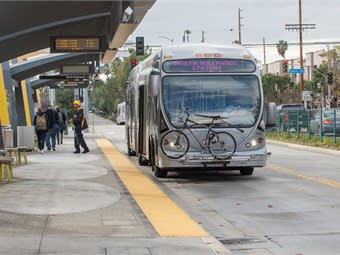
The parking-guidance program has proven to be an unqualified success for LA Metro — and a significant benefit to its commuting patrons.
Steve Hymon
The Los Angeles County Metropolitan Transportation Authority (LA Metro) has spent a great deal of time and money establishing a world-class transportation system that features 165 bus routes covering nearly 1,500 square miles and 93 Metro stations serving almost 100 miles of track. But old habits die hard, and Angelenos love their cars, in spite of the world-renowned roadway and highway congestion they face whenever they drive. So the challenge facing LA Metro administrators was how to get local citizens out of their private vehicles and onto public transportation.
Where is the Parking?
One of the biggest challenges facing LA Metro in building ridership was parking. Commuters who wanted to use public transportation often couldn’t find a parking space in spite of the fact that LA Metro provides 26,000 spaces at 87 facilities. In fact, the parking shortage was so severe that some commuters would actually arrive hours before their trains were scheduled to arrive, just to get a space. They would then go grab breakfast, or even take a nap in their vehicle while waiting for their train.
The problem was caused by unauthorized parkers. LA Metro’s parking was free, and patrons and employees of local businesses and shoppers often took those free spaces, rather than pay for parking at a nearby parking garage or on the street. In fact, somewhere between 30% and 45% of LA Metro’s spaces were typically taken up by individuals who did not use the train.
With so many of the spots tied up by unauthorized users, actual commuters were left frustrated in their efforts to find a spot in time to catch their train or bus. They could be seen driving in circles, revisiting the same spots with the hope that someone had left. The sight of cars hunting for parking spots also tended to dissuade others from even trying to find a spot, and people who might otherwise have used public transit often instead just drove themselves into town.
Some critics claimed that there wasn’t sufficient parking to meet LA Transit’s needs, but the authority and its parking consultants knew that there were plenty of spaces that were just being misused.
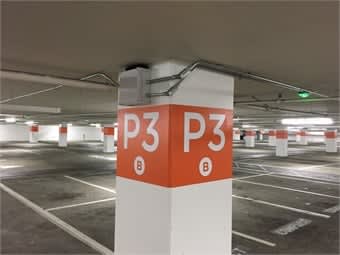
The parking-guidance system uses sensors to monitor the status of each parking space in a parking lot or garage.
Parking Sense
Solutions Through Technology
With one-third of LA Metro’s parking supply misused, a plan needed to be created to disincentivize unauthorized parking. LA Metro took the first step into finding a solution by implementing a parking fee of $3 per day. The reasoning was that this fee would help dissuade unauthorized parkers from using L.A. transit spaces when they were only parking there to avoid paying. The fee would also generate nearly $10.2 million each year. Additional revenue would also be generated by ticketing unauthorized users.
This was just the first step though. LA Metro also implemented an advanced parking-guidance suite at each of the 87 parking facilities to help commuters find available parking quickly and conveniently, while at the same time improving the management of those spaces.
The parking-guidance system uses sensors to monitor the status of each parking space in a parking lot or garage. The sensors record whether the space is available or occupied, and that information is displayed on the sensor by a series of high visibility LED lights. A green light means it’s free, while a red light means it’s occupied. This lighting system makes it very easy for drivers to tell exactly where parking is available, even at great distances. Furthermore, occupancy data is transmitted to matrix signage located at the entrances to parking lots and garages, as well as throughout the facility, indicating how many spaces are available at that moment, and where they can be found. The system typically cuts the time it takes commuters to find parking in half because drivers know exactly how many spots are open and where.
Ultimately, the technology will also be able to handle revenue control for the system. The system can utilize a special mobile app that can securely accept payment from credit cards and PayPal. By automating parking guidance, related enforcement, and payment, transit systems can eliminate the need for cameras, gates, and costly payment equipment, which can dramatically reduce daily operational costs.
One final consideration in establishing this parking-guidance solution was sustainability. By eliminating the need for commuters to circle parking aisles looking for an open spot, the technology also provides a greener parking experience. In fact, it is estimated that about 900 tons of carbon dioxide that otherwise would have emitted by the cars and trucks of commuters is being avoided just by reducing the amount of time it takes for cars to find a space.
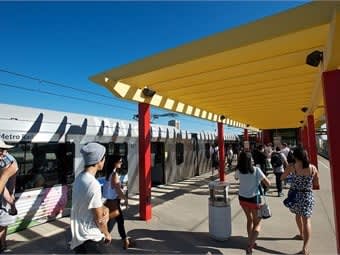
L.A. Metro has a world-class transportation system that features 165 bus routes covering nearly 1,500 square miles and 93 Metro stations serving almost 100 miles of track.
L.A. Metro
The parking-guidance program has proven to be an unqualified success for LA Metro — and a significant benefit to its commuting patrons, according to agency officials. By raising steady revenue to pay for its own maintenance, reducing the cost of daily parking operations, and creating a significantly more pleasant parking experience, the parking guidance technology has presented a win/win scenario for both LA Metro and its riders. With fewer unauthorized drivers misusing the spaces, the technology assures transit patrons will be able to find parking, and that means fewer cars on the road, less traffic congestion, and less pollution, which benefits all Angelenos.
Jake Bezzant is CEO of Parking Sense, and the architect of the LA Metro parking-guidance program. He can be reached at jakeb@parkingsense.com.
More Technology

From Hardware to Digital Partner: Luminator Charts Its Next Chapter
CEO Magnus Friberg discusses Luminator’s shift toward becoming a digital partner, the growing importance of software and interoperability, and how AI can help agencies improve operations and passenger experience.
Read More →
Beyond the Checklist: A Structured Approach to Transit Maintenance
Reliability-Centered Maintenance helps transit agencies move beyond routine checklists to focus limited resources on the assets and failures that have the greatest impact on safety, reliability, and service.
Read More →
NJ TRANSIT Advances Bus Technology Upgrades Across Statewide Fleet
More than 1,500 buses now feature upgraded technology designed to improve arrival predictions and provide free Wi-Fi, with deployment expected to reach nearly 2,000 buses by the end of 2026.
Read More →

Building a Flexible Path to Transit Electrification
John Hroncich discusses BAE Systems’ modular and scalable approach, lessons learned from decades of real-world operations, and how agencies can identify electrification strategies that fit their fleets.
Read More →
Biz Briefs: Alstom Lands Canadian Contract, LYT to Supply California TSP, and More
In METRO's latest installment, we take a look at recent news from Complete Coach Works, Beep, FlixBus, and more partnerships making headlines across the transportation sector.
Read More →
Sponsored•September 8, 2026
From Legacy Silos to Conversational Intelligence
What if transit leaders could ask any operational question and get a trusted answer in seconds? Conversational AI is transforming how agencies use their data.
Read More →
USDOT Announces Rail Vehicle Replacement Grants, Chattanooga AV Shuttle Funding
More than $191 million in federal funding will help three transit agencies replace aging rail vehicles and support a new autonomous shuttle service in Chattanooga.
Read More →
Bus Tech Talk: Keeping Transit Technicians Ahead of the Technology Curve
LA Metro’s Obed Mejia discusses technician training, evolving maintenance technology, fleet replacement, and strategies for getting the most out of today’s transit fleets.
Read More →
Biz Briefs: RIPTA Unveils New Frontrunners, Clevland RTA Adds New Siemens, and More
In METRO's latest installment, we take a look at recent news from Siemens, Prevost, Dodge, and more partnerships making headlines across the transportation sector.
Read More →
Why Simulating Pedestrian Movement Has Become Essential for Modern Rail Stations
Pedestrian microsimulation is helping rail planners identify bottlenecks, test station designs, and prepare complex transit hubs for growing passenger volumes.
Read More →