



Calif.'s Big Blue Bus reveals new GILLIG Battery Electric Bus
The delivery is the first step toward the agency’s goal to have a completely zero-emission fleet by 2030.


Photos courtesy Big Blue Bus
Photos courtesy Big Blue Bus
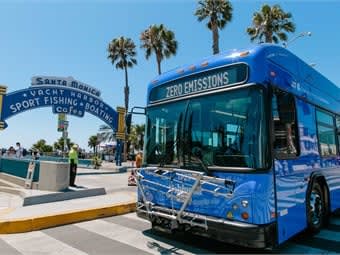
Santa Monica Big Blue Bus (BBB), along with officials from the City, GILLIG, and Cummins, unveiled its first-ever battery electric bus — the first step toward the agency’s goal to have a completely zero-emission fleet by 2030.
The bus was built by GILLIG, in collaboration with Cummins, who designed and manufactured the electric propulsion system for the bus. BBB partnered with GILLIG and Cummins to develop a cutting-edge bus that uses state-of-the-art battery electric technology. After GILLIG unveiled its battery electric bus at an event in May, the new BBB vehicle is the first GILLIG battery electric bus with the Cummins electrified powertrain to be delivered to a transit operator.
The GILLIG battery electric bus has a battery capacity of 444 kWh, with company officials expecting a real-world range of 150 miles based on an energy usage of 2.3 kWh per mile. The buses feature a direct-drive traction motor with peak torque of 3500 Nm (2,582 lbs.-ft.), and utilize energy recovered from a regenerative braking system.
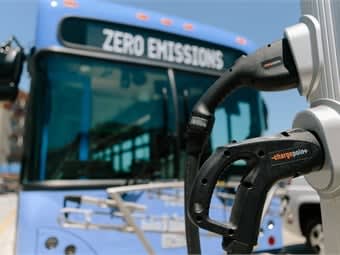
Equipped with six onboard batteries, the bus is powered by 100% renewable energy, and can be fully charged in under four hours, with a paired ChargePoint Express 250 installation.
Equipped with six onboard batteries, the bus is powered by 100% renewable energy, and can be fully charged in under four hours, with a paired ChargePoint Express 250 installation.
“Over the years, Cummins and GILLIG have been phenomenal partners to our organization, which made it easy for us to methodically approach this new technology,” BBB’s Director of Transit Services Ed King told METRO Magazine at the event. “Many agencies have deployed electric bus fleets, but we haven’t because we chose to work with known partners.”
He added that the new battery electric bus is similar to about 80% of its current bus fleet, which is also built on GILLIG’s Low Floor platform, featuring Cummins Natural Gas engines.
“What that means is the parts are interchangeable in many cases and both our maintenance techs and bus operators know this vehicle very well, which in our minds are huge bonuses,” he said.
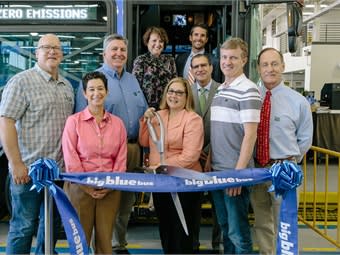
GILLIG's President/CEO Derek Maunus and Cummin's Julie Furber, joined BBB Director of Transit Services Ed King (background) and other city and local officials at a ribbon-cutting event.
A long-time leader in sustainability, BBB first began transitioning its diesel vehicle fleet to natural gas in the 1990s, and using Cummins’ Near-Zero Emissions natural gas engines in 2013. The agency also switched to renewable natural gas in 2015.
Now, the agency and its board have set an aggressive timetable to move to a full zero-emission vehicle fleet by 2030, and plan to continue that evolution with the purchase of an additional 18 battery-electric buses by 2021.
“Today marks a major milestone in our zero-emissions journey and our first step in our transition to a clean energy fleet by 2030,” King said. “This will also mark a significant step toward preserving our environment and protecting our communities.”
More Zero Emissions

Building a Flexible Path to Transit Electrification with BAE's John Hroncich
John Hroncich discusses BAE Systems’ modular and scalable approach, lessons learned from decades of real-world operations, and how agencies can identify electrification strategies that fit their fleets.
Read More →
LA Metro Board Awards 220 Battery-Electric Bus Contract to ENC
The contract, which is the largest base award of battery-electric buses by a U.S. transit agency, will be built in Southern California, sustaining good jobs as LA prepares to welcome the world in 2028
Read More →
Public Transit Conference Returning to GFX in 2027, Call for Papers Now Open
The Call for Papers is now open, allowing transit agency professionals and industry experts to help shape the PTC educational program by submitting session ideas for consideration.
Read More →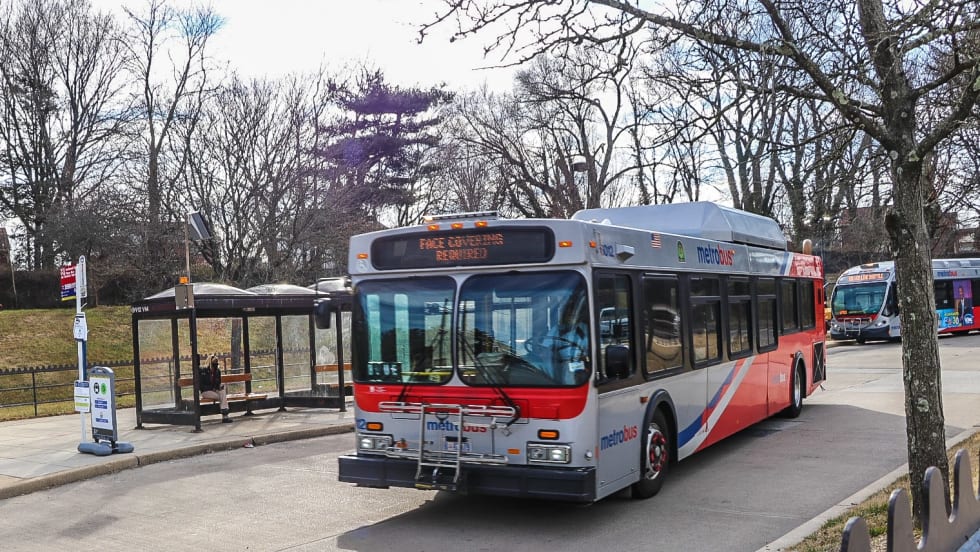
Report: Transit Bus Manufacturing Supports 34,100 Jobs, $5.1B in GDP
The “Buses Mean Business” report examines the transit bus manufacturing industry’s economic footprint, supply chain, and rising demand for vehicle replacements.
Read More →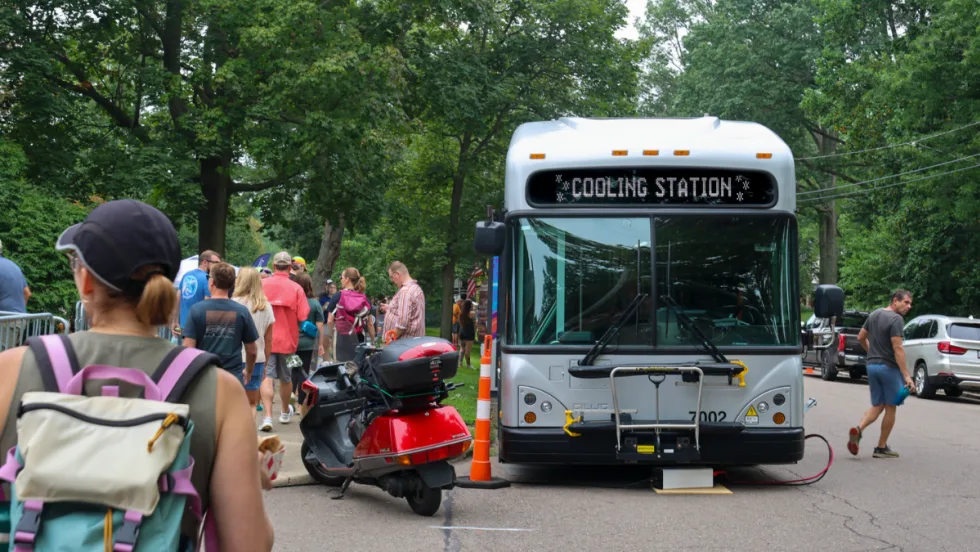
Ohio’s METRO RTA Turns Electric Buses into Mobile Power Sources at PorchROKR
See how three Gillig battery-electric buses powered festival stages while the agency’s new Park & Ride service carried approximately 1,000 attendees, demonstrating another potential use for transit agencies’ electric fleets.
Read More →
CALSTART and Forth Combine to Form Catalyst Mobility
The new name represents a renewed vision for the nonprofit focused on advancing clean, equitable, and affordable transportation solutions that move people and goods.
Read More →
Building a Flexible Path to Transit Electrification
John Hroncich discusses BAE Systems’ modular and scalable approach, lessons learned from decades of real-world operations, and how agencies can identify electrification strategies that fit their fleets.
Read More →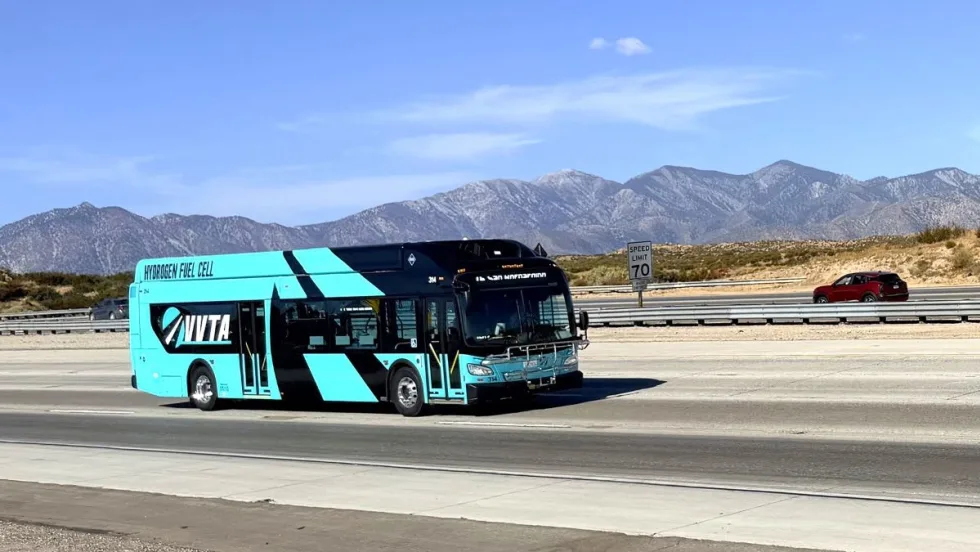
California's VVTA Begins Phased Rollout of Hydrogen Fuel Cell Buses
The agency is introducing 13 zero-emission buses into revenue service while evaluating performance across its urban, rural, and long-distance routes.
Read More →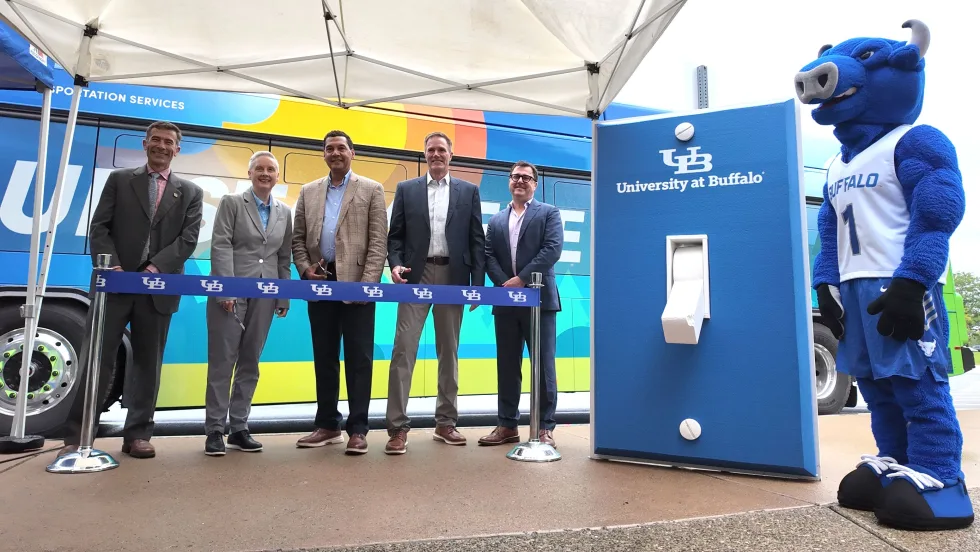
Inside Look: University at Buffalo Puts First 8 Electric Buses Into Stampede Service
UB, transportation solutions provider WeDriveU, and fleet electrification specialist Zenobē marked the deployment in the presence of students, university administrators, and local officials.
Read More →
Biz Briefs: OCTA Taps Clean Energy for Hydrogen Station, Stadler to Supply Via Rail Vehicles, and More
From manufacturers and suppliers to transit agencies and motorcoach operators, these updates offer a snapshot of the projects, partnerships and business moves driving the industry forward.
Read More →