




The training program is only as good as the instructors that are delivering it.
Delivering 'clear, consistent message' during bus operator training key
Until this is the norm, confusion, frustration, and discouragement will set in and compromise the best efforts of a new candidate.
September 17, 2019

Each new bus operator candidate is entitled to, and deserves to receive, a clear and consistent message.
Marc A. Hermann_MTA New York City Transit
6 min to read

Each new bus operator candidate is entitled to, and deserves to receive, a clear and consistent message.
Marc A. Hermann_MTA New York City Transit
Bus operator shortages are occurring more often than ever. Some of us are finding it difficult to not only successfully recruit new bus operator candidates, but also just as difficult, to retain them.
We must ensure that our existing training programs revolve around the “7 Key Ingredients” in a new bus operator training program that I have discussed at many venues. It is directed toward providing new bus operator student candidates a steady, consistent basic skills curriculum to ensure those who failed to qualify did so due to them not being able to perform up to the standards of the training department and not because of a teaching inconsistency due to a lack of a standardized curriculum being in place.
Clear, consistent message
Each new bus operator candidate is entitled to, and deserves to receive, a clear and consistent message, whether it be on the training bus, in the classroom, or with the route familiarization operator they will be assigned to for their route familiarization portion of training preceding graduation day.
A key period for problems/inconsistencies to begin to set in is during training bus “Basic Skill Development,” when a candidate can be assigned different instructors during this crucial learning period.
If possible, minimize moving student candidates among instructors during this time and allow an instructor to complete the training bus basic skills development, from start to finish, with the students they were assigned.
When an instructor change must occur, the most important ingredient that must be in the training program to allow the training to continue with minimum learning disruptions is an instructional staff that are all “on the same page” with their teachings.
The only thing different when there is an instructor change should be the instructor and not the message. If instructor inconsistencies exist, it simply won’t work and the confusion that comes as a result of this will be exposed by the candidate’s performance. The training program is only as good as the instructors that are delivering it.
Minimizing the shifting of instructors among the candidates requires a great amount of forward planning by the assigning supervisor/member of management.
Early on knowledge of the starting dates of new classes, the number of instructors required, and keeping vacation time to the point where it won’t impact trainer availability to cover all other training related work assignments are important factors to consider in minimizing training disruptions.
On occasions when the shifting of candidates between instructors during the crucial basic skills development portion of training must occur, there must be an assurance the candidates will not suffer. The objective here is that any change of instructors during skills development should be minimized, and in cases where there is an instructor change, the change will reflect a seamless transaction.
Remember, the many voices candidates will be subjected to during training should be producing one message. Until this is the norm, the door will remain open for inconsistencies in training. Confusion, frustration, and discouragement will set in and compromise the best efforts of a new candidate.
Route Familiarization Operator
The next possibility of inconsistencies among the training journey might be found in the RFO/route familiarization operator. They are also addressed as Line Trainers. (I respectfully reserve the name of trainer or instructor to the training department’s instructional staff).
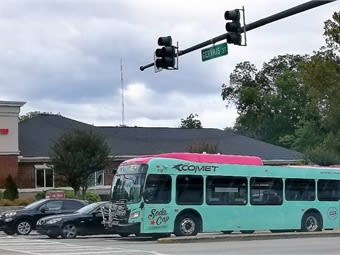
Confusion, frustration, and discouragement will set in and compromise the best efforts of a new candidate.
The COMET
These RFO’s in the important role they perform must be an extension of the training department, especially an extension of the training bus instructional staff. Remember, many voices, but one message.
It must be impressed upon the RFO’s during their selection process and also during their RFO refresher training.
It should be emphasized they will be looked upon as an extension of the training bus instructional staff, with regard to setting the example and not undoing what the training department instructors have already taught the candidates.
When an RFO receives a student for RF Training, they should have the conviction the candidate has already proven to the training bus instructor that they are worthy of beginning RF. Any inconsistency that may begin at this point can set the stage for a difficult probationary period.
Standardized training
The gap remains wide in having a standardized training program among transit agencies. I understand that each agency may have to tweak certain aspects of it, but what should be in place right out of the gate immediately after orientation day is training bus basic skill development. Nothing should come before this process of determining which candidates move forward and which candidates must be released, based on their unsatisfactory behind-the-wheel performance. The separation must occur first before moving on to other aspects of training.
Instructor-Student Ratio
Unfortunately, it doesn’t stop here. Instructor-Student Ratio is another area that appears to need work. When there are too many candidates per training bus, instructing becomes preaching. On the other hand, when there are too few candidates per training bus, it can become boring and difficult for the candidate to remain involved and absorb all that is being taught. An observant instructor will see it in the faces of their student candidates. It’s that faraway facial expression, which is saying “I’m physically here, but my concentration has checked out about an hour ago.”
In closing, consistency must be the norm.
A zero-tolerance policy for instructors that insist on “doing their own thing” should be in place.
The lack of “final day” disqualifiers, insufficient initial probationary periods, and incorrectly utilizing a supplemental training tool, such as a simulator, are in play here.
Properly utilized, this tool will play an important role in basic skill development, refresher training, return to work training, and post collision corrective action training — the key here is when ”properly utilized.”
Allocating training dollars
Those who are in positions of authority must realize that what happens on the road begins in training and the training department should be at the top of the pyramid when it comes to allocating dollars and adequate personnel to do an effective job.
The training department should be delivering world class operators, and their graduates should reflect all that is right with this rewarding line of work.
The training department should be held in high esteem by all departments. If there is work to do to get it to that level, it begins at the top and will filter down the chain.
Allocating training dollars up front versus distributing post-collision dollars is what it really amounts to. It must be paid out either way. Is it really a choice? The first option makes sense and works for me.
With that said, I am looking forward to possibly discussing this and other “Post Training” issues at an upcoming APTA event or when an individual opportunity arises. A complete assessment of one’s New Bus Operator Training Program to determine problem areas that may be in line for constructive and effective improvements is a starting point. Remember, “Many voices but one message.”
Louie Maiello is the former director of training for the New York City Transit Dept. of Buses Safety & Training Division and 2003 NTI Fellow. Currently, he is Director, Training Services, for Transit Training Solutions.
Subscribe to Our Newsletter
More Blog Posts
Building a Winning FTA Grant Proposal: Why Propane Autogas is the Pragmatic Choice for Fleet Resilience
With $610 million available through the FY 2026 Buses and Bus Facilities Competitive Program and the Low or No Emission Grant Program, agencies must build a compelling case before the September 21 deadline that balances environmental compliance with operational feasibility.
Read More →
Velo-city Conference 2026: Latest Trends in Cycling as Part of Urban Mobility
The global cycling conference highlighted how cities are integrating bicycles into multimodal transportation networks, expanding cycle tourism and reshaping urban mobility.
Read More →
Kindness Isn’t Soft...It’s Strategic.
Mike Bismeyer — often known as “The Kindness Guy” — has spent more than 17 years in public transit and mobility, serving in industry leadership roles, speaking across North America, and advocating for stronger workplace cultures. But his message doesn’t come from theory. It comes from lived experience.
Read More →
Inside ITF 2026: Transport Reacts to A Challenging World
Transport leaders from around the world gathered in Leipzig, Germany, for the 2026 International Transport Forum to discuss resilience, climate impacts, supply chains and the future of sustainable mobility.
Read More →
Every Ride Tells a Story — But You’re Not Just Selling the Ride
You’re selling the moment, the meaning, and the emotion behind it.
Read More →
How Digital Signage is Reshaping the Traveler Experience at Transportation Hubs
What was once a landscape of static signs has evolved into a responsive, immersive environment powered by real-time visual communication.
Read More →
Latest Trends in Urban Mobility from Polis Conference 2025
Polis comprises cities and regions, as well as corporate partners, from across Europe, promoting the development and implementation of sustainable mobility. This year’s event had over a thousand attendees across various policy forums and an exhibition.
Read More →
Why Transit Leaders Require Better Tools for Operational Clarity In Today’s Tech-Fragmented Environment
Across North America and beyond, transit agency officials are contending with a perfect storm of operational headaches and strategic challenges that hamper daily service and long-term progress.
Read More →
The Powerless Brokers: Why California Can’t Build Transit
It is no secret that transit in the U.S. is slow and expensive to build.
Read More →
Why Transport Sustainability Should Focus on People Instead of Cars
Simply incentivizing electrification is not enough to make a meaningful impact; we must shift our focus toward prioritizing public transportation and infrastructure.
Read More →