



Why Transport Sustainability Should Focus on People Instead of Cars
Simply incentivizing electrification is not enough to make a meaningful impact; we must shift our focus toward prioritizing public transportation and infrastructure.

There’s no denying it; if every car became an EV overnight, emissions would undeniably improve. However, even if every vehicle on the road were an EV, we would still be facing the same problem of daily gridlock traffic and long commute times.
Photo: METRO
- Electric vehicles alone are insufficient for significant environmental impact.
- Emphasis should be placed on enhancing public transportation systems.
- Investment in infrastructure prioritizes people over cars for sustainable development.
*Summarized by AI
Electric vehicles (EVs) are often looked at as the one-size-fits-all solution to the transport industry’s emissions problems. While EVs are an essential piece to the sustainability puzzle, they can’t address all the social and environmental issues associated with our cultural dependence on cars.
Simply incentivizing electrification is not enough to make a meaningful impact; we must shift our focus toward prioritizing public transportation and infrastructure.
The Issues With EV-Centric Policies
1. Congestion
There’s no denying it; if every car became an EV overnight, emissions would undeniably improve. However, even if every vehicle on the road were an EV, we would still be facing the same problem of daily gridlock traffic and long commute times.
As reported by INRIX, in 2024, drivers in Chicago and New York City lost 102 hours sitting in traffic, costing them more than $1,800 individually.
In addition to losing both time and money, there are also mental tolls that can stem from being sedentary day in and day out. The more you drive, the less physically active you are, and this has been shown to increase stress levels.
This is why emphasizing infrastructure improvements, such as public transportation, microtransit, and other shared modes, is essential, as the only way to reduce these issues is to address their root cause: congestion.
With the proper funding, policies, and infrastructure in place, we can better encourage would-be drivers to consider alternate methods of travel, which will lessen congestion on our roads while also having similar impacts on our emissions.
2. Land Use
America’s road network is so extensive that it is almost equivalent to the surface area of Norway. Urban land is quickly becoming a scarce, finite resource, and the more land that is put aside for roads is land that can’t be used for housing, green space, and other community assets.
Additionally, due to our car-dependent lifestyle, other sustainable methods of travel have been pushed out to make room for roads. These include sidewalks, protected bike lanes, and bus lanes.
To achieve our climate-neutral transport targets, we need to look beyond EVs and focus on people-centric urban planning and transportation policies. Implementing policies that reclaim space currently occupied by cars and designing cities where people can access what they need within an arm's reach are the first significant steps toward making active mobility a central part of urban life.
3. Equity in Transport
Because of the hefty price tag that comes with EVs, many low-income households are priced out of making the switch from a gas-powered car to an electric one.
The secondhand market for EVs is also unreliable because of the rapid rate of change in battery technology and unknown factors around how an EV’s battery will degrade and its impact on an EV’s driving range.
This is why we need to question how we provide financial incentives for EVs and disincentives for gas-powered vehicles without widening the existing inequality gap for those who can’t afford to make the switch.
If you take a look back at the government’s transport funding, you’d notice that there is a significant emphasis on EV infrastructure. While investing in our EV network is crucial, it cannot be the sole focus, especially not if it comes at the cost of funding for public transit networks.
Routinely, the government has spent approximately four times as much on its roads as it has on its public transit. As a result, many Americans have limited access to public transportation, and those who don’t own cars experience perpetuated patterns of disadvantage.
Let’s look at my daily commute as an example. According to Google Maps, the fastest route using public transportation takes almost two hours, requiring about an hour of walking and two bus transfers, whereas driving takes only 25 minutes. For many with commutes like mine, car ownership and usage often feel like the only viable option due to a lack of alternatives.
Electrification is essential, but it's clear that we need to invest more in technologies that can improve transit systems — because making those better will help shift the norms of how we travel.
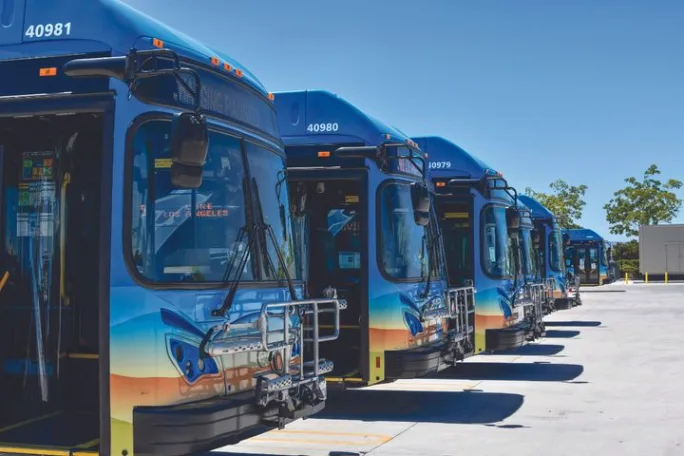
Electrification is essential, but it's clear that we need to invest more in technologies that can improve transit systems — because making those better will help shift the norms of how we travel.
Photo: AVTA
The Road to Transport Sustainability
1. Active Transport
According to a research study for the Bureau of Transportation Statistics, in 2021, 52% of all trips in the US were less than three miles long.
With most trips being so short, it begs the question: why don’t we swap these short trips for more sustainable modes of transportation like walking or biking? The answer is safety, or rather, the lack of it.
Without proper sidewalks, walking becomes essentially impossible.
To prioritize pedestrian safety, there needs to be sidewalks that are unimpeded, free of trip hazards, wide enough to accommodate strollers and wheelchair users, and well-connected by access ramps and pedestrian crossings.
Cyclists experience a similar issue with safety.
Cities that have invested in bike lanes, especially those that have invested in lanes that are physically separated from traffic, experience some of the highest cycling rates.
In addition to bike lanes, integrating a bike share program is a great way to encourage bike use while also providing improved access to those who may not have had bike access otherwise.
When implemented in collaboration with city governments and integrated into multimodal journey planners and transit payment systems, active mobility can become a seamless part of daily travel.
2. Optimizing Our Roads
When we absolutely must drive, carpooling or using a rideshare is a great sustainable alternative.
Policies and technologies that encourage the optimization of our roads and encourage other modes of transportation not only mean faster journeys for us, but they also help lower emissions.
London and New York have seen a decrease in traffic and improvements in air quality due to congestion zones and efforts to encourage public transit usage.
For London, the launch of its congestion charge (ULEZ) resulted in a 30% reduction in congestion and boosted bus patronage in Central London by 33%.
In New York, within less than one month of operation, its congestion zone increased weekend express bus patronage by 20% and reduced traffic by more than one million drivers.
Another way for regions to manage traffic flows and reduce congestion is through dynamic road pricing. Cities have been able to incentivize drivers to adjust their travel times or choose alternative routes by adjusting toll rates on key roads in real-time.
Road User Charging (RUC) programs also utilize the concept of driver incentivization by charging drivers based on the distance they travel, rather than relying on fuel taxes or flat fees. RUC helps encourage drivers to choose more sustainable travel options when possible.
While some new legislation may be required to implement RUC fully, it's important to remember that the journey toward reducing congestion and emissions can begin with just one intersection.
Lastly, innovative intersection management technologies can also be utilized to improve signal performance. Not only would this decrease gridlock, but it can also reduce emissions, speed up public transit journeys, and reduce delays by adjusting signal timings and coordination to give transit vehicles priority.
3. Public Transport
For longer distances and daily use, public transport is the most sustainable option.
However, if public transport is ever going to surpass the use of private vehicles, it needs to be convenient, reliable, affordable, and accessible. In a perfect world, we would be able to ensure that everyone could live a short walk or cycle away from a transit service.
Routes and frequencies must be supported by data to ensure they are effectively and equitably serving our communities.
Giving riders the power to plan their journeys ahead of time, regardless of what mode of transportation they prefer or where they might be coming from, is a necessity for them to feel confident that their service will get them where they need to go on time. They should also be able to track their service in real time every step of the way, receive personalized updates or trip adjustments when issues do arise, and have the freedom to pay with whatever method is most convenient to them.
The technologies underpinning these experiences already exist at various price points in the market and are successfully utilized by cities around the world. Providing the necessary funding and public policy support to implement them further and expand their integration with other parts of our transport ecosystem will be instrumental in encouraging greater mode shift.
These types of investments are important because, at the end of the day, all riders should feel like their service is clean, reliable, and that they are safe, no matter their race, age, gender, religion, or physical ability.
While there is no immediate solution and these changes definitely won’t happen overnight, there are small, consistent choices that we can make that will gradually build toward the bigger societal shift we hope to achieve.
Quick Answers
Focusing solely on electrification doesn't address broader issues like traffic congestion, urban space allocation, or equitable access to transportation.
*Summarized by AI
More Blog Posts
Building a Winning FTA Grant Proposal: Why Propane Autogas is the Pragmatic Choice for Fleet Resilience
With $610 million available through the FY 2026 Buses and Bus Facilities Competitive Program and the Low or No Emission Grant Program, agencies must build a compelling case before the September 21 deadline that balances environmental compliance with operational feasibility.
Read More →
Velo-city Conference 2026: Latest Trends in Cycling as Part of Urban Mobility
The global cycling conference highlighted how cities are integrating bicycles into multimodal transportation networks, expanding cycle tourism and reshaping urban mobility.
Read More →
Kindness Isn’t Soft...It’s Strategic.
Mike Bismeyer — often known as “The Kindness Guy” — has spent more than 17 years in public transit and mobility, serving in industry leadership roles, speaking across North America, and advocating for stronger workplace cultures. But his message doesn’t come from theory. It comes from lived experience.
Read More →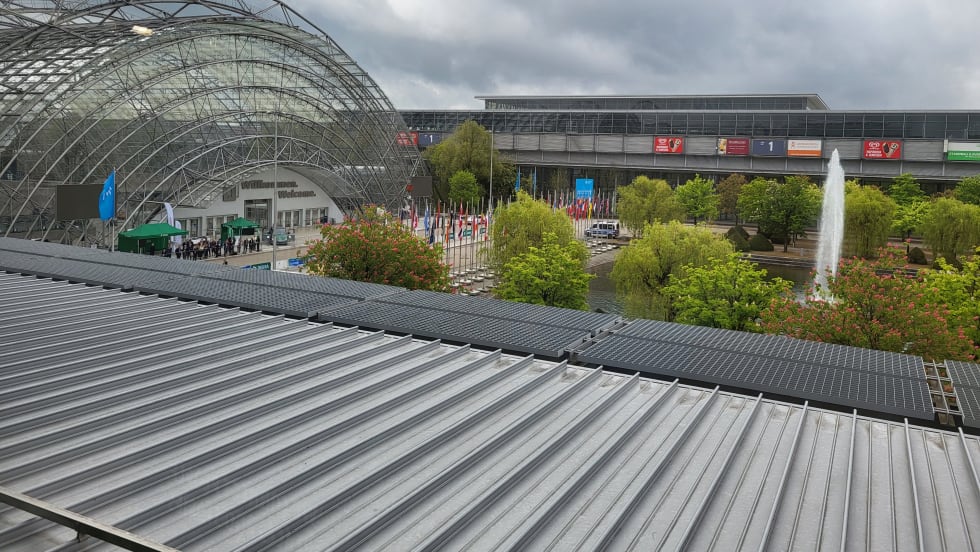
Inside ITF 2026: Transport Reacts to A Challenging World
Transport leaders from around the world gathered in Leipzig, Germany, for the 2026 International Transport Forum to discuss resilience, climate impacts, supply chains and the future of sustainable mobility.
Read More →
Every Ride Tells a Story — But You’re Not Just Selling the Ride
You’re selling the moment, the meaning, and the emotion behind it.
Read More →
How Digital Signage is Reshaping the Traveler Experience at Transportation Hubs
What was once a landscape of static signs has evolved into a responsive, immersive environment powered by real-time visual communication.
Read More →
Latest Trends in Urban Mobility from Polis Conference 2025
Polis comprises cities and regions, as well as corporate partners, from across Europe, promoting the development and implementation of sustainable mobility. This year’s event had over a thousand attendees across various policy forums and an exhibition.
Read More →
Why Transit Leaders Require Better Tools for Operational Clarity In Today’s Tech-Fragmented Environment
Across North America and beyond, transit agency officials are contending with a perfect storm of operational headaches and strategic challenges that hamper daily service and long-term progress.
Read More →
The Powerless Brokers: Why California Can’t Build Transit
It is no secret that transit in the U.S. is slow and expensive to build.
Read More →
Transit ROI & System Efficiencies Will Drive 'Big, Beautiful' Transit Funding
For many years, the narrative surrounding public transit improvements has been heavily weighted toward environmental gains and carbon reduction. While these are undeniably crucial long-term benefits, the immediate focus of this new funding environment is firmly on demonstrable system efficiencies and a clear return on investment.
Read More →