



UITP Congress Charts the Next Era of Public Transport
From East Asia to Europe, more than 400 exhibitors and 70 sessions tackled global mobility challenges — highlighting AI, automation, and urban transit equity in the race toward a carbon-free future.

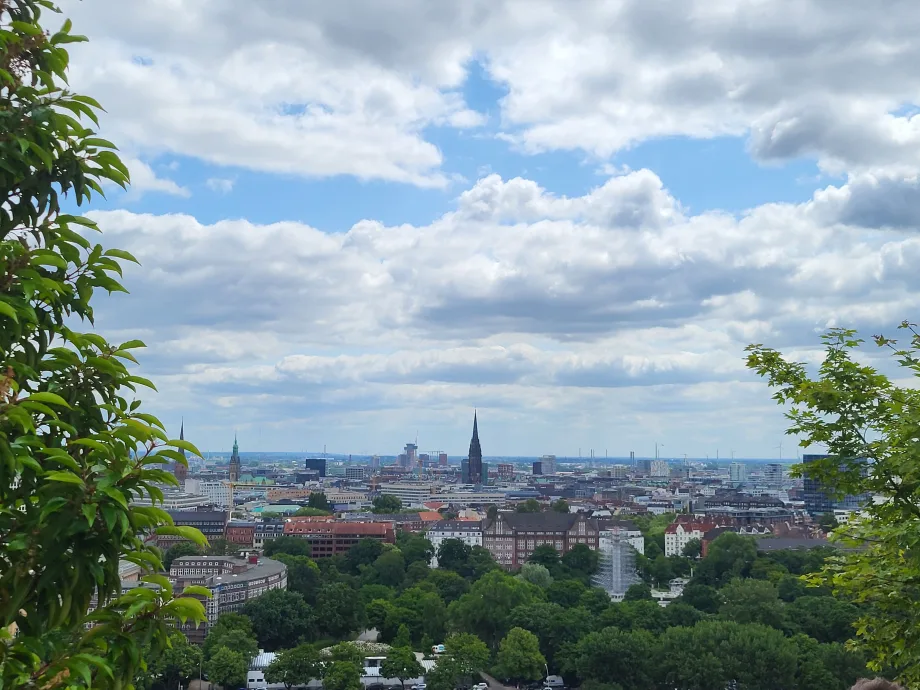
Hamburg is the second-largest city in Germany, with a population of 1.9 million. It is a major global port — the third largest in Europe — and a key industrial and commercial hub.
Photo: Giles Bailey
- The UITP Congress featured over 400 exhibitors and 70 sessions on global mobility challenges.
- Key topics discussed included AI, automation, and achieving urban transit equity.
- The event emphasized sustainable solutions for a carbon-free future in public transport.
*Summarized by AI
Returning to its roots in Hamburg, where it first convened in 1891, the UITP Global Congress roared back to life from June 15 to 18 with a powerhouse gathering of over 10,000 public transport professionals from more than 100 countries.
The event featured 70-plus sessions and a sprawling exhibition floor with 400+ global participants, including major vehicle manufacturers and system providers, operators, public authorities, and trailblazing start-ups.
UITP is the Brussels, Belgium-based International Union of Public Transport. Its members use it as a focus for thought leadership and best practices in public transport and to represent the industry globally in international discussions.
The group's origins are in Europe, but it now operates directly through regional sub-forums or partner associations worldwide.
A key objective of the Congress is to continue broadening international representation within UITP and its events, and to capture the successes and challenges of delivering public transport worldwide. This also includes considering public transport in the broader context of sustainable cities and other complementary modes.
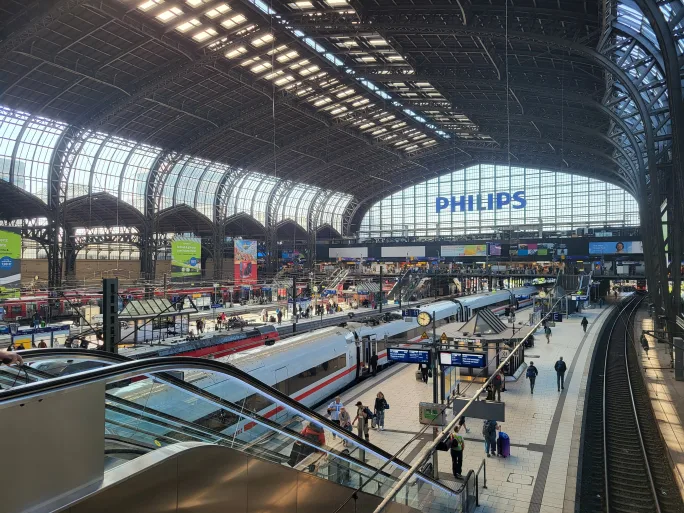
Hamburg is home to Germany’s busiest railway station, Hamburg Hauptbahnhof.
Photo: Giles Bailey
About Hamburg and Its Mobility Picture
Hamburg is the second-largest city in Germany, with a population of 1.9 million. It is a major global port — the third largest in Europe — and a key industrial and commercial hub.
The city is relocating some harbor activities to other parts of the urban area and redeveloping former inner port lands into a new “HafenCity.” This ongoing significant development is transforming the city and supporting its now significantly growing population.
As in most German cities, a rich mix of transport options is available. This is a major industrial city, and road traffic to and from the port is heavy. Therefore, several major motorways provide access.
What is somewhat surprising in a contemporary European context is the number of busy, multilane urban roads through the city's central area.
However, non-motorway urban traffic levels in the city have declined since the millennium. Hamburg has an extensive U-Bahn network of four lines with 93 stations over 66 miles; a regional S-Bahn network that also provides inner city rail transit in certain areas over 68 stations on four lines at 91 miles; an extensive urban bus network of which one-third is already electric and that includes one of the busiest bus routes in Europe - Line 5 carries 60,000 passengers per day; water taxis; an electric vehicle charging network; and shared bikes.
The city is no longer served by trams. The buses and U-Bahn are operated by Hamburger Hochbahn AG, which is wholly owned by the town.
The city also contains Germany’s busiest railway station, Hamburg Hauptbahnhof. This busy, intensively served station is a national, regional, and local rail transport hub and serves as a northern pole of the German railway network. Over half a million passengers use it every day.
Dr. Anjes Tjarks, Hamburg’s Minister for Transport and Mobility Transition, welcomed the congress and hosted it throughout. Mr. Ulrich Lange, the German federal Minister of Transport, also spoke at the opening plenary.
Public transport expansion is underway to improve service and meet Hamburg’s stated technological innovation goals, including electrification to support decarbonization and individualized, localized services supported by autonomous vehicles. This includes new U-Bahn trains, a recent extension to the redeveloped port area, and eventually a new line — U5 — across the city, the first fully automated metro line.
As in most German cities, cycling is also a popular mode of transportation, with a 22% share, followed by public transport (24%), walking (22%), and car travel (32%).
The aim is for public transport to reach 30% by 2035 and for sustainable transport to account for 80% of demand by 2030. Demand for public transport has already exceeded pre-pandemic levels, and half of the city’s population has a public transport subscription ticket.
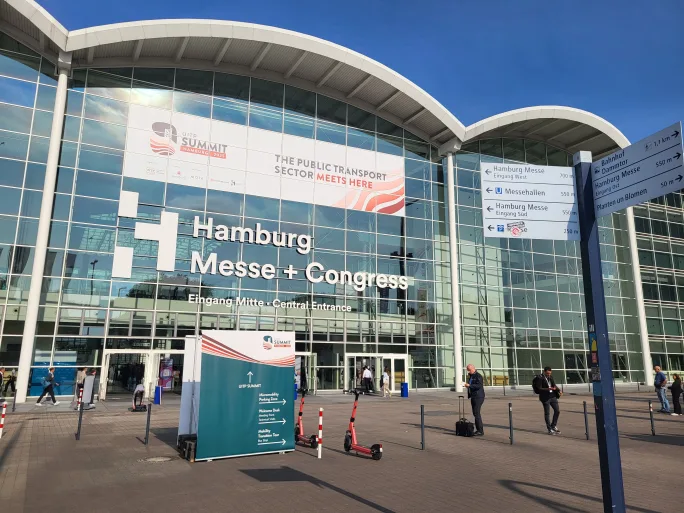
A key objective of the Congress is to continue broadening international representation within UITP and its events, and to capture the successes and challenges of delivering public transport worldwide.
Photo: Giles Bailey
Key Highlights from the UITP Global Congress
A wide-ranging conference like UITP has many themes and key takeaways. A few of the key moments are outlined below.
From Vienna, Austria, the CEO of Wiener Linien, Alexandra Reinagl, highlighted that among all the tech developments in the industry and society, “…progress lies in meeting everyday passenger needs, not chasing the latest innovation.”
Vienna is doing many things well. It has 1.3 million annual pass holders amongst a city population of two million.
Hamburg uses data sensors and data aggregation to prioritize traffic for its buses and alert bus drivers to nearby other road users. This data has also been used to develop an AI-based traffic forecasting model to examine near-term congestion and enable traffic controllers to make informed decisions about managing the city’s streets.
The conference included a thought-provoking panel of East Asian cities, including Singapore, Beijing, Delhi, Hong Kong, and Taipei, brilliantly outlining their rapid pace of transformation through improved rail-based public transport and other sustainable transport services.
From the opening session, throughout the event, and brought out again at the close, was a focus on autonomous public transport through smaller shuttles, or ultimately, larger buses.
Hamburg sees these services as an evolution of its continuing technical innovation and digitization and can, perhaps, eventually offer services in outer suburban areas where bus services are relatively weak.
Also, in more inner areas away from main traffic flows, they can use a relatively open street network within the city. However, the broader sustainability goals and growth in the classic public transport network are clear.
Moia, a division of Volkswagen Group, led the trials in Hamburg and demonstrations at the conference.
The German federal transport minister also mentioned these trials in his opening remarks.
Germany sees such trials as applicable in other contexts across the country and, importantly, as developing technical innovation in the German automotive and related industries. These vehicles are seen as one in a series of innovations that must be considered.
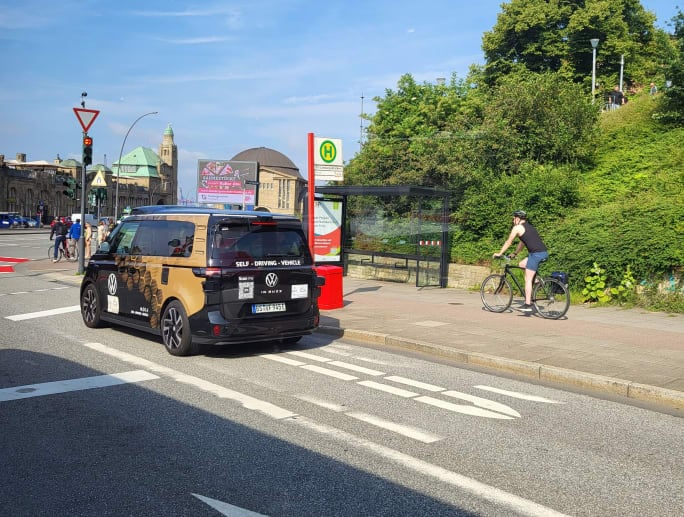
From the opening session, throughout the event, and brought out again at the close, was a focus on autonomous public transport through smaller shuttles, or ultimately, larger buses.
Photo: Giles Bailey
A Focus on Autonomous Vehicles in Europe
There is also a broader European Union agenda on autonomy.
Several attendees, including Ms. Magda Kopczyńska, EU Director-General for Mobility and Transport, represented the EU at the conference.
The industrial opportunities in autonomous vehicles and the potential to enhance the efficiency of shared transport were raised as issues to be considered.
Furthermore, simply rejecting the proposition was deemed the incorrect approach to these innovations. Thus, the EU uses some of its funds to support such trials.
All of the speakers who referenced autonomous transport also addressed the challenges of recruiting drivers of classic public transport services, which is particularly problematic in some areas of Europe and the wider world.
However, the enthusiasm and inherent practicality of developing, scaling, pricing, customer acceptance, and the ability of autonomous vehicles to work with other transport modes, including walking and cycling in crowded European cities, were repeatedly raised during discussions on and off stage.
Furthermore, can these devices actually deliver mobility services that operationally scale at the level of mass transport in larger cities to support the sustainability agenda? And, do they potentially divert attention from delivering customer focus on the core elements of the classic public transport mix?
The European context for these autonomous vehicles will differ from that in the U.S.
Again, European cities have extensive and growing classic public transport systems that are intensively used, active mobility in terms of walking and cycling is widespread, and generally, streets are constrained and the urban area is confined.
A number of speakers chose to widen the debate on autonomy to simply the better use of technology and data to improve the level of service being provided to public transport users. This includes better design and cost efficiency of services to outer suburbs, better data analytics to enhance customer information and service reliability, and the technology and data implications from the rollout of e-buses.
The UITP event confirmed Ms. Renee Amilcar's re-election as president of UITP for a second term. Amilcar is the GM of OC Transpo in Ottawa, Canada.
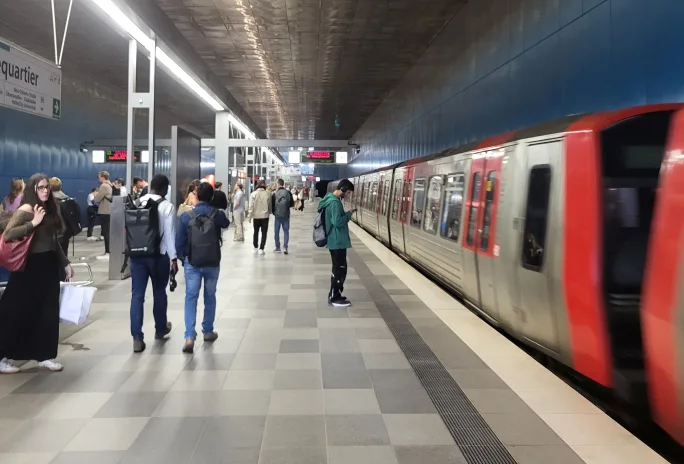
Traveling from London to Hamburg on three trains, mostly running at high speeds during their 572-mile route, essentially took the day.
Photo: Giles Bailey
Intercity Travel in Europe
As a side note, I continue to travel to events in Europe, mainly by train from my base in London.
While this is not always feasible, it is becoming increasingly more practical, even with the time penalty.
Traveling from London to Hamburg on three trains, mostly running at high speeds during their 572-mile route, essentially took the day. This included time for a relaxing break at each interchange, which other travelers may choose to compress.
The author found the journey far more appealing because of the ability to relax or work on the train, the city-to-city trip, and relaxed luggage rules. This is an ongoing transformation of the European transport system and a widespread traveler mindset.
At the closing session of the Congress, it was announced that April 17, 2026, will be declared a “World Public Transport Day.” More details on how this will raise the profile of the public transport industry will be announced in due course.
The next UITP Global Congress will be in Dubai, United Arab Emirates, in April 2026 and return to Hamburg in 2027.
Quick Answers
The UITP Congress focused on global mobility challenges, with an emphasis on AI, automation, and urban transit equity in the pursuit of a carbon-free future.
*Summarized by AI
More Blog Posts
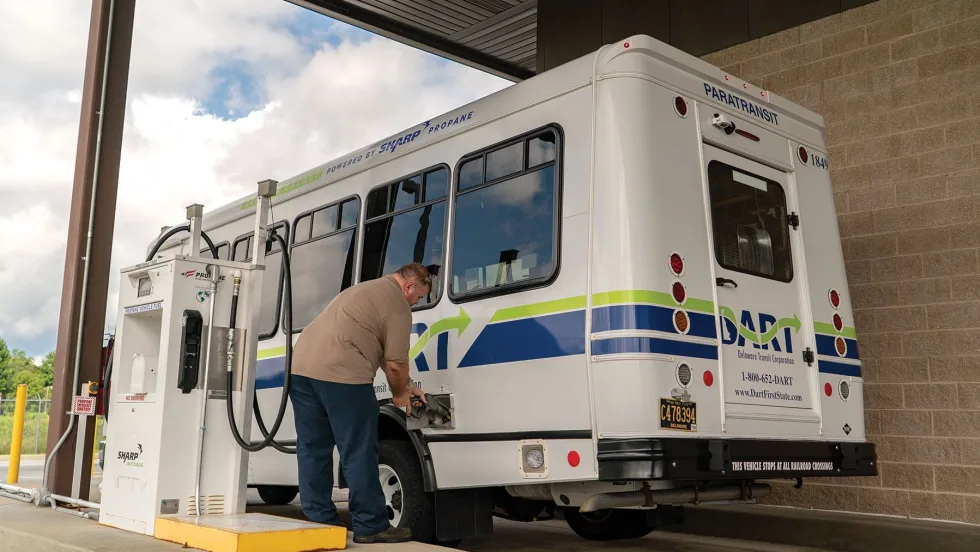
Building a Winning FTA Grant Proposal: Why Propane Autogas is the Pragmatic Choice for Fleet Resilience
With $610 million available through the FY 2026 Buses and Bus Facilities Competitive Program and the Low or No Emission Grant Program, agencies must build a compelling case before the September 21 deadline that balances environmental compliance with operational feasibility.
Read More →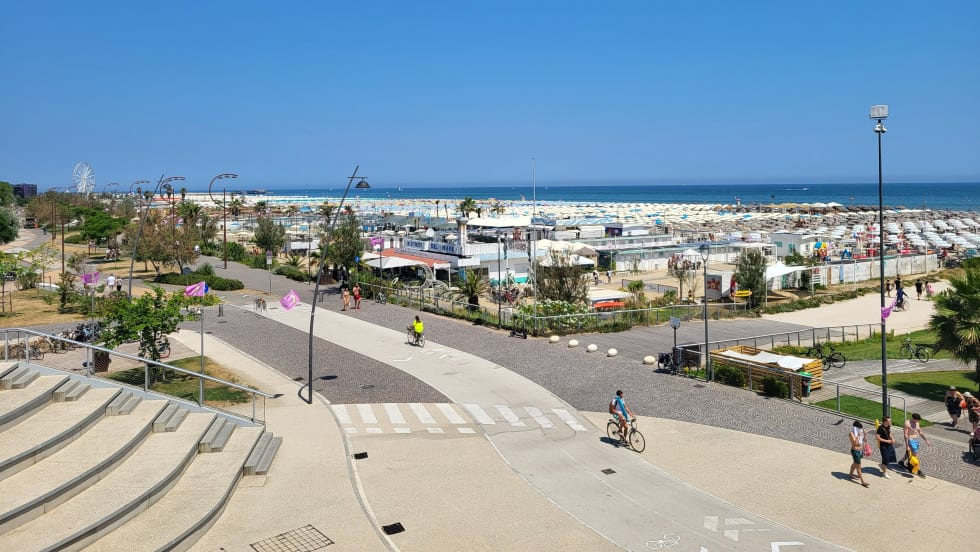
Velo-city Conference 2026: Latest Trends in Cycling as Part of Urban Mobility
The global cycling conference highlighted how cities are integrating bicycles into multimodal transportation networks, expanding cycle tourism and reshaping urban mobility.
Read More →
Kindness Isn’t Soft...It’s Strategic.
Mike Bismeyer — often known as “The Kindness Guy” — has spent more than 17 years in public transit and mobility, serving in industry leadership roles, speaking across North America, and advocating for stronger workplace cultures. But his message doesn’t come from theory. It comes from lived experience.
Read More →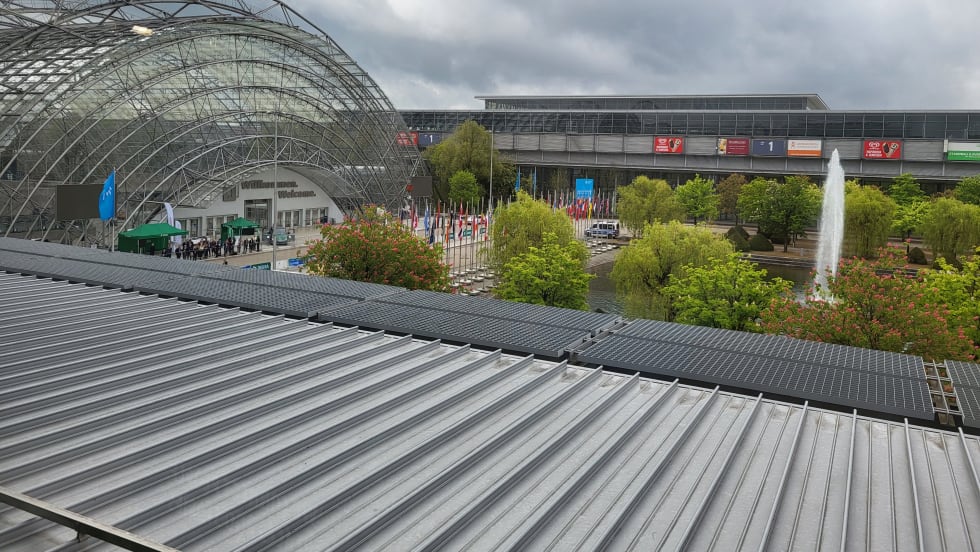
Inside ITF 2026: Transport Reacts to A Challenging World
Transport leaders from around the world gathered in Leipzig, Germany, for the 2026 International Transport Forum to discuss resilience, climate impacts, supply chains and the future of sustainable mobility.
Read More →
Every Ride Tells a Story — But You’re Not Just Selling the Ride
You’re selling the moment, the meaning, and the emotion behind it.
Read More →
How Digital Signage is Reshaping the Traveler Experience at Transportation Hubs
What was once a landscape of static signs has evolved into a responsive, immersive environment powered by real-time visual communication.
Read More →
Latest Trends in Urban Mobility from Polis Conference 2025
Polis comprises cities and regions, as well as corporate partners, from across Europe, promoting the development and implementation of sustainable mobility. This year’s event had over a thousand attendees across various policy forums and an exhibition.
Read More →
Why Transit Leaders Require Better Tools for Operational Clarity In Today’s Tech-Fragmented Environment
Across North America and beyond, transit agency officials are contending with a perfect storm of operational headaches and strategic challenges that hamper daily service and long-term progress.
Read More →
The Powerless Brokers: Why California Can’t Build Transit
It is no secret that transit in the U.S. is slow and expensive to build.
Read More →
Why Transport Sustainability Should Focus on People Instead of Cars
Simply incentivizing electrification is not enough to make a meaningful impact; we must shift our focus toward prioritizing public transportation and infrastructure.
Read More →