



Why Bus Service Cuts Should Be the Last Resort for Transit Agencies
A closer look at ridership trends, demographic shifts, and the broader impacts of service reductions reveals why maintaining, and even improving, bus service levels should be a top priority in 2025.

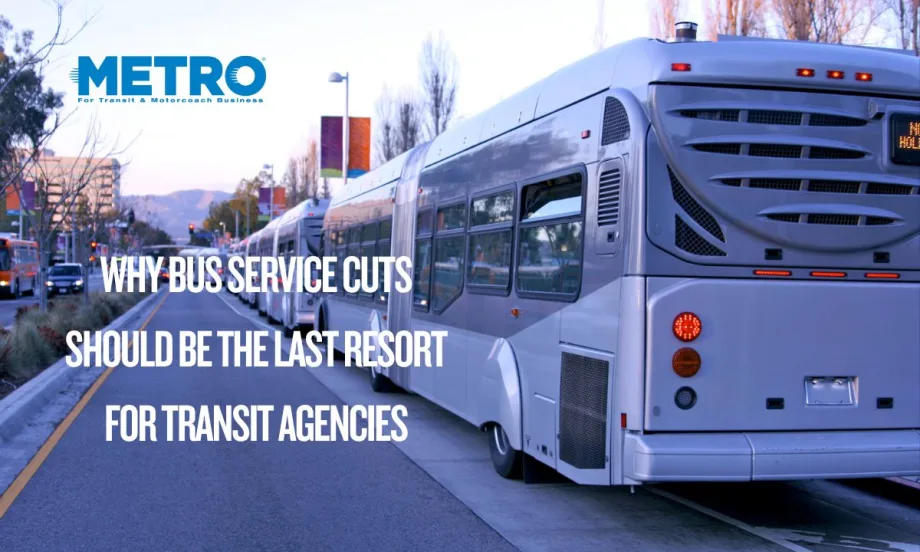
Recent warnings from major transit agencies underscore the dire consequences of slashing service.
Photo: METRO
- Reducing bus service can negatively affect community accessibility and equitable transportation, particularly in areas with significant demographic shifts.
- Preserving and enhancing bus services is crucial for accommodating evolving ridership patterns and ensuring sustainable urban mobility.
- Service reductions can lead to broader economic and societal impacts, highlighting the importance of prioritizing public transit infrastructure investments.
*Summarized by AI
As transit agencies and municipal mobility planners deal with budget shortfalls and mounting fiscal pressures, the temptation to cut transit bus service can seem like an expedient solution. However, this approach is shortsighted and risks undermining the economic, social, and environmental goals that public transit is meant to advance.
A closer look at ridership trends, demographic shifts, and the broader impacts of service reductions reveals why maintaining, and even improving, bus service levels should be a top priority in 2025.
The Real Cost of Service Cuts
Recent warnings from major transit agencies underscore the dire consequences of slashing service.
In Chicago, proposed cuts could eliminate up to 74 of 127 bus routes, end all weekend bus service on some lines, and reduce paratransit by as much as 66%.
Pittsburgh faces a 35% reduction in service and fare hikes exceeding 9% if new funding is not secured, with officials warning that "there is nothing left to cut from the budget but service".
In Metro Vancouver, halving bus service would leave more than half a million people without convenient access to transit, exacerbating congestion and stalling economic activity.
These scenarios are not unique.
Across North America, agencies are sounding the alarm: once service is cut, it can take a decade or more to rebuild ridership and restore lost routes. The impact is not limited to lower-income riders; it ripples the entire economy, affecting employers, businesses, and the region’s competitiveness.
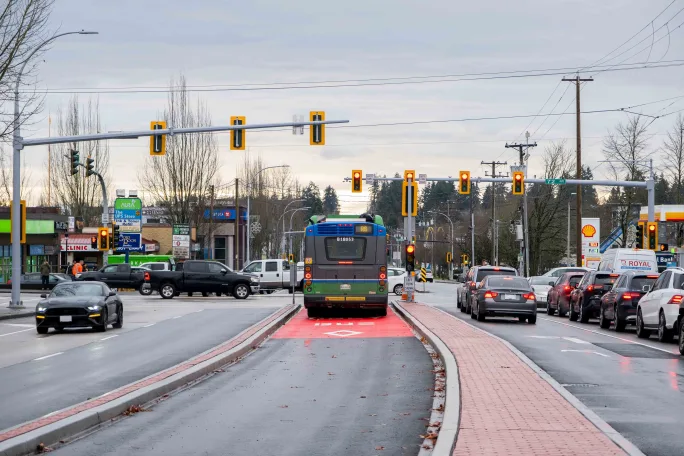
In Metro Vancouver, halving bus service would leave more than half a million people without convenient access to transit, exacerbating congestion and stalling economic activity.
Photo: TransLink
Changing Ridership Demographics
The profile of the typical transit rider is evolving. While bus service has long been a lifeline for lower-income communities, recent surveys and ridership data show that a broader population relies on transit.
For instance, the Valley Transportation Authority (VTA) in San Jose found through its onboard surveys that ridership is diversifying, with more young professionals, students, and service-sector workers using buses. This shift reflects changing urban living patterns and a growing preference for sustainable mobility options.
Moreover, agencies like Portland’s TriMet and San Jose’s VTA have reported increased bus ridership following targeted service reliability and frequency improvements. These gains are especially notable given the challenges posed by the pandemic and changing commuting patterns.
The clear lesson is that people respond positively to better service, and the benefits extend beyond traditional demographics.
Improved Service Drives Ridership
Investing in service quality, not just new vehicles or flashy ribbon-cutting ceremonies, has proven to be the most effective way to grow ridership.
While new buses and stations are important, they do not attract new riders on their own. Reliability matters most: buses that arrive on time and at predictable intervals. Agencies focused on improving on-time performance and streamlining schedules have seen measurable increases in ridership, often without adding more vehicles to the road.
Better on-time performance means agencies can do more with less.
By optimizing schedules and reducing delays, service coverage can be maintained or even expanded without incurring the costs of additional buses or operators. This approach is both fiscally responsible and responsive to riders' needs, who value dependability above all else.
The Broader Impact of Service Cuts
Cutting bus service is not just a blow to mobility for lower-income residents — it is a setback for the entire community.
Service reductions disproportionately affect shift workers, seniors, students, and people with disabilities, but they also undermine economic growth, increase congestion, and worsen air quality.
In regions facing service cuts, employers in healthcare, hospitality, and other essential sectors report difficulty retaining workers who can no longer rely on transit. The loss of mobility options can also increase household transportation costs, car dependency, and erode the tax base as people and businesses relocate to more accessible areas.
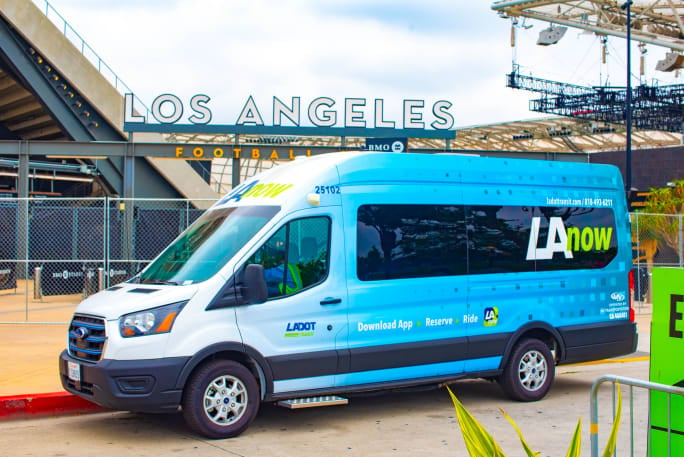
Technology can and should be leveraged to improve scheduling, real-time information, and fare collection.
Photo: LADOT
Microtransit and Technology: Not a Panacea
While microtransit and other on-demand solutions are gaining attention, they are not substitutes for robust, frequent fixed-route bus service.
Agencies consistently report that riders want reliable, frequent service on existing routes, not experimental pilot programs or niche services. Technology can and should be leveraged to improve scheduling, real-time information, and fare collection. Still, the core of any successful transit system remains a strong network of well-operated bus lines.
Funding Uncertainty and the Need for Advocacy
Tariffs, inflation, and unpredictable federal and state funding streams add further complexity to transit agency budgets, making long-term planning difficult. This uncertainty should not be used as justification for service cuts.
Instead, it highlights the urgent need for advocacy and coalition-building among agencies, municipalities, and the public to secure sustainable funding models. Agencies must communicate the real-world impacts of service reductions and work with stakeholders to prioritize transit as an essential public good.
Elevating Service, Not Cutting It
Transit agencies know that service cuts are a last resort that risks irreversible damage to mobility, equity, and economic vitality.
The evidence is clear: improved service levels drive ridership, support changing demographics, and deliver far-reaching benefits beyond traditional transit-dependent populations.
As agencies confront fiscal challenges, the focus should be on optimizing operations, advocating for stable funding, and delivering the reliable, frequent service communities need to thrive. Cutting bus service may offer short-term budget relief, but it comes at a steep and lasting cost. The path to a vibrant, resilient transit future lies in elevating service, not reducing it.
Quick Answers
Maintaining bus services is crucial because it supports ridership needs, adapts to demographic shifts, and mitigates the broader impacts of service reductions on communities.
*Summarized by AI
More Blog Posts
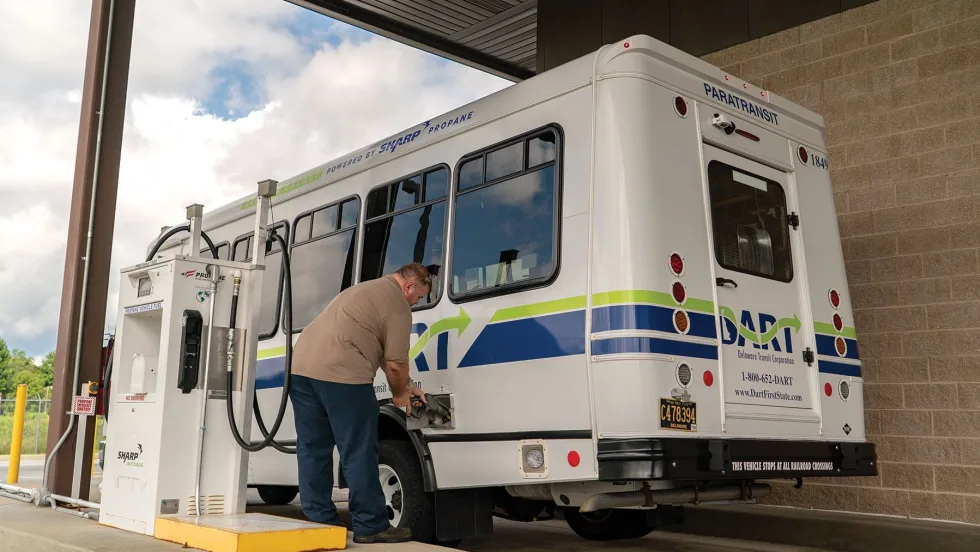
Building a Winning FTA Grant Proposal: Why Propane Autogas is the Pragmatic Choice for Fleet Resilience
With $610 million available through the FY 2026 Buses and Bus Facilities Competitive Program and the Low or No Emission Grant Program, agencies must build a compelling case before the September 21 deadline that balances environmental compliance with operational feasibility.
Read More →
Velo-city Conference 2026: Latest Trends in Cycling as Part of Urban Mobility
The global cycling conference highlighted how cities are integrating bicycles into multimodal transportation networks, expanding cycle tourism and reshaping urban mobility.
Read More →
Kindness Isn’t Soft...It’s Strategic.
Mike Bismeyer — often known as “The Kindness Guy” — has spent more than 17 years in public transit and mobility, serving in industry leadership roles, speaking across North America, and advocating for stronger workplace cultures. But his message doesn’t come from theory. It comes from lived experience.
Read More →
Inside ITF 2026: Transport Reacts to A Challenging World
Transport leaders from around the world gathered in Leipzig, Germany, for the 2026 International Transport Forum to discuss resilience, climate impacts, supply chains and the future of sustainable mobility.
Read More →
Every Ride Tells a Story — But You’re Not Just Selling the Ride
You’re selling the moment, the meaning, and the emotion behind it.
Read More →
How Digital Signage is Reshaping the Traveler Experience at Transportation Hubs
What was once a landscape of static signs has evolved into a responsive, immersive environment powered by real-time visual communication.
Read More →
Latest Trends in Urban Mobility from Polis Conference 2025
Polis comprises cities and regions, as well as corporate partners, from across Europe, promoting the development and implementation of sustainable mobility. This year’s event had over a thousand attendees across various policy forums and an exhibition.
Read More →
Why Transit Leaders Require Better Tools for Operational Clarity In Today’s Tech-Fragmented Environment
Across North America and beyond, transit agency officials are contending with a perfect storm of operational headaches and strategic challenges that hamper daily service and long-term progress.
Read More →
The Powerless Brokers: Why California Can’t Build Transit
It is no secret that transit in the U.S. is slow and expensive to build.
Read More →
Why Transport Sustainability Should Focus on People Instead of Cars
Simply incentivizing electrification is not enough to make a meaningful impact; we must shift our focus toward prioritizing public transportation and infrastructure.
Read More →