



Firearms allowed aboard Georgia's transit system
New law enables concealed weapons permit holders to carry firearm aboard buses,trains.
In June, Georgia passed a new law that allows citizens with a concealed weapons permit to take their guns onboard public transportation, as well as in restaurants and park and recreation areas.
Many believed the law, which was signed into law by Gov. Sonny Perdue in the final hours of this year’s Georgia legislative session, was dead for the year.
Put into effect in July, the law caused the Metropolitan Atlanta Rapid Transit Authority (MARTA) to respond immediately. “We passed out fliers to notify our customers of the bill and what they can expect to see,” said Wanda Dunham, chief of police for MARTA. “We also have messages on our TV station and on LCD signs at our train stations.”
Dunham explained that MARTA is asking its customers for help by remembering the “D.A.C.” model: “Don’t approach, Always consider personal safety first, Call MARTA Police.” Customers can notify police via cell phone or by using train station call boxes, blue police phones and white customer phones.
The law enables registered gun owners to carry concealed weapons aboard the state’s public transit system; however, they must provide the proper license upon questioning. MARTA will require both a Georgia gun permit and matching photo identification to ensure the permit is indeed being held by the correct person. There are approximately 300,000 gun permit holders in Georgia, according to various newspaper reports.
The new law took effect in Georgia mere days after the U.S. Supreme Court issued a landmark decision that affirmed Americans’ constitutional right to own a gun.
MARTA’s Dunham doesn’t believe the new law will turn the transit system into the “Wild West.”
“Our regular riders know that MARTA is a safe system to ride, and I don’t anticipate them to all of a sudden start carrying guns on trains or buses just because they can,” Dunham said. “We’re going to remain vigilant, watchful and deal with it if it does happen, though.”
The new Georgia law mirrors similar laws in other states across the nation.
“It appears there are federal and state laws that provide for the carrying of concealed weapons onto public transportation facilities,” said Greg Hull, director, security operations support, for APTA. “We’d prefer that the laws not provide that, because we do have a responsibility in our industry to provide for a safe and secure environment for our passengers.”
Despite the immediate fear that comes with the new law, the allowance of guns on public transportation hasn’t been a problem in other states. Spokesman for the Dallas Area Rapid Transit system, for instance, say that there has been no significant problems during the several years the law has been in effect in Texas.
Still, APTA’s Hull says that his association will keep a close eye on the effect the new law has in the state of Georgia. “We’ll be watching with interest what unfolds in Atlanta,” he said. “If we need to provide help of any kind to any of our colleagues throughout the state, or in any other state where this is legal, we’ll certainly be there to do so.”
More Management

Building Stronger Leaders, More Resilient Transit Teams
Dr. Carol Parker Walsh discusses leadership development, employee retention, workplace culture, and preparing transit’s workforce for AI and automation.
Read More →
Roman Cornell on ABC Companies’ Evolution and the Future of Passenger Transportation
The company’s CEO discusses carrying forward a third-generation family legacy, ABC’s continued evolution in passenger transportation, support for increasingly complex fleets, and how technology and continued investment could help operators improve uptime.
Read More →
CATS Launches West Charlotte Microtransit Zone, Expands Transit Services
The new microtransit zone connects residents to key destinations as Charlotte Area Transit System rolls out the first phase of its 2055 Transit System Plan.
Read More →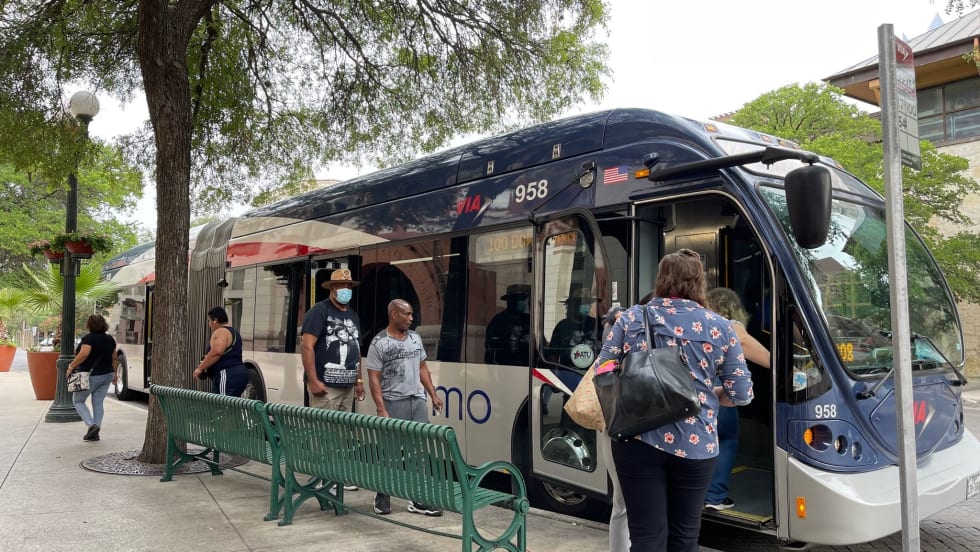
VIA Bus Ridership Grows 10.1% Through August 2026
San Antonio's VIA Metropolitan Transit reported the highest bus ridership growth among major Texas transit systems. Federal Transit Administration data ranked it second among the nation's 50 largest transit systems.
Read More →
CSA Group Releases Climate Resilience Standard for Transit, Passenger Rail
Developed with support from the Standards Council of Canada, CSA D700 guides assessing climate-related risks and planning adaptation measures for transit and passenger rail systems.
Read More →
ETA CEO John Maglio on Transit Technology, Innovation, and Building Agency Trust
ETA founder and CEO John Maglio explores the evolution of transit technology, the importance of reliable systems, and how stronger partnerships can help agencies improve operations and the passenger experience.
Read More →
COTA Launches First Customer Experience Action Plan to Improve Transit Service
The new plan outlines improvements to service reliability, accessibility, communication, and the overall rider experience across Central Ohio's transit system.
Read More →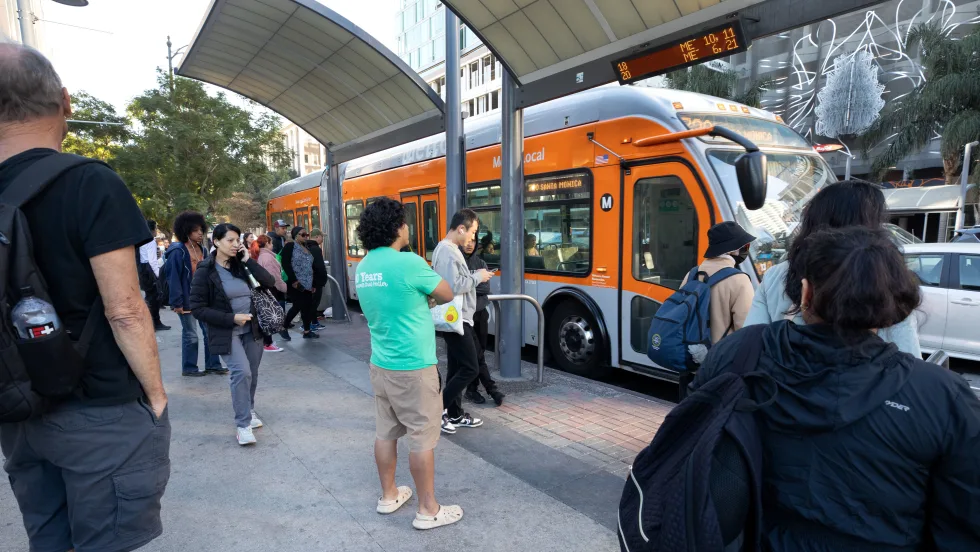
LA Metro September Ridership Climbs 3.9%, Led by Rail Growth
The agency recorded more than 27.2 million boardings, with rail ridership increasing 12.4% year over year and the D Line posting the largest gains.
Read More →
Utilimarc Launches SmartReplace to Optimize Fleet Replacement Decisions
AI-powered SmartReplace helps fleets prioritize vehicle replacements, model budget scenarios, and build more defensible long-term strategies.
Read More →
APTA Honors 2026 Award Winners, Hall of Fame Inductees at TRANSform & EXPO
Innovations in autonomous and zero-emission transportation, standout transit systems, and industry leadership took center stage among this year's honorees.
Read More →